
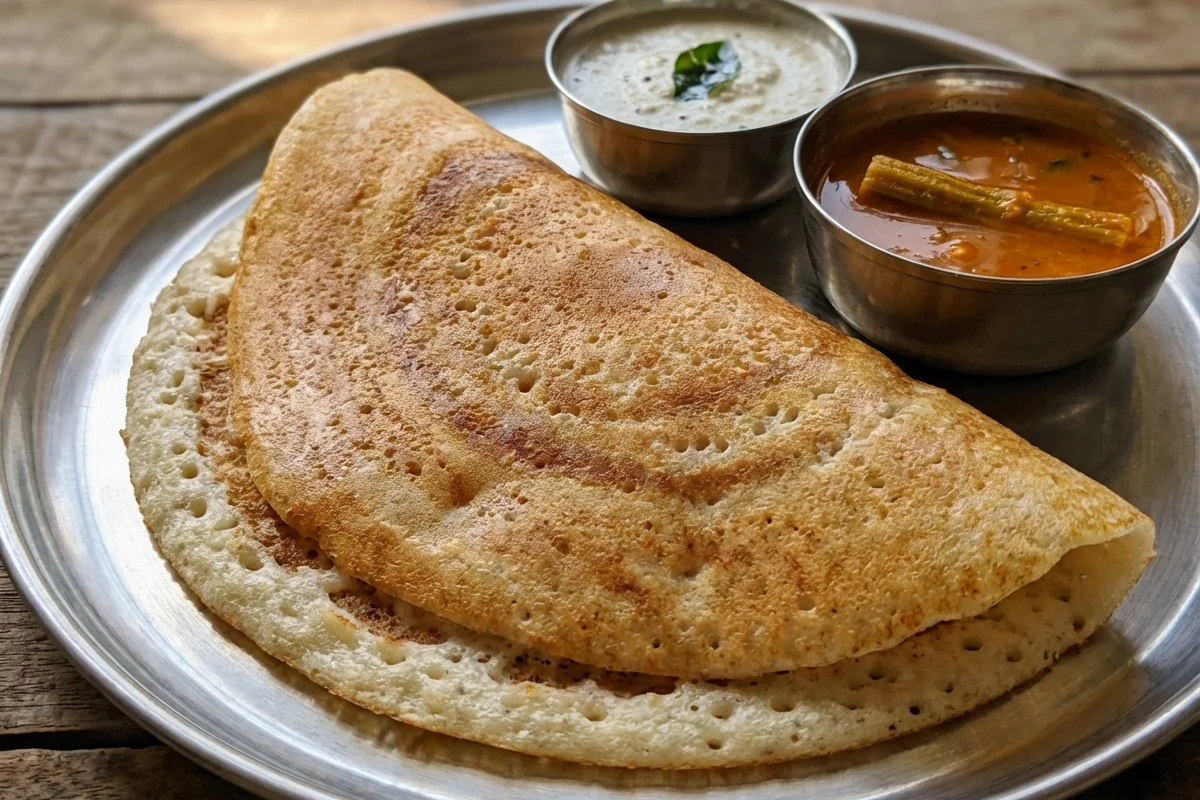
Kal Dosa
Kal dosa is a soft, thick Tamil-style dosa with a gentle tang from fermented rice and urad dal batter. It cooks up spongy in the center with lightly crisp edges and is lovely with chutney or sambar.
For 8 servings
- prep · ~240 min
Soak the rice, dal, and poha.
1.Wash the idli rice well and soak it in water for 4 hours.2.Wash the urad dal and soak it with fenugreek seeds for 4 hours.3.Soak the flattened rice in a little water for 10 minutes just before grinding.TIPUse enough water to keep the grains fully submerged so they soften evenly. - mix · ~20 min
Grind the batter.
1.Drain the urad dal and fenugreek seeds, then grind with a little water to a smooth and fluffy batter.2.Drain the rice and grind it with the soaked flattened rice to a slightly coarse batter.3.Combine both batters in a large bowl and mix well by hand for 1 to 2 minutes.TIPKeep the batter thick but pourable; a very thin batter will not give the soft, spongy texture. - rest · ~480 min
Ferment the batter.
Cover the bowl loosely and leave the batter in a warm place for 8 hours, or until risen and lightly airy. Stir in the salt gently after fermentation.
- mix
Adjust the batter consistency.
Mix the fermented batter gently. Add a little water only if needed so it falls thickly from the ladle; kal dosa batter should be thicker than regular dosa batter.
- fry · ~15 min
Cook the kal dosas.
1.Heat a tawa over medium heat and lightly grease it with a little oil.2.Pour a ladle of batter in the center and spread it lightly into a small thick round; do not spread it thin.3.Drizzle a few drops of oil around the edges, cover, and cook until the top looks set and the bottom turns light golden.4.Flip gently and cook the other side for 30 to 40 seconds.TIPCook on medium heat so the center cooks through before the bottom gets too dark. - serve
Serve the kal dosa hot.
What to keep in mind.
7 tips from the recipe — small details that make a real difference to the final dish.
- 1Mix the ground batters by hand before fermenting; the warmth helps kick-start a better rise.
- 2The rice portion should stay slightly coarse while grinding, which gives kal dosa its characteristic spongy bite.
- 3After fermentation, stir the batter gently so you do not knock out too much trapped air.
- 4If your kitchen is cool, place the batter in the oven with just the light on to help it ferment evenly.
- 5Spread the batter only lightly on the tawa; pressing it thin will make it cook like regular dosa instead of kal dosa.
- 6Covering the dosa while cooking is key, because the trapped steam sets the thick center without drying it out.
- 7Leftover batter keeps well in the fridge for 2 to 3 days; bring it closer to room temperature before making the next batch.
Adapt it for your goals.
Jaggery-kal-dosa
Add a little melted jaggery to part of the batter for a mildly sweet breakfast version that pairs well with coconut chutney.
millet kal dosaMillet-kal-dosa
Replace part of the idli rice with little millet or foxtail millet for a nuttier taste and a more whole-grain style dosa.
onion kal dosaOnion-kal-dosa
Scatter finely chopped onion, green chili, and curry leaves over the poured batter for extra aroma and texture.
low oilLow-oil
Use a well-seasoned tawa and brush on just a thin film of oil; you still get good browning with less fat.
Why this is on our healthy list.
Fermented for Easier Digestion
The naturally fermented rice and urad dal batter can be gentler on digestion and develops deeper flavor without heavy additions.
Plant-Based Protein Support
Urad dal adds plant protein to the dosa, making it more satisfying than a rice-only batter.
Light Yet Filling
Because kal dosa is steamed on the inside and uses only a little oil on the tawa, it feels hearty without being overly rich.
Frequently asked questions
Usually the batter is too thin, under-fermented, or spread too much on the tawa. Keep it thick, airy, and cook it covered over medium heat.


