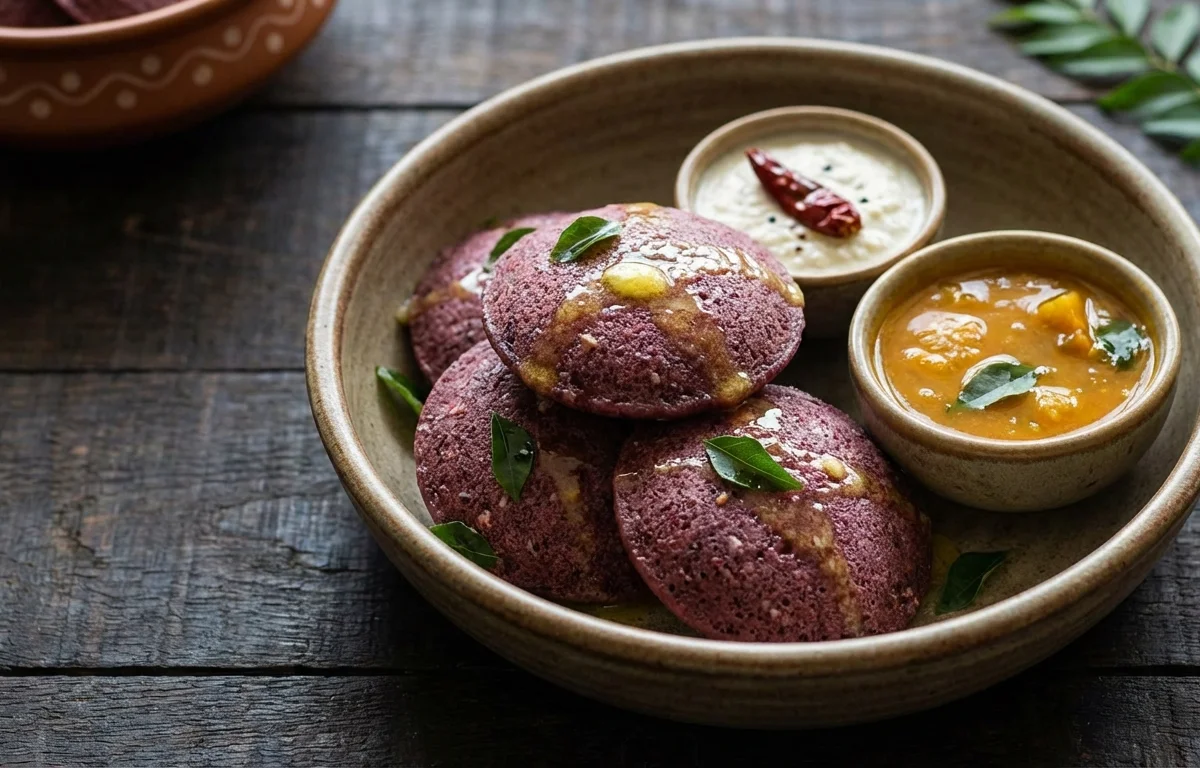
Kavuni Arisi Idli
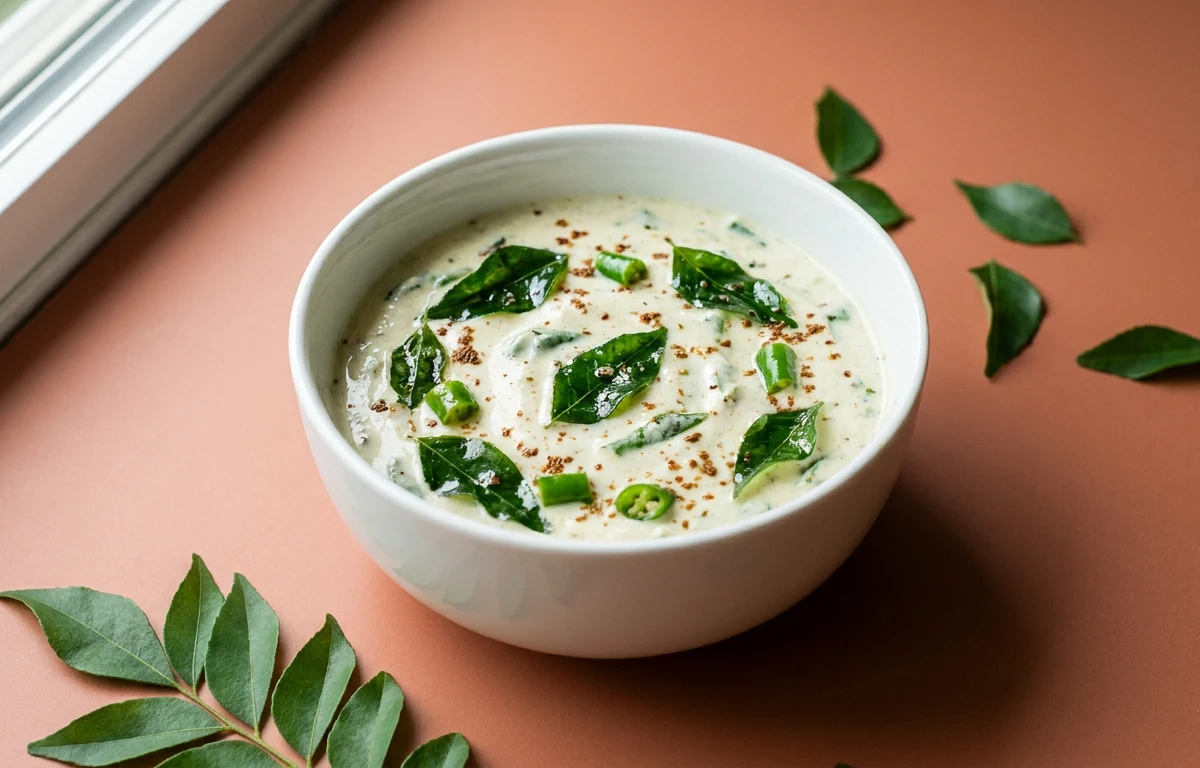
Nutty, earthy idlis made with fragrant black rice, urad dal, and a little fenugreek for lift. These steamed cakes turn out soft with a light chew and pair beautifully with coconut chutney or mild sambar.
For 8 servings
- prep · ~6 min
Soak the rice and dal.
1.Wash kavuni arisi and idli rice until the water runs clearer.2.Soak both rice varieties together in plenty of water for 6 hours.3.Wash urad dal and fenugreek seeds, then soak them together in fresh water for 4 to 6 hours. - mix · ~20 min
Grind the dal and rice into batter.
1.Drain the urad dal and fenugreek seeds, then grind with water for grinding to a light, fluffy batter.2.Drain the soaked rice and grind with water for grinding to a slightly grainy, smooth batter.3.Mix both batters in a large bowl until well combined and airy.4.Add salt and mix again with your hand for 1 minute.TIPKeep the rice batter slightly coarse so the idlis stay light instead of turning dense. - rest · ~480 min
Ferment the batter.
Cover the bowl loosely and leave the batter in a warm spot for about 8 hours, or until it rises, looks airy, and smells pleasantly tangy.
TIPThe batter should not be over-thick after fermenting. If needed, stir in a little water for grinding to reach a thick pouring consistency. - prep · ~5 min
Grease the idli plates and fill them.
Lightly grease the idli molds with oil. Stir the batter gently, then pour it into the molds until each cavity is nearly full.
- steam · ~15 min
Steam the idlis.
Place the filled plates in a steamer with boiling water and steam on medium heat for 12 to 15 minutes, until the tops are set and a skewer comes out clean.
TIPDo not steam on very high heat or the idlis can turn rubbery. - rest · ~2 min
Cool the idlis briefly.
Let the idlis rest in the molds for 2 minutes so they firm up slightly and release more easily.
- serve
Unmold and serve the idlis warm.
What to keep in mind.
7 tips from the recipe — small details that make a real difference to the final dish.
- 1Grind the urad dal until very fluffy; that trapped air is what helps these heavier black-rice idlis rise well.
- 2Keep the kavuni arisi batter slightly grainy, not pasty, or the idlis can turn dense instead of softly chewy.
- 3Mix the batter with your hand before fermenting; the warmth and natural microbes often help the idlis ferment better.
- 4Because black rice ferments a bit slower, place the batter in a warm spot and allow extra time in cool weather.
- 5Steam on medium heat only; aggressive boiling can make the idlis tight and rubbery rather than tender.
- 6Let the idlis sit in the mold for 2 minutes before unmolding so the darker batter firms up and releases cleanly.
- 7Leftover idlis reheat best by sprinkling with a little water and steaming briefly, which restores their softness.
Adapt it for your goals.
Vegan
This recipe is naturally vegan; serve with coconut chutney and oil-based milagai podi for a fully plant-based meal.
jainJain
Pair the idlis with coconut chutney made without onion or garlic, since the idli batter itself is already Jain-friendly.
millet mixMillet-mix
Replace part of the idli rice with little millet or foxtail millet for an earthier taste and a slightly heartier texture.
mini idliMini-idli
Steam the batter in mini idli plates for bite-size pieces that are great for kids, tiffin, or soaking in mild sambar.
Why this is on our healthy list.
Whole-Grain Black Rice Goodness
Kavuni arisi brings the benefits of a minimally refined whole grain, adding more character and depth than plain white rice idlis.
Protein from Urad Dal
Urad dal adds plant protein and makes the idlis more satisfying while also helping create their soft texture.
Fermented and Gentle
The fermented batter can be easier to digest for many people, and steaming keeps the cooking method light.
Frequently asked questions
Usually the urad batter was not whipped fluffy enough, the rice was ground too fine, or the batter did not ferment fully before steaming.