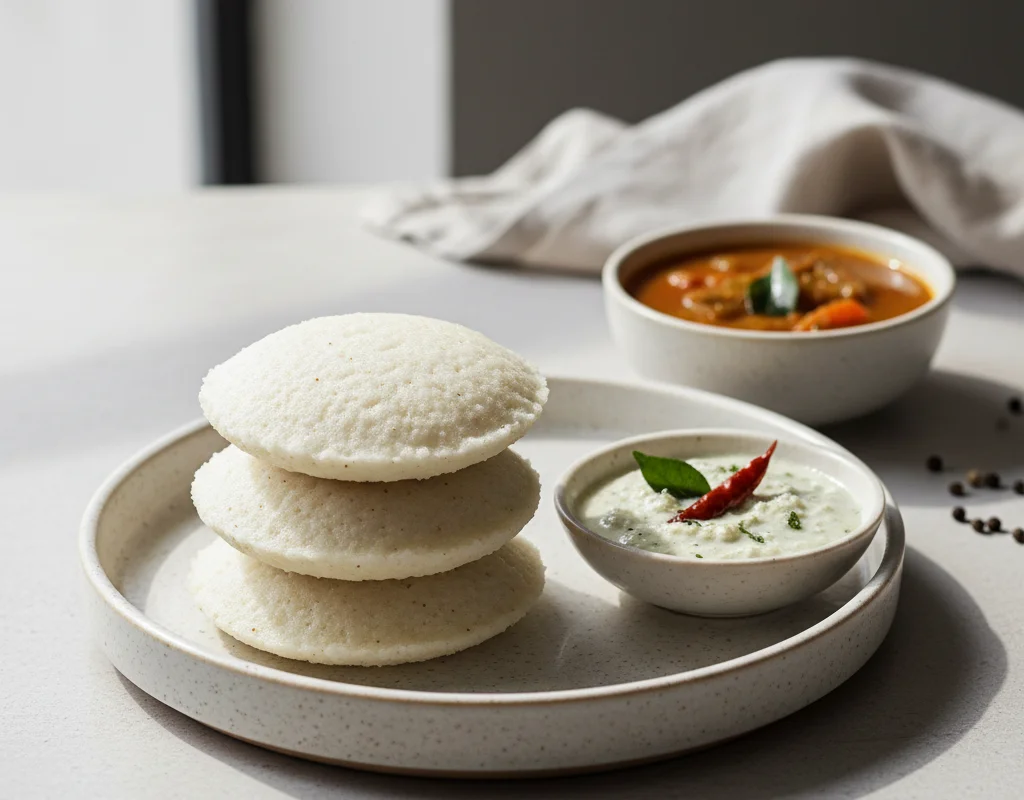
Kodo Millet Idli
Soft, fluffy steamed cakes made with kodo millet and urad dal. This nutritious twist on the South Indian classic has a slightly earthy, nutty flavor and a light, airy texture. Perfect with coconut chutney and sambar for a wholesome breakfast.
For 4 servings
- prep
Wash and soak the millet and dal.
1.Rinse kodo millet in water 2-3 times until water runs clear.2.Wash urad dal and fenugreek seeds together in a separate bowl.3.Soak the millet and poha together in water for 5 hours.4.Soak urad dal with fenugreek seeds in water for 5 hours.TIPUse enough water to cover ingredients by 2 inches. Soaking softens grains for better grinding. - mix · ~10 min
Grind the batter.
1.Drain urad dal and fenugreek seeds. Grind in a wet grinder with 0.25 cup water until smooth and fluffy. Transfer to a large mixing bowl.2.Drain kodo millet and poha. Grind with 0.5 cup water to a slightly coarse, smooth paste.3.Combine both batters in the large bowl. Add salt and mix well by hand to incorporate air.4.The batter should be thick yet pourable — dropping consistency without being watery.TIPThe urad dal batter is ready when a small drop floats in water. Grinding by hand for 2 minutes after mixing improves fermentation. - rest
Ferment the batter overnight.
Cover the bowl and let the batter ferment in a warm place for 8 hours or overnight. The batter should rise and develop a mildly sour aroma.
TIPIn colder weather, place the bowl inside an oven with the light on, or wrap in a warm towel to aid fermentation. - prep · ~5 min
Prepare the steamer and molds.
1.Pour 2 cups water into the idli cooker or steamer pot and bring to a boil.2.Grease idli molds lightly with oil.3.Gently mix the fermented batter once — do not deflate completely. Add a splash of water if it thickened overnight.TIPDo not over-mix the batter after fermentation. A gentle fold preserves the air bubbles that make soft idlis. - steam · ~10 min
Steam the idlis.
1.Pour batter into greased idli molds, filling each cavity about 3/4 full.2.Place the idli stands in the steamer once water is boiling steadily.3.Cover and steam on medium-high heat for 10 minutes.4.Check doneness by inserting a toothpick — it should come out clean.TIPLet the idlis rest in the molds for 2 minutes after steaming. This helps them release cleanly. - serve · ~2 min
Unmold and serve hot.
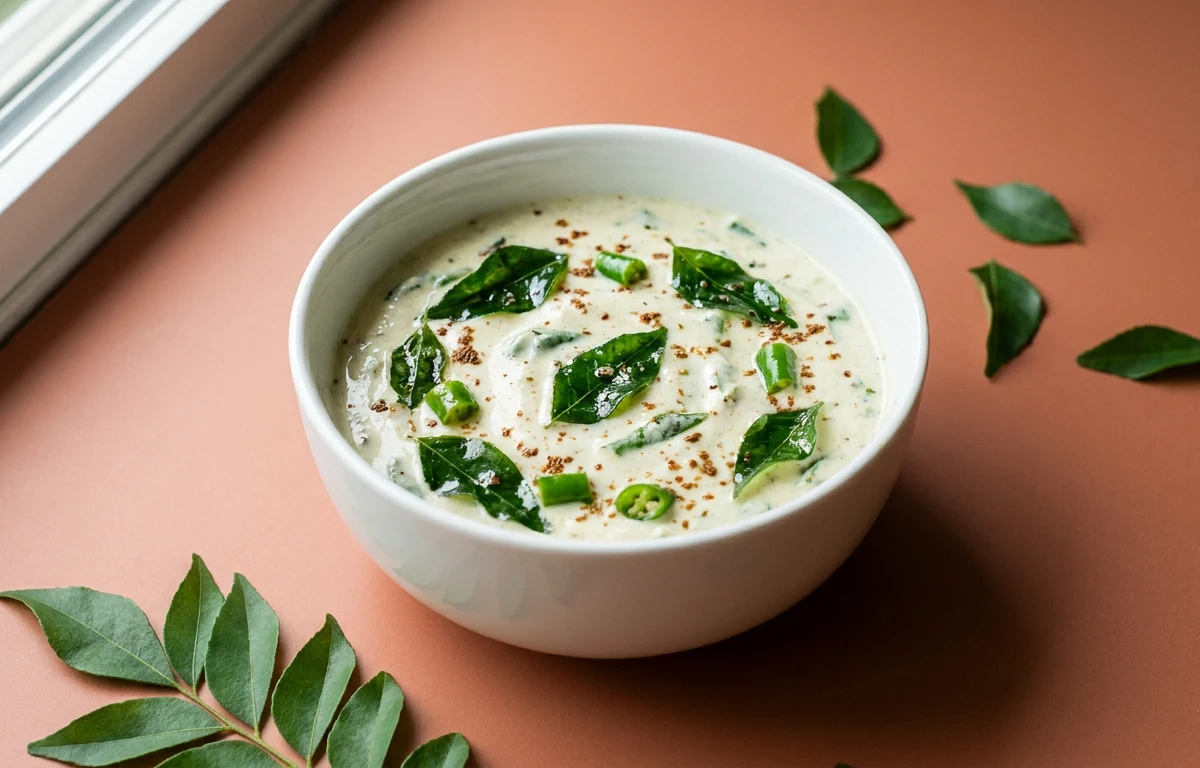
1.Remove idli stands from steamer. Let cool for 1 minute.2.Use a wet spoon to gently scoop out each idli.3.Serve immediately with coconut chutney and sambar.TIPSprinkle a few drops of sesame oil or ghee on hot idlis for extra aroma.
What to keep in mind.
7 tips from the recipe — small details that make a real difference to the final dish.
- 1Soak the kodo millet and poha together to help the batter ferment evenly.
- 2Grind the urad dal first until it is airy and doubles in volume for fluffier idlis.
- 3Ferment the batter in the oven with the light on during cold weather to maintain warmth.
- 4Check fermentation by smell and rise; the batter should have a mild sour aroma and increase in volume.
- 5Do not over-mix the fermented batter—fold gently to preserve air bubbles for soft idlis.
- 6Let steamed idlis rest in the molds for 2 minutes before unmolding to prevent sticking.
- 7To check doneness, insert a toothpick; it must come out completely clean.
Adapt it for your goals.
High-Protein
Replace ¼ cup of kodo millet with roasted chana dal (split chickpeas) to boost protein content without altering fermentation behavior.
Low OilLow-Oil
Skip greasing the molds entirely by using silicone idli trays, which release the idlis cleanly with zero added oil.
Fenugreek FreeFenugreek-Free
Omit fenugreek seeds if you dislike their bitterness; the batter will still ferment well, though the idlis may be slightly less fluffy.
Why this is on our healthy list.
Naturally Gluten-Free
Kodo millet is a gluten-free ancient grain, making these idlis safe for those with celiac disease or gluten sensitivity.
Rich in Iron and Fiber
Kodo millet provides dietary fiber for digestion and iron for energy, while urad dal adds plant-based protein and B vitamins.
Supports Gut Health
The overnight fermentation process creates probiotics and prebiotics that aid digestion and promote a healthy gut microbiome.
Low Glycemic Index
Kodo millet has a slower carbohydrate absorption rate compared to rice, helping to maintain more stable blood sugar levels.
Frequently asked questions
Dense idlis often result from inadequate fermentation or too much water in the batter. Ensure the batter doubles in volume and has a mildly sour aroma before steaming.