
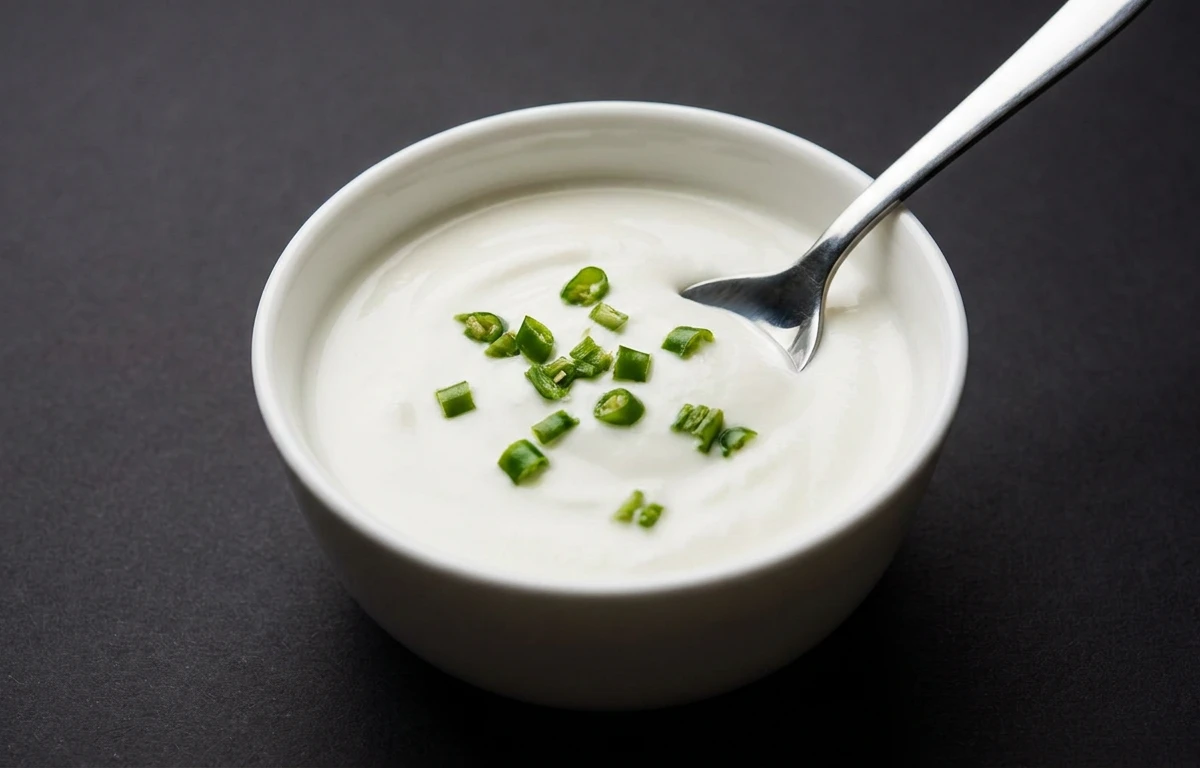
Lactose-Free Curd
Creamy, probiotic-rich homemade curd made with lactose-free milk and a vegan starter culture. This everyday staple is mildly tangy, silky smooth, and perfect as a digestive companion to any Indian meal.
For 4 servings
- boil · ~10 min
Boil the lactose-free milk.
Pour the milk into a heavy-bottomed pot. Bring to a gentle boil over medium heat, stirring occasionally to prevent scalding. Once it boils, lower the heat and simmer for 2 minutes.
TIPIf the milk boils over, the texture may become grainy. Keep the heat moderate and stay nearby. - rest · ~20 min
Cool the milk to lukewarm.
Remove the pot from heat. Let the milk cool naturally until it reaches 40-45°C (105-115°F) — warm to the touch but not hot. If you test with a clean finger, it should feel comfortably warm for 5 seconds without burning.
TIPMilk hotter than 50°C (122°F) will kill the live cultures; cooler than 35°C (95°F) will not activate them. - mix · ~1 min
Dissolve the vegan starter in a small amount of milk.
Spoon the vegan yogurt starter into a small bowl. Add 2-3 tablespoons of the lukewarm milk and whisk briskly until completely smooth with no lumps.
TIPTempering the starter with a little warm milk ensures it distributes evenly throughout the batch. - mix · ~1 min
Combine the starter with the remaining milk.
Pour the dissolved starter mixture back into the pot of lukewarm milk. Whisk gently in one direction for about a minute to distribute the cultures evenly throughout.
- rest · ~2 min
Pour into a ceramic bowl and place in a warm water bath.
Transfer the inoculated milk into a clean ceramic or glass bowl. Fill a larger casserole dish with warm water (about 40°C) and place the bowl inside, ensuring the water comes about halfway up the sides of the bowl. Cover the bowl with a clean lid or plate.
TIPA warm water bath maintains a steady temperature and is the secret to consistently thick, creamy curd. - rest · ~480 min
Let the curd set undisturbed in a warm place.
Place the water bath setup in a warm, draft-free spot — inside a switched-off oven, a closed microwave, or wrapped in a thick towel inside a cupboard. Leave it completely undisturbed for 6-8 hours or overnight.
TIPMovement or vibration during setting will break the gel structure and yield watery curd. Do not move, check, or jiggle the bowl. - rest · ~120 min
Check for doneness and refrigerate.
After 6-8 hours, gently tilt the bowl — the curd should be set firm and not flow freely. The surface should be smooth and slightly glossy. Refrigerate for at least 2 hours to fully cool and firm up before serving.
TIPCurd that is still runny after 8 hours needs more warmth; warm the water bath again and give it 2 more hours.
What to keep in mind.
6 tips from the recipe — small details that make a real difference to the final dish.
- 1Use full-fat lactose-free milk for the creamiest, richest texture; ultra-light versions yield thin curd.
- 2Cool the boiled milk to exactly 40-45°C — too hot kills the cultures, too cool stalls fermentation.
- 3Whisk the starter with a little warm milk first to prevent lumps and ensure even culture distribution.
- 4Place the setting bowl in a warm water bath (40°C) for consistent temperature and thick, silky curd.
- 5Do not disturb the bowl during setting — vibration breaks the gel and makes curd watery.
- 6Refrigerate the set curd for at least 2 hours before serving to firm up and stop fermentation.
Adapt it for your goals.
High-protein
Swap 200ml of the lactose-free milk with lactose-free protein-fortified milk for a thicker, higher-protein curd with similar tang.
low fatLow-fat
Use skim lactose-free milk for a lighter curd with fewer calories; note that it will be less creamy and may set slightly looser.
jainJain
Ensure the vegan starter is made without root vegetables (e.g., use a coconut-based yogurt starter that is Jain-friendly) to keep the curd suitable for Jain dietary practices.
soy freeSoy-free
Choose a coconut or almond-based yogurt starter instead of soy-based to make the curd completely soy-free.
Why this is on our healthy list.
Lactose-Free & Digestive-Friendly
Made with lactose-free milk, this curd is gentle on sensitive stomachs and suitable for those with lactose intolerance.
Rich in Probiotics
The live cultures from the vegan starter introduce beneficial bacteria that support gut health and digestion when consumed regularly.
Good Source of Calcium
Lactose-free milk retains its calcium content, making this curd a bone-friendly addition to meals.
Frequently asked questions
Watery curd usually happens if the milk cooled below 35°C before adding the starter, or if the bowl was moved during setting. Ensure milk is at 40-45°C and leave it undisturbed for 6-8 hours.


