
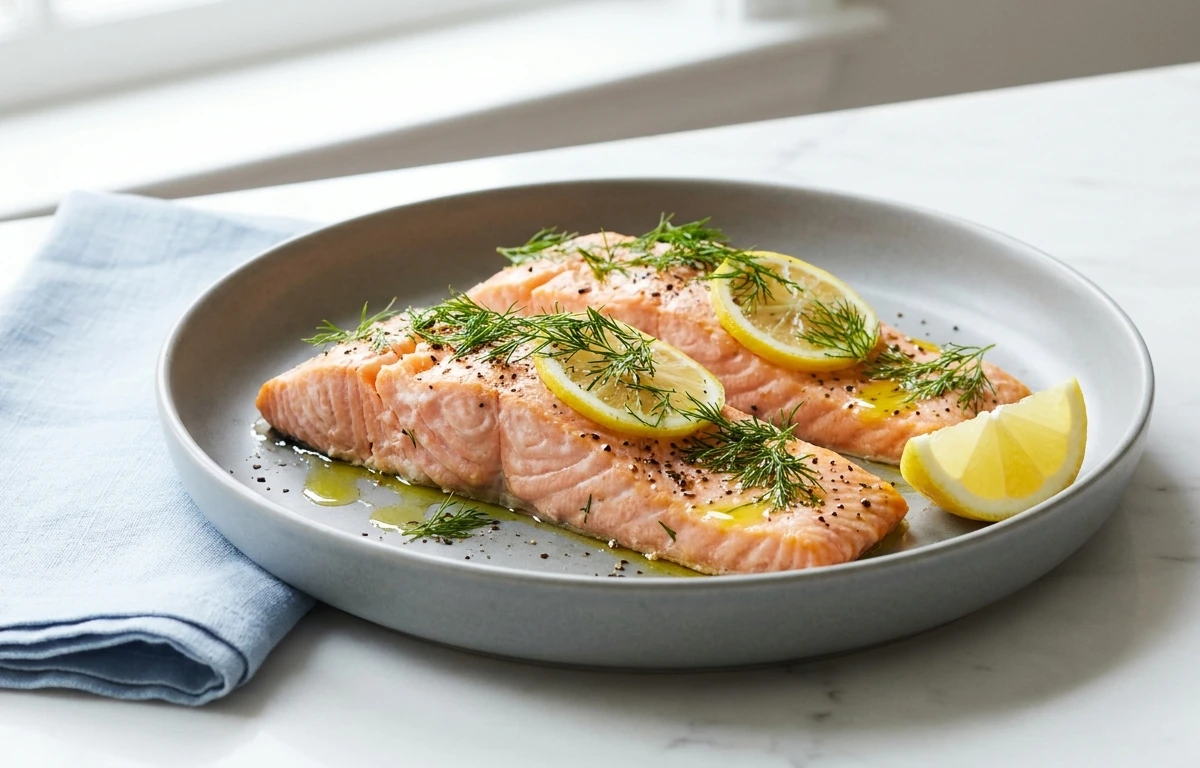
Lemon Dill Baked Salmon
Bright, buttery salmon fillets baked until tender and flaky, infused with fresh lemon and aromatic dill. This elegant weeknight dinner comes together in under 30 minutes with minimal cleanup — perfect with roasted vegetables or a simple green salad.
For 4 servings
- prep
Preheat oven and prepare the baking dish.
Preheat the oven to 400°F (200°C). Lightly grease a 9x13 inch baking dish to prevent sticking.
- prep
Pat salmon dry and arrange in dish.
1.Pat the salmon fillets dry with paper towels.2.Place them skin-side down in the prepared baking dish, leaving a little space between each fillet. - mix
Make the lemon-dill butter sauce.
1.In a small bowl, combine the melted butter, lemon zest, lemon juice, and minced garlic.2.Stir in the chopped dill, salt, and black pepper.3.Whisk until everything is well blended. - assemble
Spoon the sauce over the salmon.
Spoon the lemon-dill butter mixture evenly over each fillet, letting it drip down the sides and pool slightly in the dish.
- bake · ~15 min
Bake until salmon is opaque and flakes easily.
Place the baking dish in the preheated oven and bake for 13 to 16 minutes, or until the salmon is opaque throughout and flakes easily with a fork. The internal temperature should reach 145°F (63°C) at the thickest part.
- garnish
Garnish and serve immediately.
Remove from oven and let rest for 2 minutes. Garnish with extra fresh dill and serve with lemon wedges if desired.
What to keep in mind.
6 tips from the recipe — small details that make a real difference to the final dish.
- 1Pat the salmon fillets thoroughly dry with paper towels before baking to ensure the butter sauce clings properly and the fish browns lightly.
- 2Use a fish spatula to lift the salmon off the baking dish — the skin will stick if you try to slide a regular spatula underneath.
- 3For uniformly cooked fillets, select pieces of similar thickness (about 1 inch) and arrange them with space between each for hot air to circulate.
- 4Let the salmon rest for 2 minutes after baking so the juices redistribute; skipping this step can result in drier fish.
- 5Leftover salmon keeps in the fridge for up to 2 days — flake it cold over salads or gently reheat in a low oven at 300°F (150°C) to avoid overcooking.
- 6If your fillets are thinner than 1 inch, reduce the bake time to 10-12 minutes and start checking for doneness early.
Adapt it for your goals.
Herb Swap
Replace dill with equal parts fresh parsley and chives, or use 1 teaspoon dried dill if fresh is unavailable — the dish still gets a bright, herbal finish.
No Butter / Dairy FreeNo Butter / Dairy-Free
Substitute the butter with 3 tablespoons extra-virgin olive oil or a dairy-free butter alternative; the salmon stays tender and the lemon-garlic flavor shines just as clearly.
Sheet Pan MealSheet Pan Meal
Add trimmed asparagus or green beans to the baking dish around the salmon before spooning on the sauce — everything roasts together for a complete meal in one pan.
Cajun TwistCajun Twist
Add 1/2 teaspoon smoked paprika and a pinch of cayenne to the butter sauce for a warm, smoky counterpoint to the lemon and dill.
Why this is on our healthy list.
Rich in Omega-3 Fatty Acids
Salmon is one of the best natural sources of EPA and DHA omega-3s, which support heart and brain health.
High-Quality Protein
Each serving provides a substantial amount of complete protein to help maintain muscle and keep you satisfied.
Source of Vitamin D
Wild or farmed salmon is one of the few food sources of vitamin D, important for bone health and immune function.
Low in Carbohydrates
This dish contains virtually no carbs, making it suitable for low-carb and keto-friendly eating patterns.
Frequently asked questions
The salmon is done when it is opaque all the way through and flakes easily with a fork at the thickest part — a thermometer should read 145°F (63°C).


