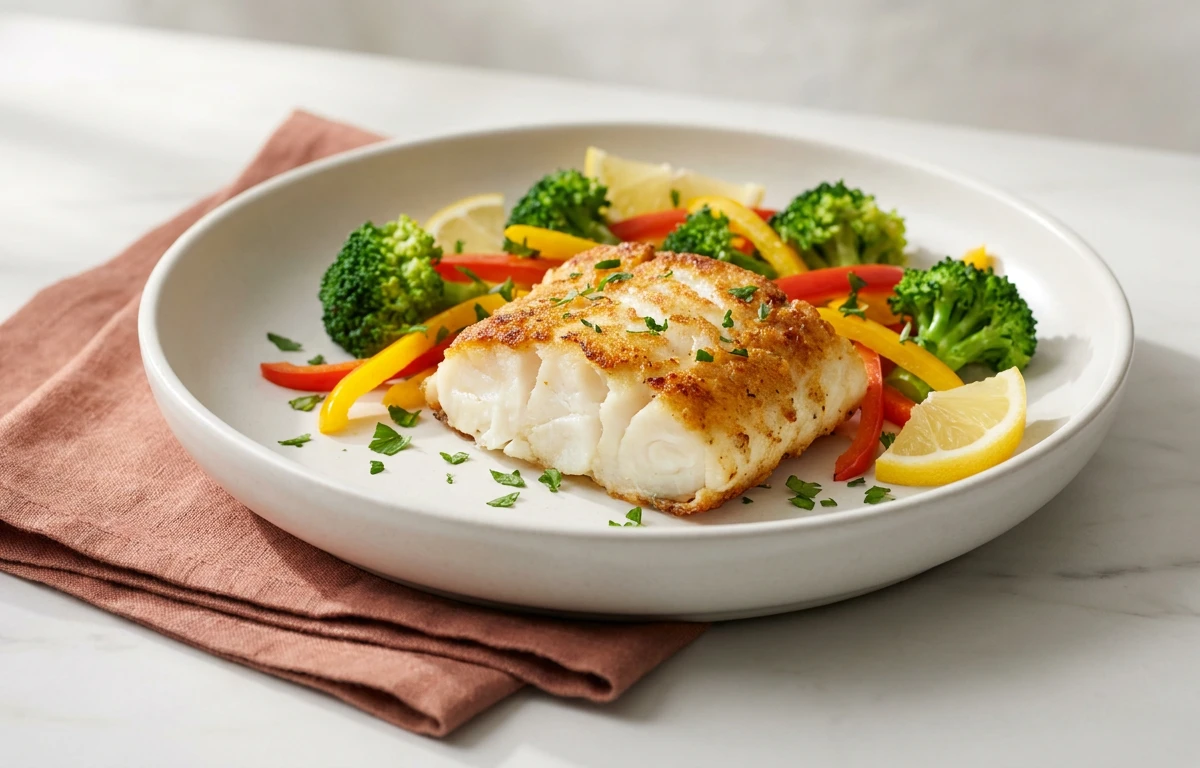
Lemon Herb Baked Cod with Roasted Veggies
Flaky, tender cod fillets baked with a bright lemon-herb marinade, paired with caramelized roasted vegetables that cook on the same sheet pan. A light, wholesome dinner that comes together with minimal effort and delivers clean, fresh flavors in every bite.
For 4 servings
- prep · ~10 min
Preheat oven and prep the vegetables.
1.Preheat oven to 425°F (220°C). Line a large rimmed sheet pan with parchment paper.2.On the sheet pan, toss zucchini, bell peppers, red onion wedges, and cherry tomatoes with 2 tbsp olive oil and half the salt.3.Spread vegetables in an even single layer, leaving 4 spaces for the cod fillets.TIPDon't overcrowd the pan — vegetables need space to roast, not steam. - prep · ~2 min
Make the lemon-herb marinade.
1.In a small bowl, whisk together lemon juice, 1 tbsp olive oil, minced garlic, oregano, thyme, smoked paprika, remaining salt, and black pepper. - assemble · ~3 min
Season the cod and arrange on the pan.
1.Pat cod fillets completely dry with paper towels.2.Spoon the lemon-herb mixture evenly over all 4 fillets.3.Place each fillet in one of the open spaces on the sheet pan.4.Lay lemon slices on top of each fillet and scatter any extra around the vegetables.TIPDrying the fish helps the herb paste cling and promotes even baking. - bake · ~25 min
Bake until fish is flaky and vegetables are tender.
Place the sheet pan in the preheated oven and roast everything together for 22 to 25 minutes. The cod is done when it flakes easily with a fork and reaches an internal temperature of 145°F. Vegetables should be tender with lightly charred edges.
TIPIf vegetables need more browning, switch to broil for the last 2 minutes — watch closely so the garlic doesn't burn. - garnish
Garnish with fresh parsley and serve hot.
Remove the pan from the oven. Sprinkle chopped parsley over the fish and vegetables. Serve each fillet with a generous portion of roasted veggies, spooning any pan juices over the top.
TIPA final squeeze of fresh lemon right before serving brightens all the flavors.
What to keep in mind.
6 tips from the recipe — small details that make a real difference to the final dish.
- 1Pat the cod fillets completely dry before applying the herb marinade for better flavor adhesion.
- 2Arrange the vegetables in a single layer with space around each piece to encourage caramelization.
- 3Use an instant-read thermometer to check cod doneness at 145°F (63°C) for perfect flakiness.
- 4If your oven runs cool, preheat an extra 10 minutes to ensure the high heat needed for roasting.
- 5For extra char on the veggies, switch to broil for the final 2 minutes and watch closely.
- 6Leftover cod keeps in the fridge for up to 2 days; reheat gently in a low oven to avoid drying.
Adapt it for your goals.
Low-oil
Reduce olive oil to 1 tbsp total and toss vegetables with a splash of vegetable broth; the fish stays moist from lemon steam.
high proteinHigh-protein
Swap cod for halibut or salmon fillets (adjust cooking time by 3–5 minutes) for a denser protein boost.
mediterranean grain bowlMediterranean-grain-bowl
Serve the baked cod and veggies over warm quinoa or farro, drizzled with tahini sauce for a hearty meal.
dairy freeDairy-free
This recipe is naturally dairy-free; just skip any butter-based garnish and use extra lemon juice.
spicySpicy
Add ½ teaspoon red pepper flakes to the herb marinade for a gentle heat that complements the smoked paprika.
Why this is on our healthy list.
Lean Protein Source
Cod is naturally low in fat and rich in high-quality protein, supporting muscle repair and satiety.
Rich in Vitamin C
Bell peppers, lemon, and cherry tomatoes in this dish provide a generous amount of immune-supporting vitamin C.
Heart-Healthy Fats
Olive oil contributes monounsaturated fats, which are linked to better cardiovascular health.
Low in Carbohydrates
With only non-starchy vegetables and fish, this meal is naturally low-carb and suitable for blood sugar management.
Frequently asked questions
Yes, but thaw them completely in the refrigerator overnight and pat very dry before marinating to avoid excess moisture.