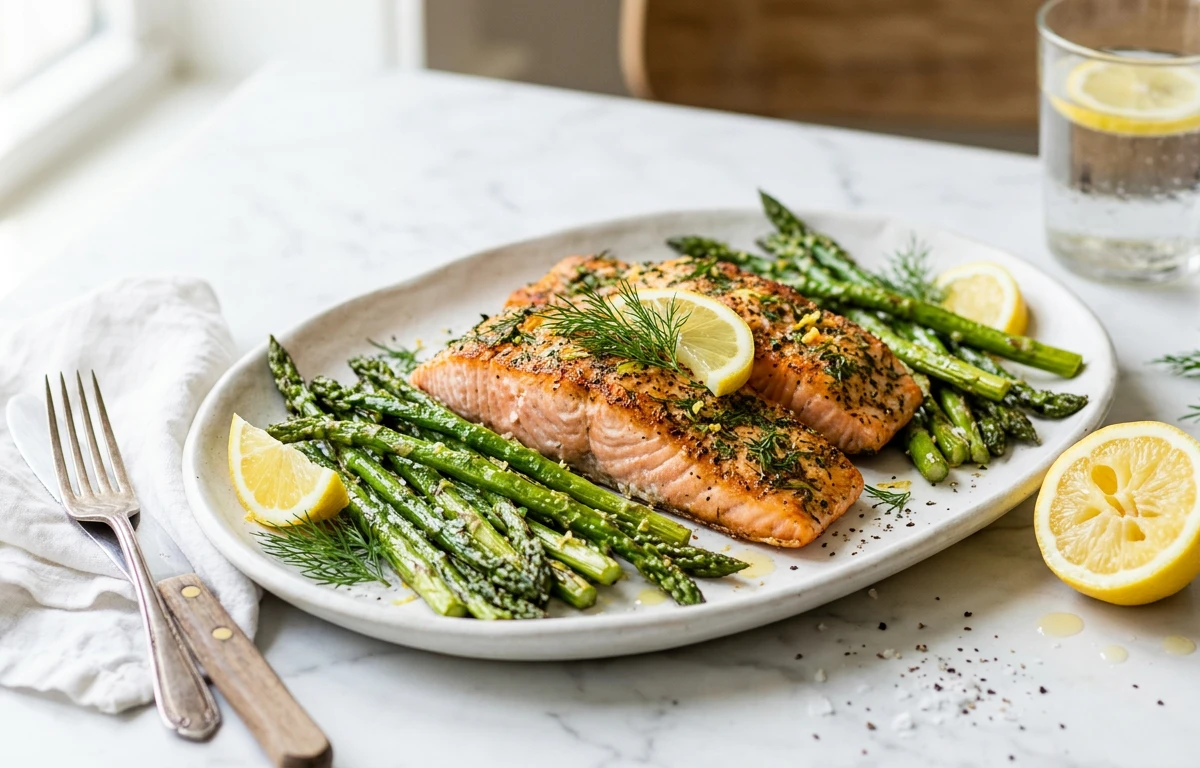
Lemon-Herb Salmon & Asparagus
Bright, herby salmon fillets baked alongside tender asparagus spears on a single sheet pan. The lemon-garlic-herb crust locks in moisture while the oven does all the work, giving you a restaurant-quality dinner with minimal cleanup. Ready in under 30 minutes.
For 4 servings
- prep
Preheat oven and prepare the sheet pan.
1.Position a rack in the middle of the oven and preheat to 400°F (200°C).2.Line a large rimmed sheet pan with parchment paper for easy cleanup. - mix
Make the lemon-herb mixture.
1.In a small bowl, combine 2 tbsp olive oil, minced garlic, lemon zest, 1 tbsp lemon juice, chopped dill, and chopped parsley.2.Season with half the salt and the black pepper, then stir to blend into a loose paste.TIPRoom-temperature salmon absorbs the herb mixture more evenly — let it sit out while the oven preheats. - prep
Season the salmon and asparagus.
1.Pat the salmon fillets dry with a paper towel and place them skin-side down on one side of the prepared sheet pan.2.Toss the asparagus spears with the remaining lemon-herb mixture and the rest of the salt directly on the other side of the pan.3.Spread everything into a single, even layer so nothing is crowded.TIPCrowding the pan steams the food instead of roasting it — leave a little space between each fillet and spear. - bake · ~15 min
Bake until salmon flakes easily.
1.Slide the sheet pan into the preheated oven and bake for 12–15 minutes.2.Check for doneness at 12 minutes: the salmon should flake easily with a fork and reach an internal temperature of 145°F (63°C).3.The asparagus should be bright green and tender-crisp.TIPIf the asparagus tips brown before the salmon is done, cover just the tips loosely with a small strip of foil. - garnish
Finish with fresh lemon and serve.
1.Remove the sheet pan from the oven and squeeze the remaining lemon juice over everything.2.Garnish with thin lemon slices and an extra scatter of fresh herbs if you have them.3.Serve immediately straight from the pan or transfer to plates.
What to keep in mind.
7 tips from the recipe — small details that make a real difference to the final dish.
- 1Pat the salmon fillets thoroughly dry before coating to help the herb paste adhere and promote browning.
- 2Arrange the asparagus in a single layer, not overlapping, so it roasts rather than steams.
- 3Use a fish spatula to flip the asparagus halfway through if you prefer more even charring.
- 4Check the salmon at the 12-minute mark by pressing gently with a fork — it should flake easily when done.
- 5For the crispiest skin, place the salmon skin-side down and do not move it during baking.
- 6Let the baked salmon rest on the pan for 2 minutes before serving so the juices redistribute.
- 7Store leftovers in an airtight container in the fridge for up to 2 days; reheat gently in a low oven.
Adapt it for your goals.
Low-oil
Replace the 2 tbsp olive oil with a spray of cooking oil or a tablespoon of water mixed with the herbs to reduce fat while keeping the seasoning.
high proteinHigh-protein
Swap the asparagus for broccoli florets or green beans for a different vegetable that also roasts well, and add a side of quinoa for extra protein.
jainJain
Omit the garlic and replace it with a pinch of asafoetida (hing) for a Jain-friendly version that still delivers savory depth.
veganVegan
Substitute the salmon with thick slices of firm tofu or portobello mushroom caps, and use the same lemon-herb marinade; adjust baking time to 20–25 minutes.
Why this is on our healthy list.
Rich in Omega-3s
Salmon provides heart-healthy omega-3 fatty acids that support brain function and reduce inflammation.
High in Vitamin K
Asparagus is an excellent source of vitamin K, which plays a key role in bone health and blood clotting.
Good Source of Vitamin C
Lemon juice and zest add vitamin C, aiding immune function and helping the body absorb iron from the meal.
Low in Saturated Fat
This dish relies on olive oil and the natural fats in salmon, keeping saturated fat content minimal.
Frequently asked questions
Yes, but thaw them completely in the refrigerator overnight and pat them very dry before seasoning to prevent excess moisture.