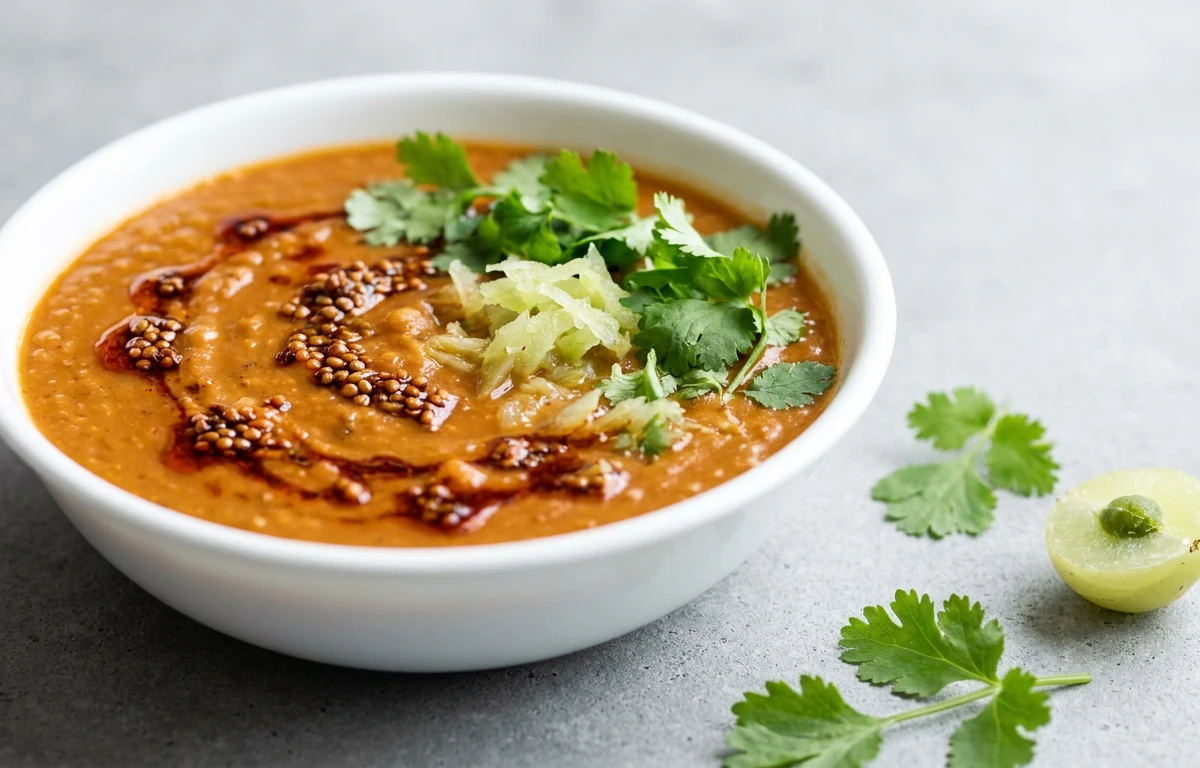
Lentil Dal with Grated Gooseberry
A comforting, everyday lentil dal given a tangy twist with grated fresh gooseberry. The amla melts into the tempered dal, adding a bright, lemony sharpness that cuts through the richness. A homestyle dish from South Indian kitchens that's both nourishing and deeply satisfying with steamed rice.
For 4 servings
- prep
Wash the dal and prep the gooseberry.
Wash the toor dal thoroughly under running water until water runs clear. Deseed the gooseberries and grate them coarsely. Set both aside.
- pressure cook · ~15 min
Pressure cook the dal with gooseberry.
1.Add washed dal, grated gooseberry, turmeric powder, and 2.5 cups water to the pressure cooker.2.Close the lid and cook on medium-high heat for 3 whistles.3.Lower heat and cook for another 5 minutes.4.Let the pressure release naturally, then open the lid.5.Add salt and mash the dal lightly with a ladle until smooth. - temper · ~3 min
Make the tempering.
1.Heat oil in a small pan over medium heat until shimmering.2.Add mustard seeds and let them splutter.3.Add cumin seeds and dried red chilies, sauté for 15 seconds.4.Add curry leaves and asafoetida, stir briefly until fragrant.5.Add crushed garlic and slit green chilies, fry until garlic turns light golden.TIPCrackle the mustard seeds fully before adding other spices — this releases their nutty flavor into the oil. - saute · ~7 min
Sauté the onions and tomato.
1.Add chopped onion to the tempering and sauté until translucent, about 3-4 minutes.2.Add chopped tomato and red chili powder.3.Cook until tomato softens and oil starts to separate at the edges, about 3 minutes. - simmer · ~4 min
Combine and simmer.
1.Pour the entire tempering mixture into the cooked dal.2.Stir well to combine and bring to a gentle simmer.3.Let it bubble for 3-4 minutes so the flavors meld together.4.Adjust consistency with a splash of hot water if the dal feels too thick.TIPGooseberry adds natural tanginess. If you prefer a slightly sweeter balance, add a tiny pinch of jaggery while simmering. - garnish
Garnish with fresh coriander and serve hot.
Transfer to a serving bowl, sprinkle with chopped coriander leaves, and serve immediately with steamed rice or roti.
What to keep in mind.
6 tips from the recipe — small details that make a real difference to the final dish.
- 1Grate the gooseberry coarsely, not finely, so it retains some texture after pressure cooking.
- 2Use fresh curry leaves for the tempering — dried ones lack the essential citrusy aroma.
- 3Let the pressure release naturally to allow the dal to soften fully without turning mushy.
- 4If the dal is too thick after mashing, adjust with hot water a little at a time to reach a soupy consistency.
- 5Cook the onions until just translucent, not browned, to keep the dal's homestyle, mild sweetness.
- 6For the best flavor, use cold-pressed coconut oil or ghee for the tempering.
Adapt it for your goals.
Vegan
Use coconut oil instead of ghee in the tempering to keep the dish fully plant-based while adding a subtle tropical note that complements the gooseberry's tang.
low oilLow-oil
Reduce tempering oil to 1 teaspoon and dry-roast the mustard seeds, cumin, and curry leaves before adding a splash of water — you'll still get the aromatic pop without the extra fat.
spicierSpicier
Add 1 teaspoon of Kashmiri red chili powder along with the regular chili powder for a vibrant red color and a deeper, fruity heat that balances the gooseberry's sourness.
protein boostProtein-boost
Stir in 1/2 cup of cooked moong dal (split green gram) after simmering for an extra protein kick and a slightly different texture.
Why this is on our healthy list.
Rich in Vitamin C
Indian gooseberry (amla) is a potent source of natural vitamin C, which supports immune function and iron absorption.
High in Plant Protein
Toor dal (pigeon pea lentils) provides a solid dose of plant-based protein, essential for muscle repair and satiety.
Digestive Support
Asafoetida and curry leaves in the tempering are traditionally used to aid digestion and reduce bloating.
Low in Unhealthy Fats
With only 2 teaspoons of oil or ghee for the entire dish, this dal is a low-fat, heart-friendly meal option.
Frequently asked questions
Yes, but rehydrate 2-3 dried amla in warm water for 15 minutes, then grate. The flavor will be milder, so you may need to add a squeeze of lemon at the end.