
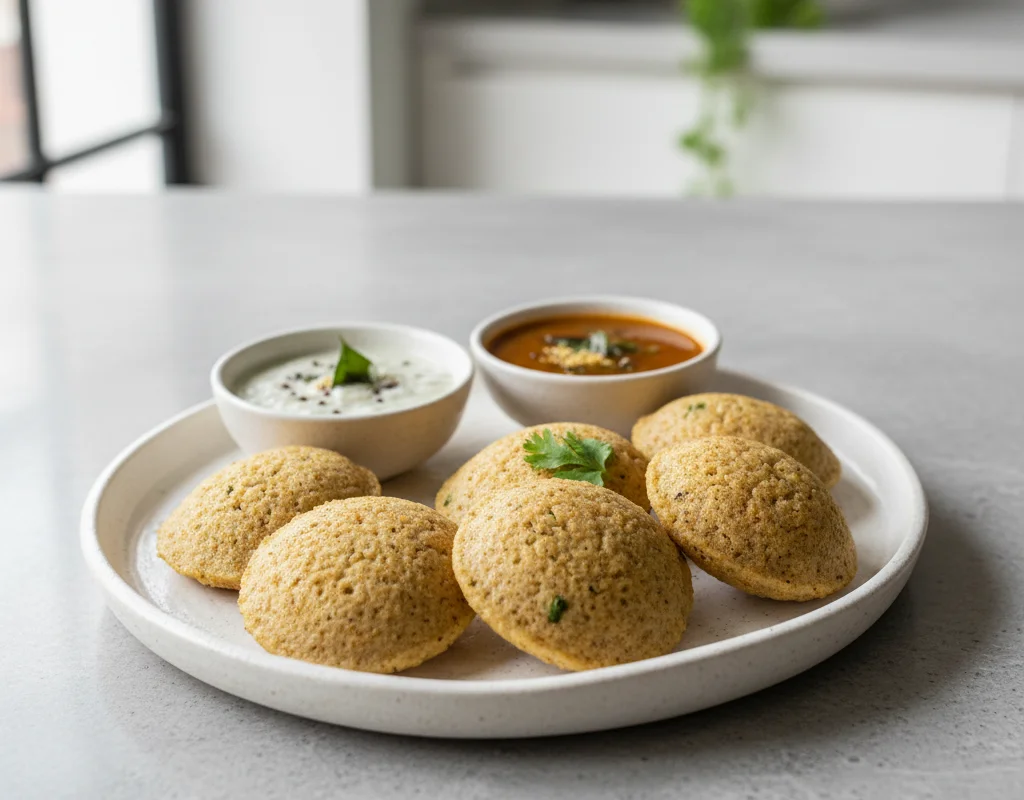
Little Millet Idli
Steamed savory cakes from fermented little millet and urad dal batter.
For 6 servings
Soak the millet and dal separately
- Rinse the little millet and urad dal thoroughly under cold water.
- Combine the urad dal with fenugreek seeds in one bowl.
- Cover both the millet and the dal mixture with ample water and soak for 4 to 6 hours.
Grind the batter and ferment overnight
- Drain the soaking water and grind the dal and millet into a smooth, thick paste.
- Mix both batters together in a large vessel and stir in the salt.
- Cover and leave in a warm spot to ferment for at least 8 hours until the volume doubles.
TIPUse a large container to prevent the batter from overflowing during fermentation.Steam the idlis until firm and fluffy
- Grease the idli moulds lightly with a drop of oil or cooking spray.
- Pour the fermented batter into each mould, filling them about three-quarters full.
- Steam in a preheated steamer for 12 to 15 minutes until a toothpick comes out clean.
TIPLet the idlis rest for 2 minutes after steaming for easier removal from the moulds.
What to keep in mind.
4 tips from the recipe — small details that make a real difference to the final dish.
- 1Use aged urad dal to ensure the idlis turn out soft and spongy.
- 2Avoid over-mixing the batter after fermentation to keep the air bubbles intact.
- 3If living in a cold climate, ferment the batter inside an oven with the light turned on.
- 4Ensure the water in the steamer is boiling before placing the idli stands inside.
Adapt it for your goals.
Diabetic friendly
Replace salt with a low-sodium substitute and add grated carrots for extra fiber.
spicierSpicier
Add finely chopped green chilies, ginger, and curry leaves directly into the batter before steaming.
kid friendlyKid friendly
Use mini-idli moulds and serve with a mild, sweet coconut milk dip.
Why this is on our healthy list.
Low Glycemic Index
Little millet releases glucose slowly, helping maintain stable blood sugar levels.
High Dietary Fiber
Promotes satiety and supports a healthy digestive system.
Probiotic Benefits
Natural fermentation enhances gut flora and improves nutrient absorption.
Frequently asked questions
Yes, it is a nutrient-dense, gluten-free alternative to traditional rice idlis, offering a lower glycemic index and higher mineral content.


