
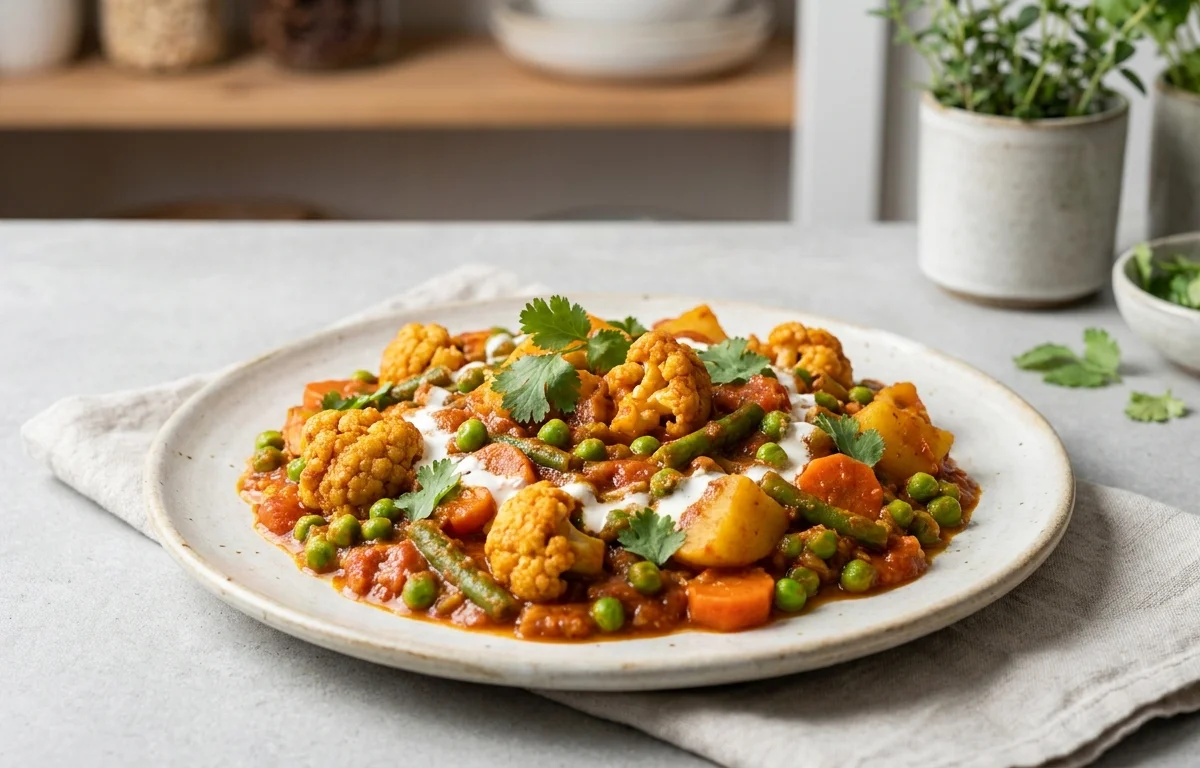
Mixed Vegetable Curry
A colorful medley of seasonal vegetables simmered in a lightly spiced onion-tomato gravy. This everyday North Indian-style curry is quick to make, naturally vegan, and pairs beautifully with roti or steamed rice for a comforting weeknight meal.
For 4 servings
- prep
Prep all the vegetables.
1.Peel and cube the potatoes and carrot into bite-sized pieces.2.Trim the green beans and cut into 1-inch lengths.3.Break the cauliflower into small florets.4.Finely chop the onions and tomatoes. Grate the ginger and mince the garlic. - boil · ~6 min
Parboil the vegetables.
Bring a pot of water to a boil. Add the cubed potatoes, carrot, green beans, cauliflower, and green peas. Boil for 5-6 minutes until just tender but still firm. Drain and set aside.
- temper · ~1 min
Make the tempering.
1.Heat oil in a kadhai or deep pan over medium heat.2.Add cumin seeds and let them sizzle and turn fragrant (30 seconds).TIPDon't let the cumin seeds burn — they turn bitter fast. - saute · ~12 min
Build the onion-tomato base.
1.Add chopped onions and sauté until translucent (4-5 minutes).2.Stir in grated ginger, minced garlic, and slit green chilies. Cook until the raw aroma disappears (1-2 minutes).3.Add chopped tomatoes, turmeric powder, red chili powder, coriander powder, and cumin powder.4.Cook, stirring frequently, until tomatoes soften completely and oil starts to separate at the edges (5-7 minutes).TIPMash the tomatoes with the back of your spoon as they cook — this gives the gravy body. - simmer · ~12 min
Simmer the vegetables in the gravy.
1.Add the parboiled vegetables and salt to the pan. Stir gently to coat everything with the masala.2.Pour in 1.5 cups of water and bring to a gentle boil.3.Lower the heat, cover, and simmer for 10-12 minutes until the vegetables are fully tender and the gravy thickens slightly.TIPStir once or twice while simmering to prevent sticking. If the gravy gets too thick, add a splash of water. - mix · ~2 min
Finish with garam masala.
Turn off the heat. Sprinkle garam masala over the curry and stir gently. Let it rest covered for 2 minutes so the aroma infuses.
- garnish
Garnish with fresh coriander leaves and serve hot.
Transfer to a serving bowl, scatter chopped coriander leaves on top, and serve with roti or steamed rice.
What to keep in mind.
6 tips from the recipe — small details that make a real difference to the final dish.
- 1Parboil the vegetables until just tender—overcooking at this stage makes them mushy in the final curry.
- 2Cook the onion-tomato base until the oil visibly separates at the edges; this deepens the flavor and prevents a raw taste.
- 3Mash the tomatoes with the back of a spoon while cooking to create a thick, cohesive gravy without adding extra fat.
- 4Add the garam masala only after turning off the heat—its volatile aromas dissipate with prolonged cooking.
- 5Let the finished curry rest covered for 2 minutes before serving to let the spices meld fully.
- 6For a thicker gravy, simmer uncovered for the last 3–4 minutes; add water by the tablespoon if it becomes too thick.
Adapt it for your goals.
Low-oil
Replace the oil with a tablespoon of water for the tempering, and use a non-stick pan. The cumin seeds will toast in dry heat; add water splash by splash to prevent sticking. Perfect for those reducing fat without losing the aromatic base.
high proteinHigh-protein
Add 1 cup of boiled chickpeas or paneer cubes along with the parboiled vegetables. This boosts satiety and turns the curry into a complete one-pot meal for active lifestyles.
jain (no onion/no garlic)Jain (no onion/no garlic)
Skip the onion and garlic; use asafoetida (hing) – a pinch sizzled with the cumin seeds – to mimic the savory depth. The tomatoes and spices still provide a robust North Indian flavor.
coconut basedCoconut-based
Replace half the water with thin coconut milk and add a teaspoon of curry leaves while tempering. This lends a South Indian twist, making the gravy richer and slightly sweet, ideal with rice.
roasted vegetableRoasted vegetable
Toss the cubed potatoes, carrot, and cauliflower with a pinch of salt and oil, then roast at 200°C (400°F) for 15 minutes before adding to the gravy. This adds a caramelized, smoky depth that transforms the dish.
Why this is on our healthy list.
Rich in Dietary Fiber
The mix of potatoes, carrots, beans, peas, and cauliflower provides both soluble and insoluble fiber, supporting healthy digestion and promoting a feeling of fullness.
Packed with Antioxidants
Cauliflower, carrots, and tomatoes contribute vitamin C, beta-carotene, and lycopene, which help combat oxidative stress. Turmeric adds curcumin, a potent anti-inflammatory compound.
Low in Saturated Fat
With only 2 teaspoons of oil and no dairy, this curry is naturally very low in saturated fat, making it heart-friendly while still being satisfying.
Naturally Vegan and Gluten-Free
Every ingredient is plant-based and free from gluten, so this dish fits seamlessly into vegan and gluten-free diets without any substitutions.
Frequently asked questions
Yes, but the vegetables will release more water and take longer to soften, often resulting in a thinner gravy and unevenly cooked pieces. Parboiling gives you better control over texture.


