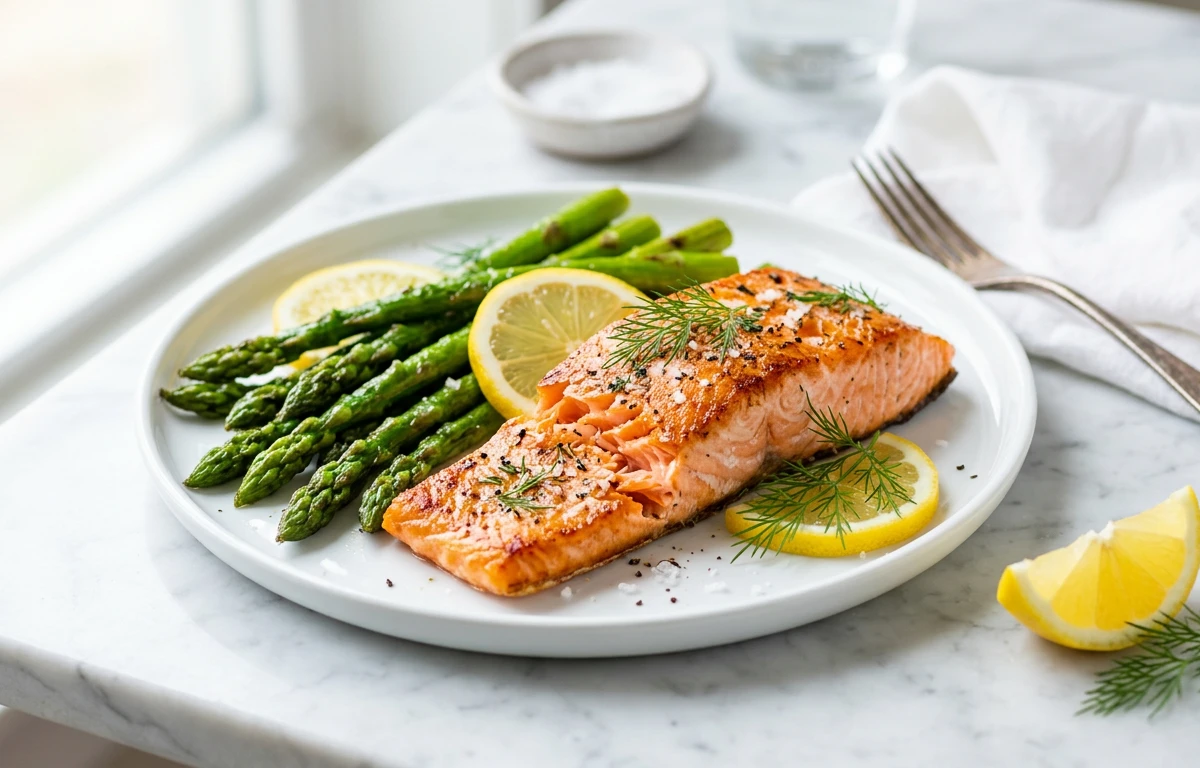
Low-Carb: Lemon-Dill Salmon & Asparagus
Flaky, oven-baked salmon fillets infused with bright lemon and fresh dill, paired with tender roasted asparagus. This quick, one-pan dinner is naturally low-carb, packed with healthy fats and protein, and ready in under 30 minutes.
For 4 servings
- prep
Preheat oven and prep the baking sheet.
Preheat the oven to 400°F (200°C). Line a large baking sheet with parchment paper for easy cleanup.
- mix
Make the lemon-dill sauce.
1.In a small bowl, whisk together olive oil, lemon juice, lemon zest, minced garlic, and chopped dill.2.Season with half the salt and the black pepper. Stir to combine.TIPReserve a tablespoon of the sauce for drizzling after baking. - prep
Season the salmon and asparagus.
1.Pat the salmon fillets dry with a paper towel and place them skin-side down on one side of the baking sheet.2.Arrange the trimmed asparagus on the other side of the sheet.3.Drizzle the sauce evenly over the salmon fillets and asparagus.4.Sprinkle everything with the remaining salt.TIPPatting the salmon dry helps the oil mixture adhere and promotes better browning. - bake · ~15 min
Bake the salmon and asparagus.
Place the baking sheet in the preheated oven. Bake for 12 to 15 minutes, until the salmon is opaque and flakes easily with a fork. The asparagus should be tender but still vibrant green.
TIPSalmon internal temperature should reach 145°F (63°C) for perfect doneness. Avoid overcooking. - serve
Plate and serve immediately.
Remove the sheet from the oven. Divide the salmon fillets and asparagus among four plates. Drizzle the reserved lemon-dill sauce over the salmon. Serve with extra lemon wedges if desired.
What to keep in mind.
6 tips from the recipe — small details that make a real difference to the final dish.
- 1For the flakiest salmon, bring fillets to room temperature for 10 minutes before baking.
- 2Use thick, even asparagus spears so they cook at the same rate as the salmon.
- 3Reserve a spoonful of the lemon-dill sauce to drizzle after baking—it brightens the finished dish.
- 4Check doneness at 12 minutes; salmon should flake easily and reach 145°F internally.
- 5Save the salmon skin—it crisps up beautifully if you sear it in a hot pan after baking.
- 6Make ahead: Prep the sauce and trim asparagus up to a day in advance; store separately in the fridge.
Adapt it for your goals.
Low-oil
Reduce olive oil to 1 tbsp and replace the remaining tablespoon with lemon juice or vegetable broth. This cuts calories while keeping the dish moist and tangy.
dairy herb crustDairy-herb crust
Top each salmon fillet with 1 tbsp of grated Parmesan mixed with panko before baking. Adds a golden, crunchy crust and savory depth.
spicySpicy
Add 1/2 tsp red pepper flakes or a thinly sliced Fresno chili to the lemon-dill sauce. Ideal for those who want a gentle heat with the bright citrus.
jainJain
Omit garlic and use asafoetida (hing) instead—same savory allium effect without using roots. Replace dill with fresh cilantro for a Jain-friendly flavor profile.
Why this is on our healthy list.
Rich in Omega-3s
Salmon provides EPA and DHA omega-3 fatty acids, which support heart and brain health.
High-Quality Protein
Each serving delivers about 30g of complete protein from salmon, aiding muscle repair and satiety.
Low in Carbohydrates
With only asparagus as the vegetable, this dish fits keto, low-carb, and diabetic-friendly diets naturally.
Good Source of Folate
Asparagus is packed with folate, a B vitamin essential for cell growth and DNA production.
Vitamin C Boost
Fresh lemon zest and juice add vitamin C, which helps iron absorption from the asparagus and supports immunity.
Frequently asked questions
Yes, but thaw it completely in the fridge overnight and pat it very dry before baking to avoid excess moisture.