
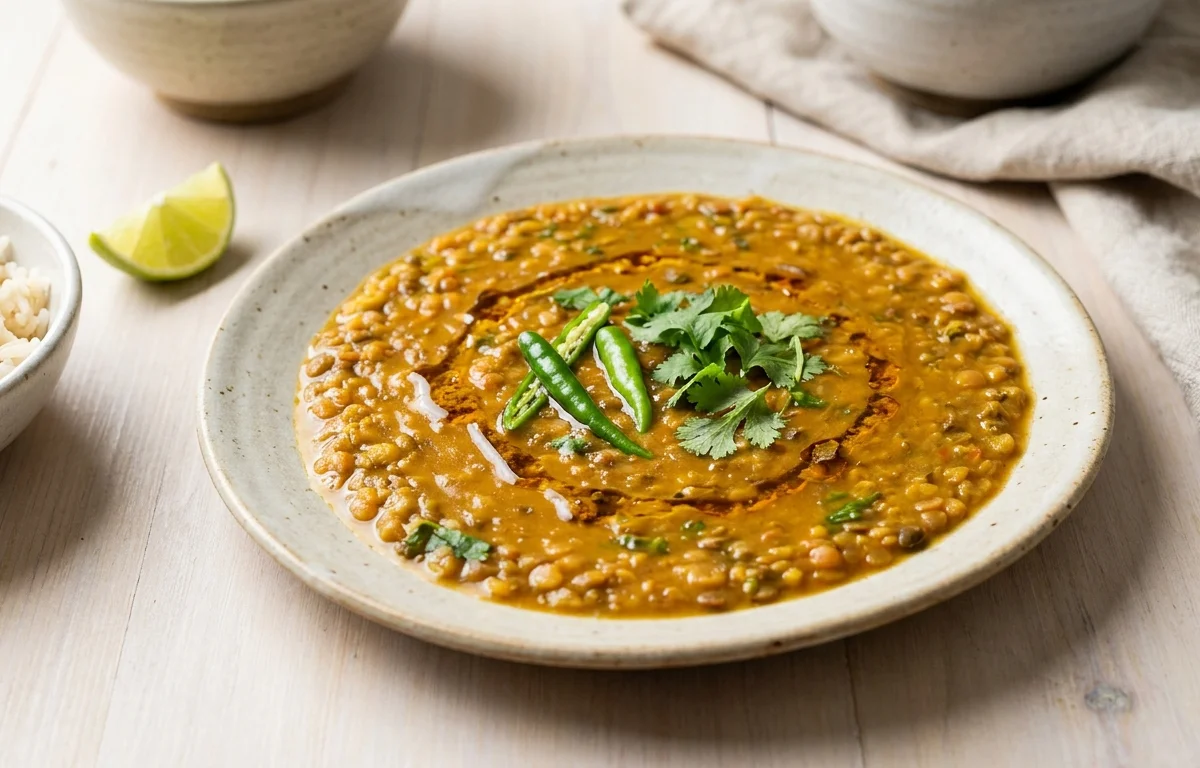
Masoor Dal Sheddho
A simple, soul-warming Bengali preparation of red lentils boiled with raw mustard oil, green chilies, and a pinch of salt. This no-tempering, no-spice dal is rustic, wholesome, and deeply comforting — the way it is cooked in countless Bengali homes, served with rice and a wedge of lime.
For 4 servings
- prep
Rinse the dal.
Wash the masoor dal in 2-3 changes of water until the water runs almost clear. Drain well.
- boil · ~25 min
Boil the dal with water, mustard oil, and green chilies.
In a deep saucepan, combine the rinsed dal, water, raw mustard oil, slit green chilies, and salt. Bring to a boil over medium-high heat, then reduce the heat to low. Cover and simmer until the dal is soft and mushy, about 20-25 minutes. The dal should break down completely and turn a uniform pale orange-yellow. Stir occasionally to prevent sticking.
TIPRaw mustard oil is essential for the authentic pungent kick. Do not heat or smoke it beforehand. - mix
Adjust consistency and serve.
Once the dal is cooked, use a whisk or ladle to mash it lightly against the sides of the pot for a smoother texture. If it is too thick, add a splash of warm water to reach a thin, soup-like consistency. Check salt and adjust. Serve hot in individual katoris with a lime wedge on the side.
TIPThis dal thickens as it cools. It should be quite thin when hot so it soaks beautifully into rice. - garnish
Finish with a squeeze of lime.
Squeeze the lime wedge over the dal just before eating. The raw mustard oil and lime together create the signature rustic Bengali flavor.
What to keep in mind.
7 tips from the recipe — small details that make a real difference to the final dish.
- 1Use raw, cold-pressed mustard oil straight from the bottle for its characteristic pungent aroma. Heating it mutes the flavor entirely.
- 2Slit the green chilies lengthwise instead of chopping them – this allows flavor to infuse into the dal without making it painfully spicy.
- 3Cook the dal until it breaks down into a mushy, almost porridge-like texture. The perfect doneness cue: it should turn a uniform pale orange-yellow.
- 4This dal thickens as it sits, so keep it a bit soupier than you want the final texture to be. Stir in a splash of hot water if it gets too thick.
- 5For the smoothest consistency, whisk the cooked dal vigorously with a hand whisk or mash it against the sides of the pot with a ladle.
- 6Serve this dal immediately after cooking, while it is piping hot. A cold or reheated Sheddho loses its rustic charm.
- 7This dal keeps well in the fridge for up to 2 days. The flavors deepen as it rests; reheat gently with a splash of water.
Adapt it for your goals.
High-protein
Stir in a spoonful of ghee or a splash of cream after cooking for extra richness. You can also add a handful of steamed spinach or chopped coriander for color and nutrients.
low oilLow-oil
Reduce the mustard oil to 1 teaspoon and finish with a few drops of lemon juice just before serving. This still gives a hint of pungency while cutting the fat.
jainJain
Omit the green chilies (or use a tiny piece of ginger instead) and skip the lime if you avoid sour foods. The dal remains simple and comforting.
veganVegan
This recipe is already vegan. Ensure the lime wedge is organic or unwaxed, and serve with steamed rice or flatbread.
Why this is on our healthy list.
Rich in Plant Protein
Red lentils are an excellent source of plant-based protein, supporting muscle repair and keeping you full for longer.
High in Dietary Fiber
Lentils are packed with soluble fiber, which aids digestion, helps regulate blood sugar levels, and promotes heart health.
Good Source of Iron
This dal provides a solid dose of iron, essential for red blood cell formation and preventing fatigue. The lime squeeze helps your body absorb it better.
Low in Fat
With only a small amount of raw mustard oil, this dish is naturally low in fat while still delivering satisfying richness.
Frequently asked questions
Masoor dal (split red lentils) is ideal because it breaks down quickly into a creamy texture. Yellow lentils (moong dal) will also work, but they take a bit longer to soften.



-curry.webp)
.webp)