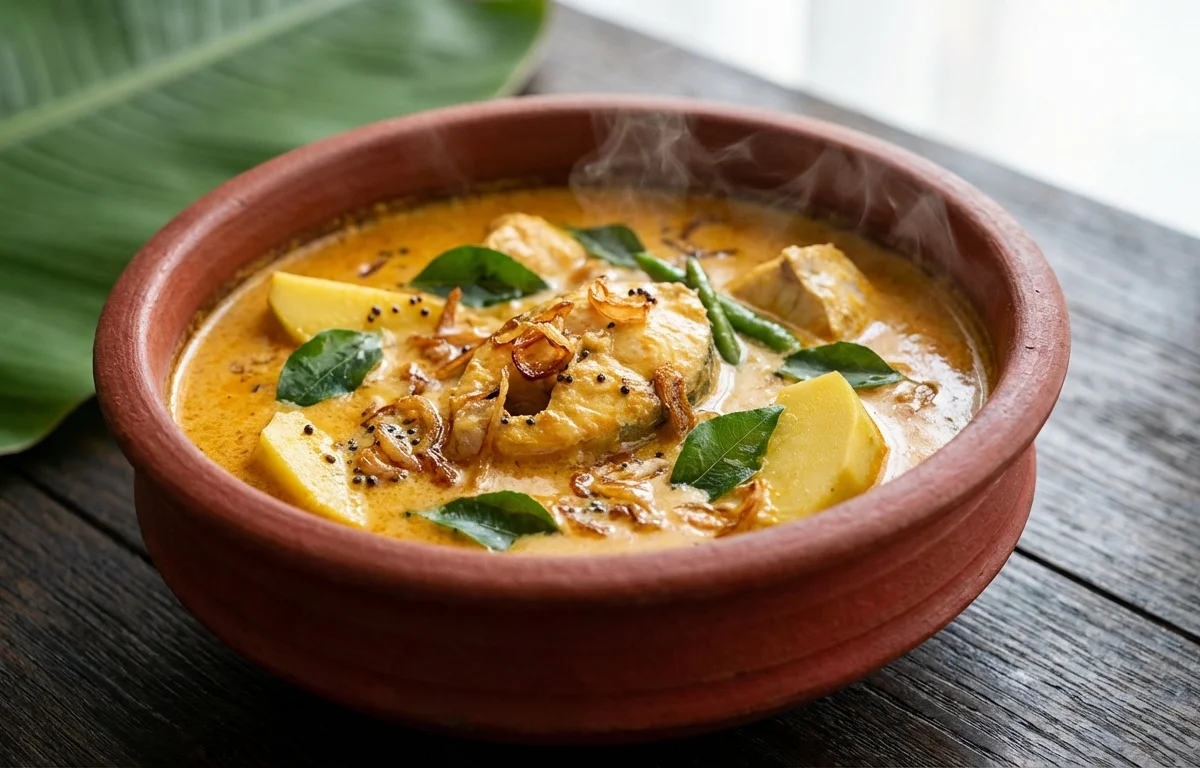
Meen Alleppey Curry
A tangy, aromatic fish curry from the backwaters of Kerala, simmered in coconut milk with raw mango and fresh spices. The ginger-garlic paste and green chilies infuse the gravy with a gentle heat, while the raw mango lends a unique sourness that perfectly balances the richness of the coconut.
For 4 servings
- prep · ~5 min
Prepare the fresh coconut milk.
Combine the freshly grated coconut with 1 cup warm water and blend to a fine paste. Strain through a muslin cloth or fine mesh sieve, pressing firmly to extract thick milk. Set aside. Reserve the pulp for a second lighter extraction if desired.
- prep · ~10 min
Marinate the fish steaks.
Rub the fish slices with a pinch of turmeric powder, red chili powder, and salt. Let them rest for 10 minutes at room temperature.
TIPKingfish holds its shape well in the gravy; avoid over-handling delicate fish like pomfret. - temper · ~2 min
Make the tempering.
1.Heat coconut oil in the earthenware pot (manchatti) over medium heat until shimmering.2.Add mustard seeds and let them splutter fully (30 sec).3.Add fenugreek seeds and stir once; they will turn golden in seconds (10 sec).4.Toss in curry leaves and let them crisp up briefly.TIPFenugreek seeds burn quickly and turn bitter — keep the heat moderate. - saute · ~7 min
Build the aromatic base.
1.Add sliced onions and sauté until they turn soft and translucent (4-5 min).2.Add julienned ginger, sliced garlic, and slit green chilies. Sauté until the raw smell disappears (2 min).3.Stir in the remaining turmeric powder and red chili powder and cook for 30 seconds.TIPDo not brown the onions heavily; the curry base should be light and aromatic. - simmer · ~15 min
Simmer the mango and fish in coconut milk.
1.Add the sliced raw mango wedges and half a cup of water. Mix well and bring to a gentle simmer (3 min).2.Pour in the extracted thick coconut milk and bring the gravy to a very gentle boil.3.Slide in the marinated fish steaks carefully, spoon some gravy over them, and simmer on low heat for 8-10 minutes until the fish is just cooked through.TIPNever boil vigorously after adding coconut milk — it will split. A gentle bubble is all you need. - garnish · ~1 min
Finish and serve the curry.
Give the pot a gentle swirl to mix the gravy without breaking the fish. Taste and adjust salt. Serve hot directly from the manchatti.
- rest · ~5 min
Let the curry rest for 5 minutes off the heat.
This cooling period allows the flavors to meld and the gravy to thicken slightly.
What to keep in mind.
7 tips from the recipe — small details that make a real difference to the final dish.
- 1Use an earthenware pot (manchatti) for an authentic earthy flavor and even heat distribution.
- 2Extract the first (thick) milk only; reserve the second extract for a lighter curry if needed.
- 3Pat fish dry before marinating to ensure the spice rub sticks and sears properly.
- 4Simmer the mango wedges before adding fish to soften them and release their sourness.
- 5Don't stir the curry with a spoon once the fish is added—swirl the pot gently to avoid breaking the fillets.
- 6Let the curry rest off heat for 5 minutes; the gravy thickens and the flavors deepen.
- 7If using pomfret, reduce simmering time to 5–6 minutes as it cooks faster than kingfish.
Adapt it for your goals.
Low-oil
Reduce coconut oil to 1 tablespoon and sauté onions in a non-stick pan to cut fat while retaining the tempering flavor.
high proteinHigh-protein
Replace half the coconut milk with unsweetened almond milk or skimmed yogurt (stirred off heat) to boost protein and reduce calories.
jainJain
Omit garlic and onion; use asafoetida (hing) in the tempering and add extra ginger and green chili for a Jain-friendly version.
veganVegan
Swap fish for firm tofu or jackfruit chunks; marinate and simmer the same way for a plant-based curry.
quick weeknightQuick-weeknight
Use canned thick coconut milk and skip the first extraction step; reduce water to 1/4 cup for a faster version.
Why this is on our healthy list.
Rich in Omega-3 Fatty Acids
Kingfish provides heart-healthy omega-3s that support cardiovascular health and reduce inflammation.
Digestive Aid from Raw Mango
The raw mango contributes natural acids and fiber, aiding digestion and complementing the richness of coconut.
Low in Added Sugar
This savory curry contains no added sugar, relying on the natural tartness of mango and spices for flavor.
Source of Anti-Inflammatory Spices
Turmeric and ginger provide curcumin and gingerol, known for their anti-inflammatory and antioxidant properties.
Coconut Oil for Metabolism
Coconut oil contains medium-chain triglycerides (MCTs) which may support metabolic health.
Frequently asked questions
Yes, but thaw it completely in the fridge, pat dry thoroughly, and reduce simmering time by 2-3 minutes to prevent overcooking.