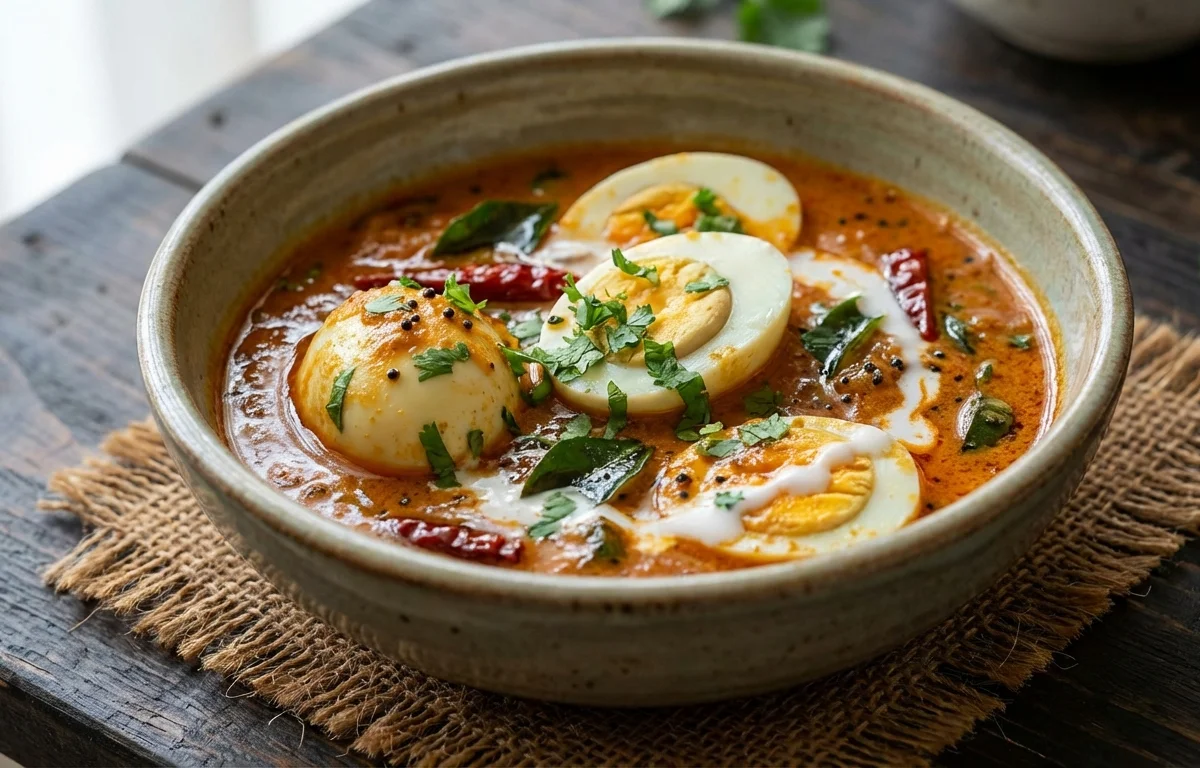
Kerala Egg Curry with Coconut Milk
Hard-boiled eggs simmered in a velvety, golden-hued coconut milk gravy. Fragrant with curry leaves, ginger, and a whisper of green chili, this coastal Kerala curry is gently spiced, mildly sweet, and incredibly comforting. Scoop it up with appam or steamed rice for a weeknight dinner that comes together in under 45 minutes.
For 4 servings
- prep · ~10 min
Boil, cool and peel the eggs.
Place eggs in a saucepan, cover with cold water and bring to a rolling boil. Reduce heat and simmer for 8 minutes. Transfer immediately to an ice bath, let cool completely, then peel and set aside.
TIPOlder eggs peel more easily than fresh ones. - saute · ~8 min
Sauté the aromatics in coconut oil.
1.Heat coconut oil in a kadai or deep pan over medium heat.2.Add sliced onions and a pinch of salt. Cook until soft and translucent (4-5 min).3.Add ginger, garlic, green chili, and curry leaves. Sauté until the raw smell fades and onions turn light golden (3-4 min). - saute · ~5 min
Cook the tomatoes with the spice powders.
1.Add the chopped tomato and cook until it softens and the oil begins to separate at the edges (3-4 min).2.Sprinkle in turmeric powder, red chili powder, and coriander powder. Stir continuously for 1 minute to bloom the spices without burning.TIPIf the spices stick, add a splash of water. Keep the heat low so the spices don't get bitter. - simmer · ~7 min
Build the coconut milk gravy.
1.Pour in the thick coconut milk and the warm water. Stir well and bring to a gentle simmer.2.Season with salt and black pepper powder. Let the gravy bubble softly and thicken slightly (5-7 min), stirring occasionally. - simmer · ~5 min
Score the eggs and simmer in the gravy.
1.Make 3-4 shallow slits on each hard-boiled egg with a paring knife — this helps the eggs soak up the gravy.2.Gently slide the eggs into the simmering gravy. Spoon some gravy over the tops. Simmer for 5 minutes so the flavors meld together.TIPDon't skip the slits — they make all the difference between a plain boiled egg and one that's packed with Kerala flavor. - garnish · ~2 min
Finish with garam masala and a final tempering of curry leaves.
Sprinkle the pinch of garam masala over the curry. For an optional finishing touch, heat a tiny splash of coconut oil in a small pan, crackle 5-6 extra curry leaves, and pour it over the curry. Let it rest, covered, for 2 minutes off the heat.
TIPThat final sizzle of curry leaves in coconut oil releases incredible aroma — it's a classic Kerala finish. - serve
Serve hot with appam, puttu, or steamed rice.
What to keep in mind.
7 tips from the recipe — small details that make a real difference to the final dish.
- 1Use thick first-extract coconut milk for a rich, velvety gravy that doesn't curdle.
- 2Score the boiled eggs with shallow slits so they absorb the spiced coconut gravy from within.
- 3Bloom the spice powders on low heat with a splash of water to avoid bitterness and raw taste.
- 4Let the finished curry rest off the heat for 2 minutes after the tempering to marry flavors.
- 5Add the coconut milk only after the tomatoes are fully cooked to prevent separation.
- 6For a deeper aroma, crackle fresh curry leaves in hot coconut oil as a final garnish.
- 7Make the gravy a day ahead; reheat gently and add freshly scored eggs before serving.
Adapt it for your goals.
Low-oil
Reduce coconut oil to 1 tbsp and sauté onions in a non-stick pan with a splash of water. This cuts calories while keeping the authentic flavor profile intact.
high proteinHigh-protein
Add 200g of cubed paneer or firm tofu along with the eggs for extra protein. Simmer together so both absorb the coconut gravy.
veganVegan
Replace hard-boiled eggs with 200g of cubed extra-firm tofu or chickpeas. The coconut gravy works beautifully as a vegan base.
extra spicyExtra-spicy
Increase green chilies to 4 and add 1/2 tsp of crushed red pepper flakes along with the spice powders for a fiery kick that Kerala cuisine is also known for.
Why this is on our healthy list.
Rich in Healthy Fats
Coconut milk provides medium-chain triglycerides (MCTs) that support energy and metabolism, while coconut oil adds additional healthy saturated fats.
Good Source of Protein
Eggs deliver high-quality complete protein with all essential amino acids, making this curry a satisfying meal choice.
Anti-Inflammatory Spices
Turmeric, ginger, and curry leaves contain natural anti-inflammatory compounds that may support overall wellness.
Low in Carbs
This egg curry is naturally low in carbohydrates, making it suitable for low-carb or keto-friendly meals when served without rice.
Frequently asked questions
You can, but the gravy will be thinner and less creamy. To compensate, reduce the water by half and simmer a little longer to thicken it.