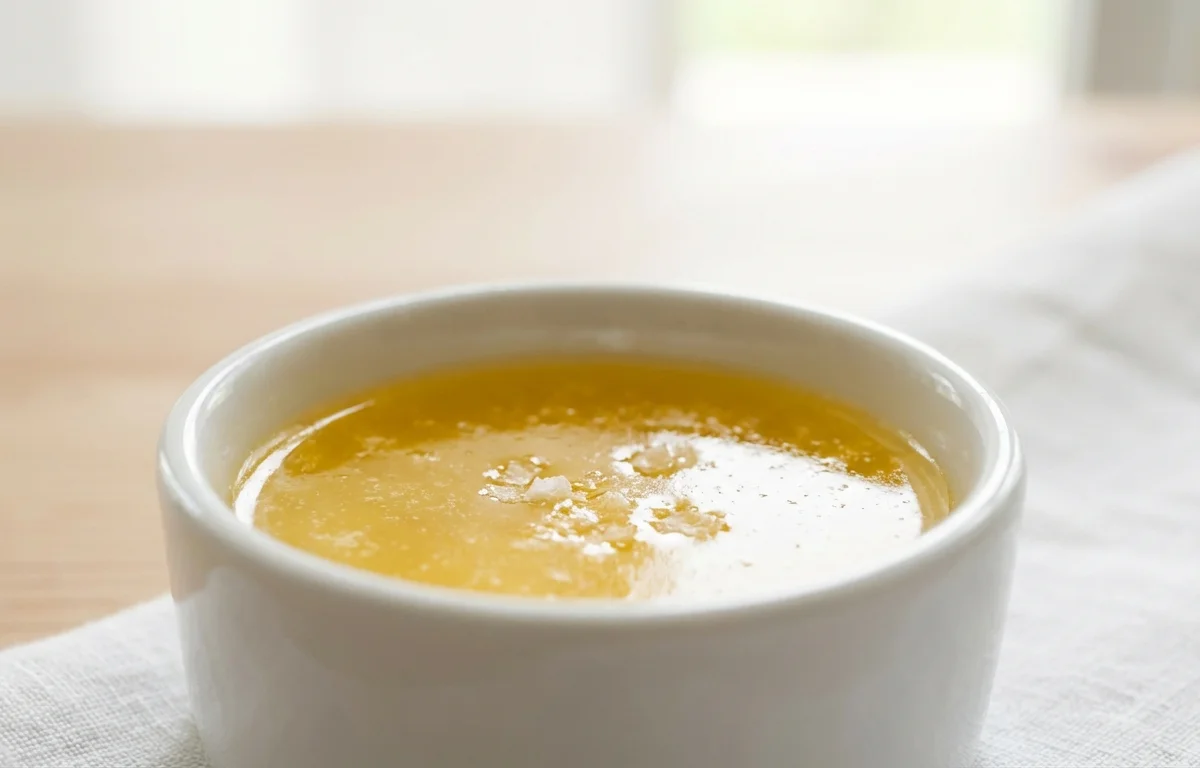
Melted Butter
Silky, golden melted butter ready in minutes. A simple kitchen staple that transforms everything it touches — drizzle over popcorn, steamed vegetables, grilled seafood, or toast. Rich, warm, and utterly comforting.
For 4 servings
- prep · ~1 min
Cut the butter into even pieces.
Cut 4 tablespoons of unsalted butter into roughly equal chunks so they melt at the same rate. Even pieces prevent scorching.
TIPCold butter cut uniformly melts more gently, with less risk of splitting. - boil · ~2 min
Melt the butter low and slow.
1.Place butter pieces in a small saucepan over low heat.2.Stir gently with a heatproof spatula as butter begins to soften.3.Remove the pan from heat the moment the butter is fully liquid and golden — do not let it sizzle or brown.TIPLow heat is key. High heat forces the water out too fast, causing splatter and risking burnt milk solids. - mix
Season and serve immediately.
Stir in a tiny pinch of salt, pour into a small warm serving dish, and bring to the table while still liquid and glossy.
What to keep in mind.
6 tips from the recipe — small details that make a real difference to the final dish.
- 1Cut butter into equal chunks so they melt uniformly and prevent scorching.
- 2Use low heat only; high heat causes splatter and burns milk solids.
- 3Remove from heat the moment butter is fully liquid — do not let it brown.
- 4Stir gently with a heatproof spatula as it softens for even melting.
- 5Serve in a warmed dish to keep the butter liquid longer at the table.
- 6Leftover melted butter can be refrigerated and gently re-melted for later use.
Adapt it for your goals.
Herb-Infused Butter
Add fresh herbs like thyme, rosemary, or chives during the last seconds of melting for a fragrant butter perfect over steak or vegetables.
Garlic ButterGarlic Butter
Stir in a small minced garlic clove after melting for a savory butter ideal for bread, seafood, or pasta.
Lemon ButterLemon Butter
Add a squeeze of fresh lemon juice and a pinch of zest after melting for a bright, tangy butter that complements fish and greens.
Brown ButterBrown Butter
Continue heating past melting until the milk solids turn golden-brown and nutty for a deeply flavored drizzle on pancakes, pasta, or roasted vegetables.
Vegan ButterVegan Butter
Use a high-quality plant-based butter stick (not margarine) for a dairy-free version that melts and seasons just as well.
Why this is on our healthy list.
Source of Healthy Fats
Butter provides fat-soluble vitamins A, D, E, and K2 from grass-fed sources, supporting nutrient absorption.
Contains Butyrate
Butter is a natural source of butyrate, a short-chain fatty acid that supports gut health and digestion.
No Artificial Additives
This simple recipe uses only butter and salt, avoiding the preservatives and emulsifiers found in many processed spreads.
Frequently asked questions
Yes, but reduce or omit the added salt, as salted butter already contains salt that can make the final product too salty.