
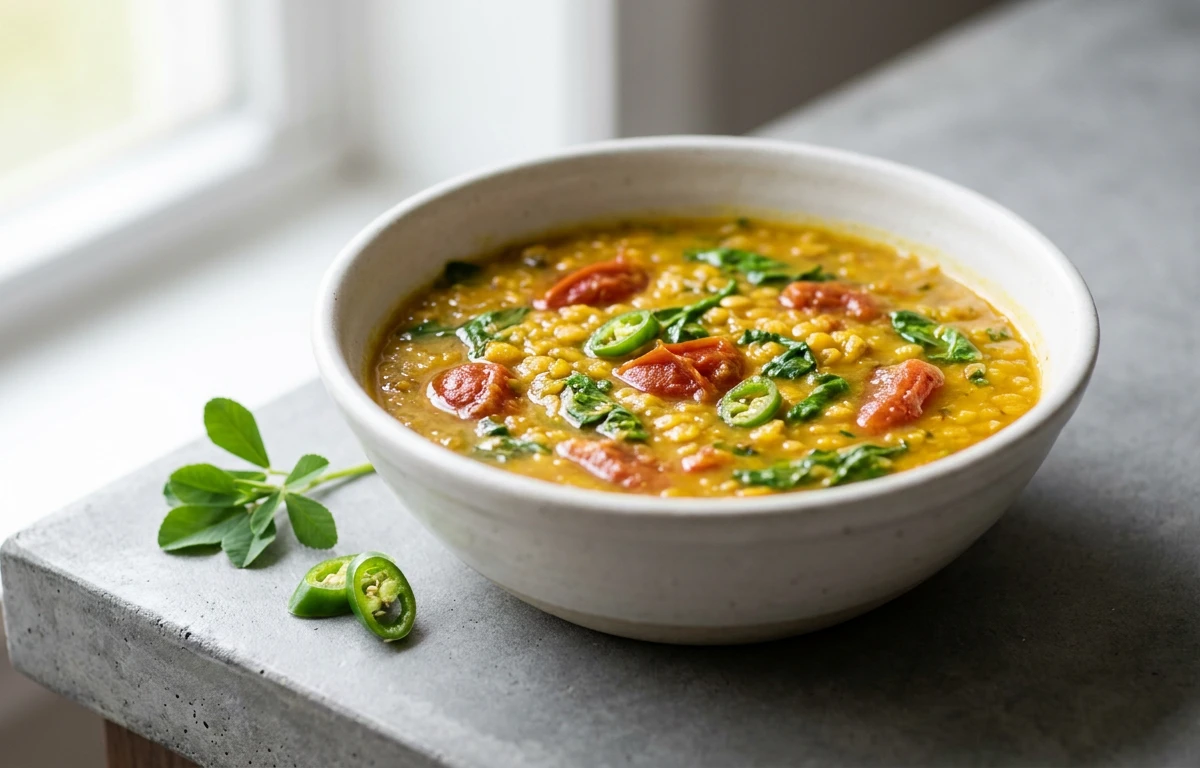
Methi Dal
A comforting, homestyle dal infused with the gentle bitterness of fresh fenugreek leaves. This everyday North Indian staple balances earthy lentils with a fragrant garlic and cumin tempering, making it perfect to ladle over steamed rice.
For 4 servings
- prep · ~30 min
Soak and prepare the lentils.
1.Rinse toor dal and masoor dal together under cold water until water runs clear.2.Soak the rinsed dals in fresh water for 30 minutes, then drain.TIPSoaking helps the dal cook faster and digest easier. - pressure cook · ~15 min
Pressure cook the dal with fenugreek.
1.Add the drained dal, chopped fenugreek leaves, turmeric powder, and 2.5 cups of water to a pressure cooker.2.Close the lid and pressure cook on medium heat for 3 to 4 whistles.3.Allow the pressure to release naturally, then open the lid and mash the dal lightly with a ladle.4.Stir in the salt and let it simmer on low heat while you prepare the tempering.TIPIf the dal is too thick, add half a cup of warm water to loosen it. - temper · ~2 min
Make the garlic-cumin tempering.
1.Heat ghee in a small frying pan over medium heat until melted and shimmering.2.Add cumin seeds and let them sizzle and turn golden (about 30 seconds).3.Add chopped garlic and sauté until fragrant and lightly browned (1 minute).4.Add broken dried red chilies and asafoetida; stir for 15 seconds until aromatic.TIPDon't let the garlic burn — it turns bitter. Keep the heat medium. - mix · ~2 min
Pour the tempering over the dal.
1.Carefully pour the hot tempering over the simmering dal.2.Add the red chili powder and stir everything together.3.Let it bubble on low heat for 2 minutes so the flavors meld. - serve
Serve the methi dal hot.
Ladle into serving bowls and serve immediately with steamed rice, roti, or paratha.
TIPA squeeze of fresh lemon juice just before eating brightens the whole dish.
What to keep in mind.
5 tips from the recipe — small details that make a real difference to the final dish.
- 1Soak the dals for at least 30 minutes to reduce cooking time and improve digestibility.
- 2Wash fenugreek leaves thoroughly to remove any grit; chop them finely for even distribution.
- 3Let the pressure release naturally so the dal stays creamy and doesn't splatter.
- 4If the dal is too thick after cooking, stir in warm water a little at a time until you reach the desired consistency.
- 5Temper the ghee on medium heat: when cumin seeds pop and garlic turns light gold, it's ready — burnt garlic will ruin the flavor.
Adapt it for your goals.
Vegan
Replace ghee with any neutral oil or coconut oil — the tempering will still be aromatic, and the dal remains creamy and satisfying without dairy.
low oilLow-oil
Use just 1 tsp oil for the tadka and skip the ghee entirely; the dal's natural creaminess and the fenugreek's flavor still shine.
extra proteinExtra protein
Swap half the toor dal with moong dal (split yellow mung beans) for a lighter, higher-protein dal that still pairs beautifully with methi.
spicySpicy
Add 1-2 finely chopped green chilies along with the garlic in the tempering for an extra kick of heat that cuts through the fenugreek bitterness.
Why this is on our healthy list.
Rich in Plant-Based Protein
Toor dal and masoor dal together provide a solid source of vegetarian protein, supporting muscle repair and satiety.
Fenugreek for Digestion
Fresh fenugreek leaves are known in Ayurveda to aid digestion and help regulate blood sugar levels, adding both flavor and nutrition.
Low in Fat
With only 2 teaspoons of ghee for the entire dish, this dal is a light, heart-friendly option for everyday meals.
Turmeric's Anti-Inflammatory Properties
A pinch of turmeric not only gives the dal a golden color but also provides curcumin, a compound celebrated for its anti-inflammatory effects.
Frequently asked questions
Yes — simmer the soaked dals with fenugreek and water in a covered pot for 35-40 minutes until soft, stirring occasionally and adding water as needed.


