
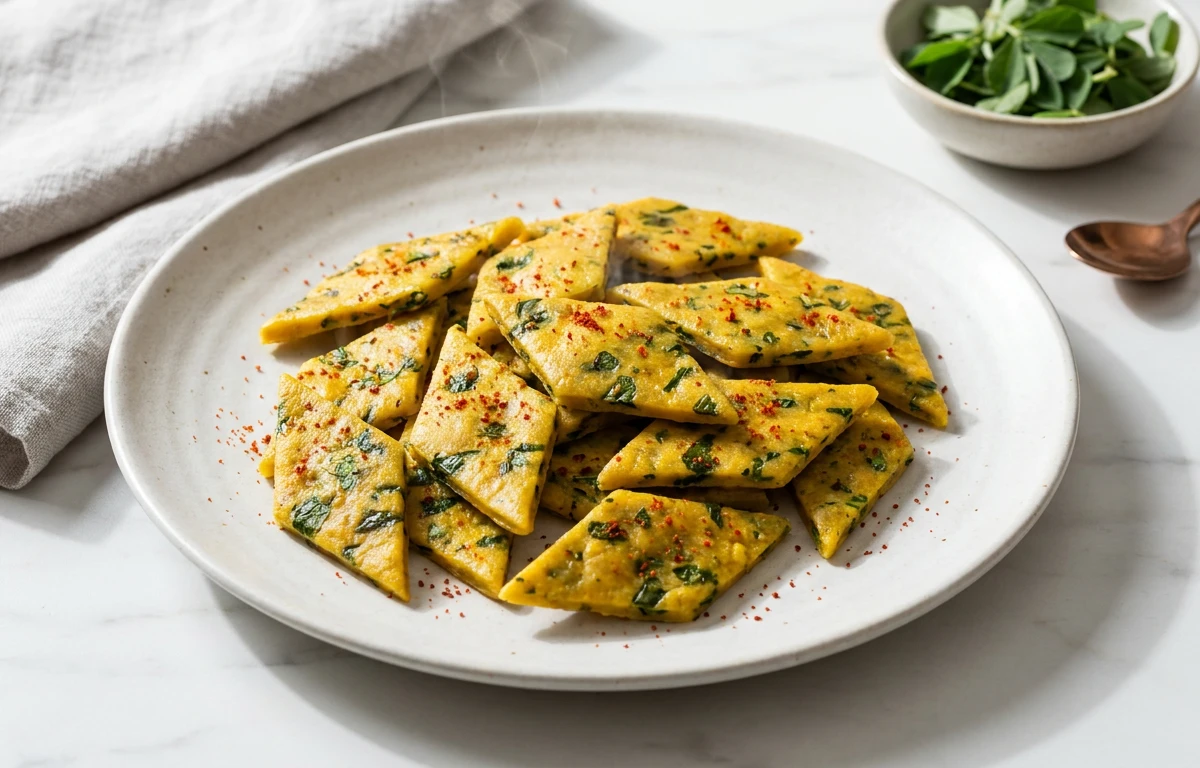
Methi Dhokli
Soft, chewy whole wheat dumplings simmered in a tangy, mildly sweet fenugreek-infused gram flour gravy. This classic Gujarati one-pot comfort dish brings together the slight bitterness of fresh methi leaves with a jaggery-kokum balance that wakes up the palate. Served with steamed rice or bajra roti, it's a complete meal on its own.
For 4 servings
- prep · ~10 min
Prepare the fenugreek leaves and dhokli dough.
1.Wash the fresh methi leaves thoroughly and chop roughly. Set aside.2.In a mixing bowl, combine whole wheat flour, chickpea flour, 2 tsp oil, carom seeds, 1 pinch turmeric, 1 pinch red chili powder, and 0.25 tsp salt.3.Add the chopped methi leaves and mix well to distribute evenly.4.Add water little by little and knead into a firm, smooth dough. Cover and set aside while you start the gravy. - temper · ~3 min
Make the tempering.
1.Heat 2 tsp oil in a deep kadhai or pan over medium heat.2.Add mustard seeds and let them splutter completely (30 sec).3.Add cumin seeds and let them sizzle until fragrant (15 sec).4.Add asafoetida, curry leaves, slit green chilies, and chopped ginger. Sauté for 30 seconds until aromatic.TIPDon't let the ginger burn — it turns bitter fast. Keep the heat at medium. - simmer · ~7 min
Build the fenugreek gravy.
1.Add 3 cups of water to the kadhai and bring to a rolling boil.2.Add 1 pinch turmeric, 0.5 tsp red chili powder, 1 tsp coriander powder, and 0.5 tsp salt. Stir well.3.Add kokum petals and grated jaggery. Mix and let the gravy simmer for 5 minutes on medium heat.4.Taste the gravy and adjust the sweet-sour balance — it should be slightly tangy with a hint of sweetness.TIPThe gravy should be well-seasoned before adding dhokli. Dhokli absorbs salt and spices as it cooks, so keep the gravy slightly sharper than you'd normally prefer. - prep · ~5 min
Roll and cut the dhokli.
1.Divide the dough into 2 equal portions.2.Dust a flat surface with dry wheat flour. Roll each portion into a thin round, about 6-7 inches in diameter.3.Using a knife, cut the rolled dough into diamond shapes or small squares. - boil · ~15 min
Cook the dhokli in the simmering gravy.
1.Make sure the gravy is at a gentle boil. Slide the dhokli pieces into the gravy one by one, stirring gently after each addition to prevent sticking.2.Once all dhokli are added, reduce the heat to low-medium. Cover and cook for 12-15 minutes, stirring occasionally.3.The dhokli will float to the top and look glossy when cooked. Gravy will thicken slightly as the flour releases starch.TIPStir gently — rough stirring can break the dhokli pieces. They are delicate while cooking. - garnish · ~2 min
Finish with roasted peanuts and fresh coriander.
1.Dry roast the peanuts in a small pan until crunchy and lightly browned. Crush them coarsely.2.Sprinkle the crushed peanuts and chopped coriander leaves over the cooked Methi Dhokli.3.Turn off the heat and let it rest for 5 minutes — the flavors meld beautifully as it sits. - serve
Serve Methi Dhokli warm with steamed rice or bajra roti.
What to keep in mind.
6 tips from the recipe — small details that make a real difference to the final dish.
- 1If fresh methi tastes extremely bitter, blanch in boiling water for 30 seconds before chopping to mellow the bite.
- 2Knead the dhokli dough firmly but not too tight — a smooth, pliable dough ensures chewy dumplings, not dense rocks.
- 3Always taste and adjust the gravy's sweet-sour balance before adding dhokli; the dumplings absorb seasoning as they cook.
- 4Slide dhokli pieces into gently boiling gravy one at a time, then stir softly so they don't clump or break.
- 5Dry-roast peanuts until deep golden for an intense crunch that offsets the soft dhokli and gravy.
- 6Let the finished Methi Dhokli rest, covered, for 5 minutes off heat — the flavors marry beautifully during this wait.
Adapt it for your goals.
Gluten-free
Replace whole wheat flour with a mix of 70% sorghum (jowar) flour and 30% rice flour; the gravy remains unchanged.
high proteinHigh-protein
Add 2 tablespoons of roasted, crushed peanuts directly into the dough for extra crunch and protein, plus a nutty layer.
low oilLow-oil
Skip the tempering oil by dry-roasting mustard and cumin seeds, then adding a splash of water to the pan. Reduce oil in the dough to 1 teaspoon.
jain friendlyJain-friendly
Omit asafoetida, curry leaves, and ginger; use a pinch of hing substitute and replace peanuts with pomegranate seeds (anardana) for tang.
Why this is on our healthy list.
Rich in Dietary Fiber
Whole wheat flour and fresh fenugreek leaves provide ample fiber, supporting digestion and prolonged satiety.
Good Source of Plant Iron
Fenugreek leaves and jaggery naturally supply iron, which may help maintain healthy blood levels when paired with vitamin C (from kokum).
Low in Saturated Fat
This dish uses minimal oil and relies on plant-based ingredients, keeping saturated fat content very low.
Contains Probiotic-Like Benefits
Kokum is a natural source of hydroxycitric acid and antioxidants, traditionally used to aid metabolism and digestion.
Frequently asked questions
Hard dhokli usually means the dough was over-kneaded or rolled too thick. Keep the dough soft, roll to 3-4 mm thickness, and don't skip the resting time.


