
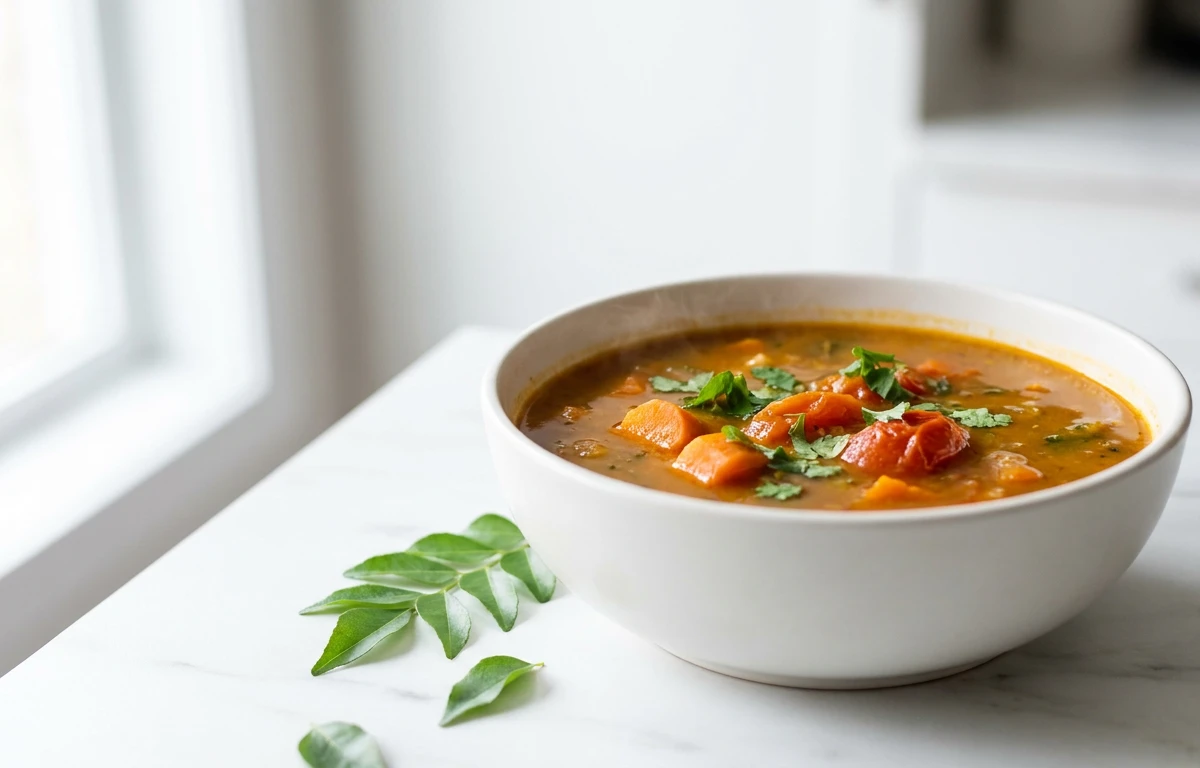
Mild Sambhar
A gentle, comforting version of the beloved South Indian lentil stew. This mild sambhar is packed with tender vegetables and cooked toor dal, finished with a fragrant tempering of mustard seeds, curry leaves, and a whisper of hing. Perfect with soft idlis, crispy dosas, or a simple bowl of steamed rice for a light, nourishing meal.
For 4 servings
- prep · ~15 min
Soak the tamarind paste.
In a small bowl, soak the tamarind paste in a quarter cup of warm water for 15 minutes. Squeeze and dissolve well, then strain to remove any fibers. Set the tamarind water aside.
- pressure cook · ~15 min
Pressure cook the dal.
Add the washed toor dal to a pressure cooker with water and turmeric powder. Cook on medium heat for 4 whistles, then let the pressure release naturally. Mash the dal well until smooth.
TIPNatural pressure release gives you a creamier dal. Don't rush it. - boil · ~12 min
Cook the vegetables.
In a heavy-bottomed pot, combine the pumpkin, drumstick pieces, carrot, green beans, tomato, and shallots with 2 cups of water. Bring to a boil and cook until the vegetables are tender but still hold their shape, about 10-12 minutes.
- mix · ~10 min
Combine dal, vegetables, and spices.
Add the mashed dal to the pot with the cooked vegetables and water. Stir in the sambar powder, salt, and the tamarind water. Mix well, bring to a gentle simmer, and let it bubble away for 8-10 minutes so the flavors meld. Adjust the consistency with water if needed — it should be thinner than a gravy.
TIPDon't let it boil too hard — a gentle simmer keeps the vegetables intact. - temper · ~2 min
Make the tempering.
1.Heat oil in a small pan over medium heat until shimmering.2.Add mustard seeds and let them splutter (30 sec).3.Add cumin seeds and broken dried red chili, stir until fragrant (15 sec).4.Add asafoetida and curry leaves, stir for 10 seconds, then pour the entire tempering over the simmering sambhar.TIPCurry leaves will crackle and release their aroma instantly — pour the tempering over immediately. - simmer · ~3 min
Simmer after tempering.
Stir the tempering into the sambhar and let it simmer for a final 2-3 minutes. Turn off the heat and cover, letting it rest for 5 minutes.
- garnish
Garnish with cilantro and serve hot.
What to keep in mind.
6 tips from the recipe — small details that make a real difference to the final dish.
- 1For a creamier dal, mash the cooked toor dal with a potato masher or the back of a spoon.
- 2Cut drumstick pieces into 2-inch lengths so the tender flesh is easy to squeeze out while eating.
- 3Soak tamarind paste in warm water before use to extract maximum tang without fiber bits.
- 4Let the sambhar rest for 5 minutes after tempering so the flavours deepen and meld together.
- 5Adjust the water after adding the dal — sambhar should be pourable, not thick like a stew.
- 6Remove seeds from the dried red chili to keep the tempering aromatic but gentle on spice.
Adapt it for your goals.
High-protein
Replace half the water in step 3 with cooked moong dal or add a cup of cubed paneer along with the vegetables for extra protein without altering the mild flavour.
low oilLow-oil
Skip the oil tempering entirely and instead bloom the mustard seeds, cumin, and curry leaves in 2 tablespoons of water or the vegetable cooking water for a fat-free version.
jainJain
Omit the drumsticks (moringa pods), shallots, and asafoetida — replace shallots with an equal volume of cubed bottle gourd or zucchini, and skip the tempering's hing for a Jain-friendly stew.
instant potInstant-pot
Use an Instant Pot: sauté tempering ingredients on 'Sauté' mode, add dal, water, turmeric, and all vegetables, then pressure cook on high for 8 minutes with natural release.
vegetable swapVegetable-swap
Substitute pumpkin with sweet potato or butternut squash, and swap green beans with chopped zucchini or broccoli — the natural sweetness balances the tamarind beautifully.
Why this is on our healthy list.
Good Source of Plant Protein
Toor dal provides a solid dose of protein and dietary fiber, supporting muscle repair and digestive health without animal products.
Rich in Beta-Carotene
Pumpkin and carrots are high in beta-carotene, an antioxidant that the body converts into vitamin A for healthy vision and immune function.
Low in Saturated Fat
This sambhar uses just a teaspoon of oil for tempering, making it a heart-friendly, low-fat meal that still delivers full flavour.
Natural Source of Iron
Toor dal and curry leaves both contribute non-heme iron, which is better absorbed when paired with the vitamin C from tomatoes.
Frequently asked questions
Yes, but skip the pressure cooking. Rinse canned toor dal and mash it; simmer with the vegetables and water for 5 minutes before adding sambar powder and tamarind.


