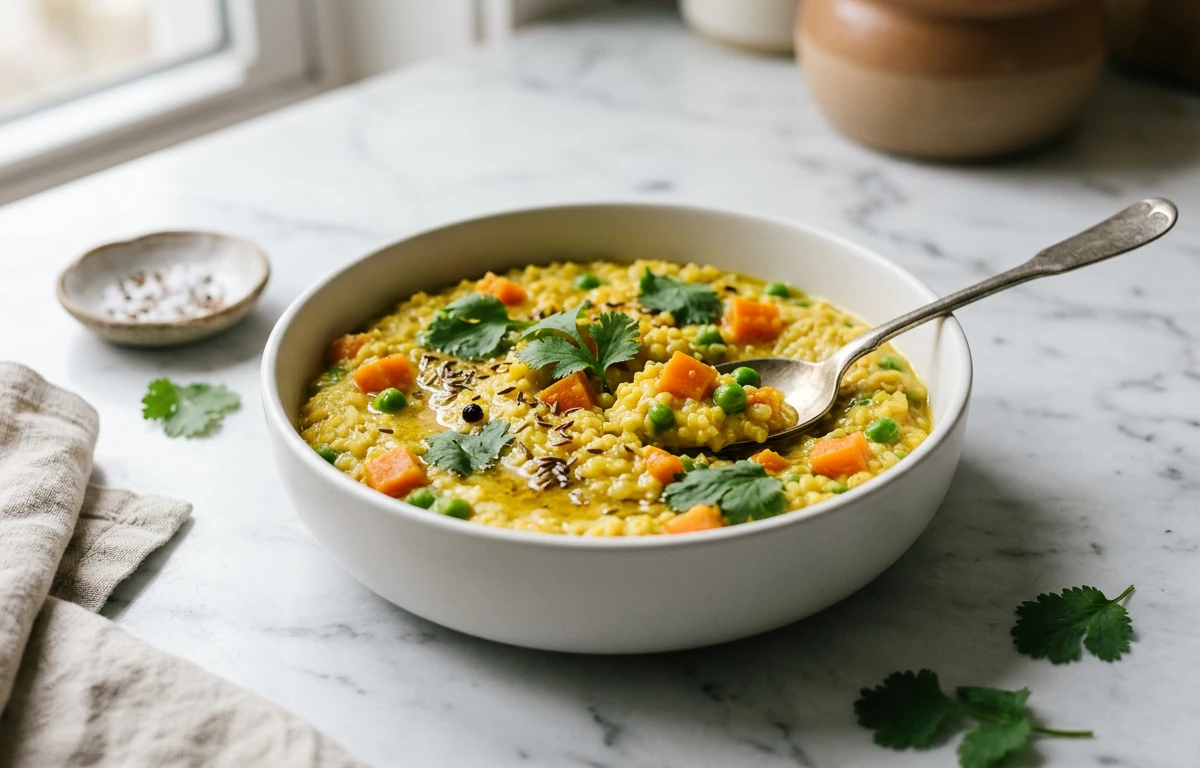
Millet Moong Dal Khichdi
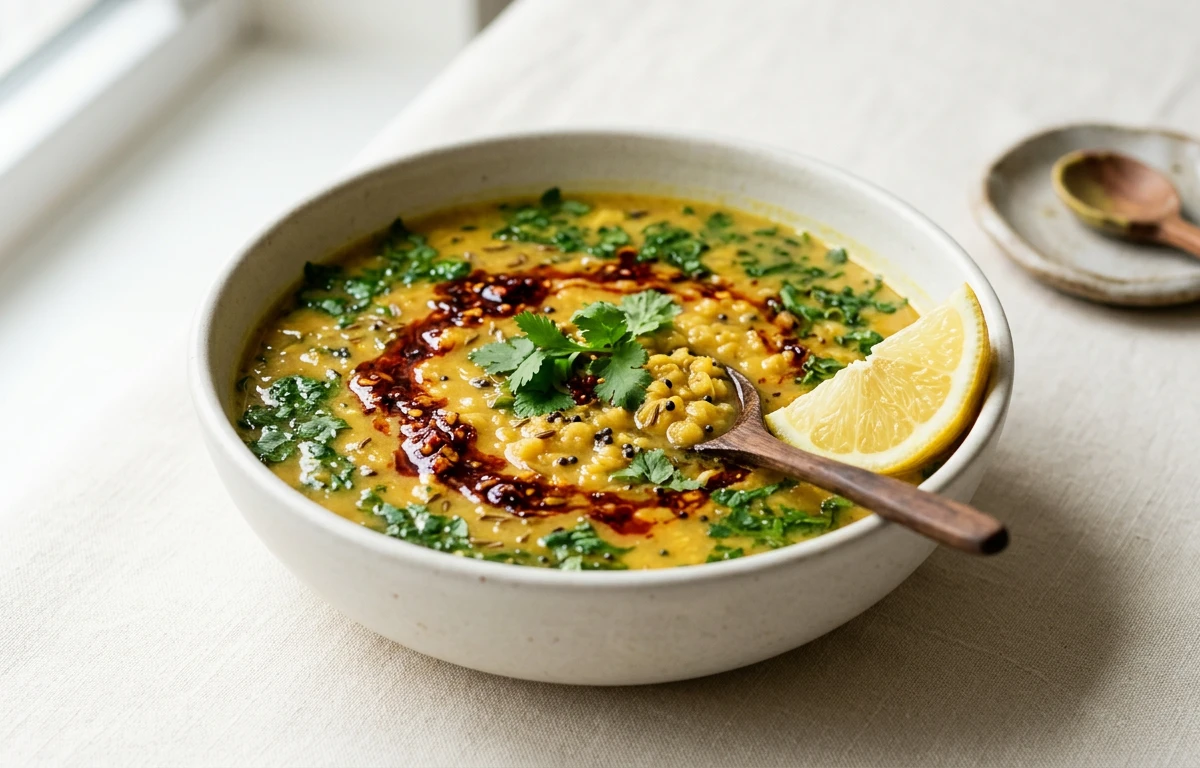
A warm, comforting one-pot meal made with nutrient-packed millet and protein-rich split yellow moong dal. This light yet satisfying khichdi cooks up soft and porridge-like, with a gentle tempering of cumin, ginger, and ghee that fills the kitchen with an earthy aroma. Perfect for days when you want something easy on the stomach but deeply nourishing.
For 4 servings
- prep
Soak the millet and moong dal.
1.Rinse foxtail millet and moong dal separately under running water.2.Soak millet in enough water for 30 minutes, then drain.3.Soak moong dal in enough water for 30 minutes, then drain.TIPSoaking reduces cooking time and makes the khichdi softer on the stomach. - prep · ~5 min
Prep the vegetables and aromatics.
1.Finely dice the carrot into small cubes.2.Finely chop the ginger.3.Slit the green chili lengthwise. - temper · ~2 min
Make the tempering in the pressure cooker.
1.Heat ghee in the pressure cooker over medium heat until it melts and shimmers.2.Add cumin seeds and let them crackle (30 seconds).3.Add asafoetida and curry leaves; fry until fragrant (10 seconds).4.Add chopped ginger and green chili; sauté 30 seconds until aromatic.TIPKeep the heat medium — high heat can burn the cumin and make the tempering bitter. - saute · ~2 min
Sauté the millet, dal, and carrot.
1.Add the drained millet and moong dal to the cooker.2.Add the diced carrot and turmeric powder.3.Stir gently for 1-2 minutes to coat everything in ghee and toast lightly. - pressure cook · ~12 min
Pressure cook the khichdi.
1.Add 3.5 cups of water and the salt. Stir once.2.Close the pressure cooker lid and place the weight on.3.Cook on medium-high heat until the first whistle, then reduce heat to low.4.Cook for 3 more whistles (about 10-12 minutes total).5.Turn off the heat and let pressure release naturally.TIPNatural pressure release is key — it lets the grains finish cooking gently and absorb all the moisture. - assemble · ~1 min
Mash and adjust consistency.
1.Open the cooker once pressure has fully released.2.Mash the khichdi lightly with the back of a ladle for a creamy texture.3.If too thick, stir in a splash of warm water to reach desired consistency. - garnish · ~1 min
Garnish with fresh coriander and lemon juice.
1.Scoop khichdi into serving bowls.2.Sprinkle chopped coriander leaves on top.3.Drizzle lemon juice over each serving, if using.TIPA small dollop of ghee on top just before serving makes it extra comforting.
What to keep in mind.
7 tips from the recipe — small details that make a real difference to the final dish.
- 1Soak millet and moong dal for at least 30 minutes to ensure even cooking and a creamy texture.
- 2Let the pressure release naturally; quick release can make the grains mushy on the outside and hard inside.
- 3If the khichdi is too thick after cooking, stir in warm water a little at a time until it reaches a porridge-like consistency.
- 4Use a heavy-bottomed or pressure cooker to prevent the millet and dal from sticking to the bottom.
- 5Temper the cumin seeds just until they crackle — burnt cumin turns bitter and ruins the flavor.
- 6For a richer taste, add an extra teaspoon of ghee on top of each serving just before eating.
- 7This khichdi thickens as it cools; store it with a splash of water and reheat gently to restore the texture.
Adapt it for your goals.
Vegan
Replace ghee with coconut oil or your favorite neutral oil in the tempering; the coconut oil adds a subtle sweetness that pairs well with the turmeric and ginger.
low oilLow-oil
Skip the ghee tempering entirely and instead sauté the cumin, ginger, and curry leaves in a tablespoon of water or cooking spray — lighter but still aromatic.
vegetable loadedVegetable-loaded
Add ¼ cup each of finely chopped spinach, peas, and bell peppers along with the carrot for extra color, fiber, and nutrients.
high proteinHigh-protein
Increase the moong dal to 1 cup and reduce millet to ½ cup for a higher protein-to-carb ratio, ideal for post-workout recovery.
jainJain
Omit the asafoetida and curry leaves (if not allowed in your tradition), and replace green chili with a pinch of black pepper for gentle heat.
Why this is on our healthy list.
Gluten-Free Comfort Food
Foxtail millet is naturally gluten-free, making this khichdi a safe and soothing meal for those with gluten sensitivity or celiac disease.
Plant-Based Protein Source
The combination of millet and moong dal provides a complete amino acid profile, offering steady energy and muscle support without animal products.
Easy on Digestion
Ginger, asafoetida, and the gentle cooking method make this khichdi highly digestible, often recommended during illness or recovery.
Rich in Antioxidants
Turmeric and curry leaves bring curcumin and polyphenols that help combat inflammation and support overall wellness.
Low in Fat, High in Fiber
This dish is naturally low in fat from a small amount of ghee, while the millet and dal contribute soluble fiber that supports gut health.
Frequently asked questions
Yes, use a heavy-bottomed pot with a tight-fitting lid; simmer on low for 25–30 minutes, stirring occasionally, until the grains are soft and porridge-like.