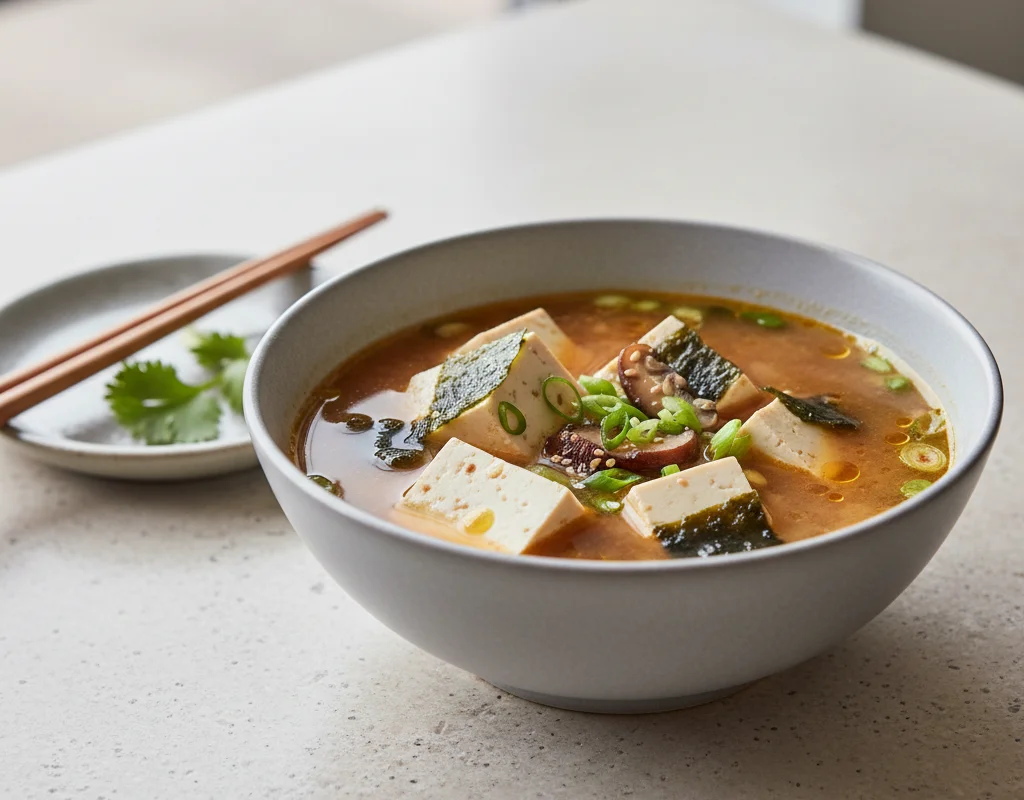
Miso Soup Tofu
A soothing, umami-rich Japanese soup with delicate silken tofu cubes, wakame seaweed, and green onions floating in a savory miso-dashi broth. Ready in under 15 minutes, this soul-warming bowl is perfect as a starter or light meal.
For 4 servings
- prep · ~5 min
Rehydrate the wakame.
Place dried wakame in a small bowl with enough water to cover. Let soak until soft and expanded, about 5 minutes. Drain and set aside.
- prep · ~5 min
Prepare the dashi stock.
Place 4 cups water and the kombu piece in a medium saucepan. Heat over medium heat until small bubbles appear at the edges, about 5 minutes. Remove kombu just before water boils.
TIPNever let kombu boil — it releases a bitter taste. Remove it when you see the first tiny bubbles. - boil · ~3 min
Finish the dashi with bonito flakes.
Bring the kombu water to a rolling boil. Add the bonito flakes and immediately turn off the heat. Let them steep for 2 minutes, then strain the broth through a fine mesh strainer into a clean bowl or pot. Discard the spent flakes.
TIPPress the bonito flakes gently with the back of a spoon to extract every drop of flavor before discarding. - simmer · ~2 min
Add tofu and wakame.
Return the strained dashi to the saucepan over medium-low heat. Add the cubed silken tofu and the drained wakame. Gently heat until the tofu is warmed through, about 2 minutes. Do not let the soup boil.
TIPKeep the heat gentle — boiling after adding miso makes the soup taste flat and grainy. - mix · ~1 min
Dissolve the miso paste into the soup.
Ladle about half a cup of the warm broth into a separate small bowl. Add the white miso paste and whisk until completely smooth with no lumps. Pour this dissolved miso mixture back into the main soup pot and stir gently to combine.
TIPNever add miso directly to the pot — dissolving it first prevents lumps and protects the delicate fermented flavors. - garnish
Ladle into bowls and garnish with green onion.
Divide the soup evenly among serving bowls. Top each with a generous sprinkle of sliced green onion. Serve immediately while hot.
TIPThe soup is best enjoyed right away — the aroma fades and the tofu can break if it sits too long.
What to keep in mind.
6 tips from the recipe — small details that make a real difference to the final dish.
- 1Use high-quality white miso for a milder, sweeter flavor that complements the delicate dashi.
- 2Cut silken tofu gently with a wet knife to prevent it from crumbling.
- 3Always remove kombu before the water boils to avoid a bitter, slimy broth.
- 4Strain bonito flakes through a fine-mesh sieve or cheesecloth for a clear, clean dashi.
- 5Whisk miso into a small amount of warm broth first to ensure it dissolves completely without clumps.
- 6Serve miso soup immediately; it loses its aroma and texture if reheated.
Adapt it for your goals.
Vegan
Replace bonito flakes with dried shiitake mushrooms (soaked overnight or simmered 15 minutes) to create a fully plant-based dashi that still delivers deep umami.
high proteinHigh-protein
Add a soft-boiled egg halved on top or stir in shredded chicken for extra protein without overpowering the delicate miso flavor.
spicySpicy
Stir 1/2 teaspoon of gochugaru (Korean chili flakes) or a drizzle of chili oil into each bowl for a subtle heat that complements the miso's sweetness.
low sodiumLow-sodium
Use a reduced-sodium white miso and skip the bonito flakes—use only kombu dashi—to lower the salt content while keeping the soup savory.
hearty mealHearty meal
Add small cubes of firm potato or daikon radish, simmered in the dashi before adding tofu, for extra heartiness and texture.
Why this is on our healthy list.
Probiotic-Rich Miso
White miso is a fermented food that contains live probiotics, which support a healthy gut microbiome when the soup is not boiled after adding the paste.
High in Plant Protein
Silken tofu provides a light but complete source of plant-based protein, making this soup a satisfying option for vegetarians.
Iodine from Seaweed
Kombu and wakame offer a natural source of iodine, essential for healthy thyroid function and metabolism.
Low-Calorie Hydration
This broth-based soup is low in calories and high in water content, making it a light yet nourishing choice for weight management.
Frequently asked questions
Yes, but adjust the amount: red miso is saltier and stronger, so start with 2 tablespoons; yellow miso is milder and can be used in equal measure to white.