
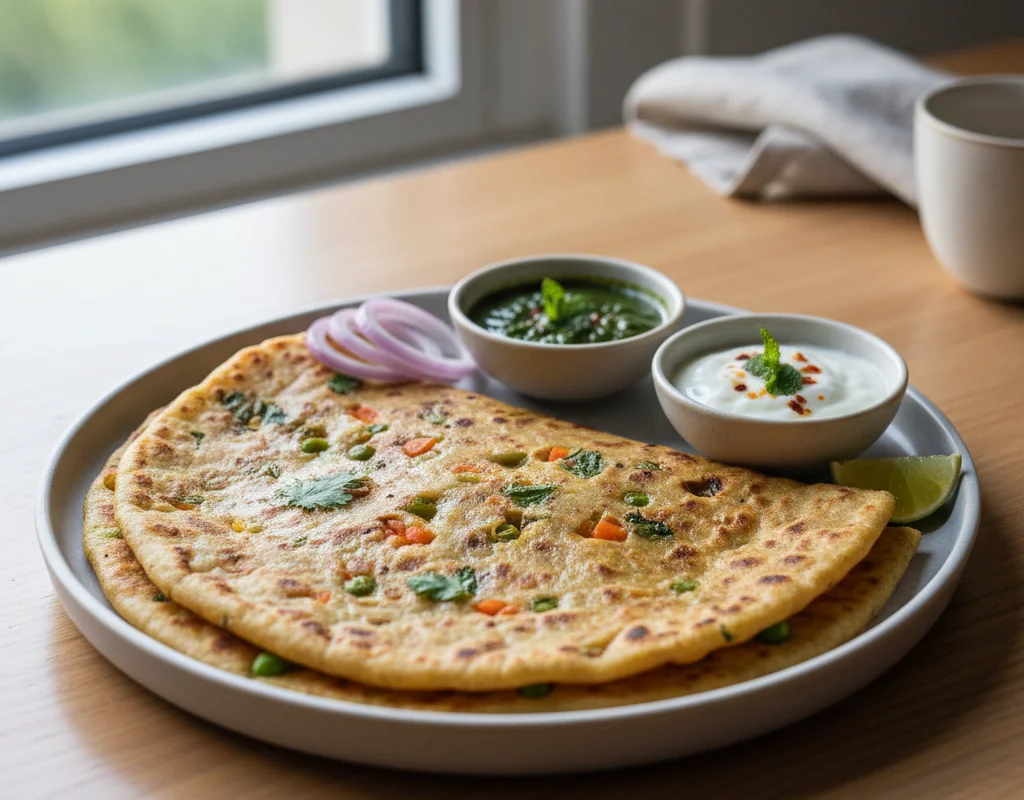
Mixed Vegetable Paratha
A wholesome flatbread stuffed with a savory mix of finely grated carrots, cabbage, and onions, spiced with ginger and cumin. Perfect for a nutritious breakfast or a light lunch.
For 4 servings
Prepare the vegetable filling.
- In a large bowl, combine the grated carrot, cabbage, and finely chopped onion.
- Squeeze out any excess water from the vegetables to prevent the dough from becoming soggy.
- Add the grated ginger, chopped green chili, cumin seeds, turmeric powder, coriander leaves, and salt.
- Mix everything well until evenly combined. Set the filling aside.
TIPSqueezing the water from the vegetables is a crucial step for a non-sticky, easy-to-roll paratha.Knead the dough.
In a separate bowl, place the whole wheat flour. Gradually add water and knead for 5-7 minutes to form a soft, smooth, and pliable dough. Cover with a damp cloth and let it rest for 15 minutes.
TIPResting the dough helps the gluten relax, making the parathas softer and easier to roll out.Stuff and roll the parathas.
- Divide the rested dough into 4 equal-sized balls.
- Take one dough ball and flatten it into a small disc about 3 inches in diameter.
- Place about 2-3 tablespoons of the vegetable filling in the center.
- Bring the edges of the dough together to seal the filling completely, forming a ball again.
- Gently flatten the stuffed ball and dust it with a little dry flour.
- Carefully roll it out into a 6-7 inch circle, applying even pressure.
TIPDon't overstuff the parathas, as they might tear while rolling.Cook the parathas.
- Heat a tawa or flat non-stick pan over medium heat.
- Place the rolled paratha on the hot tawa and cook for about a minute, or until small bubbles appear.
- Flip the paratha and cook the other side for another minute.
- Spread 1/4 tsp of ghee on the top side and flip again.
- Press gently with a spatula and cook until golden brown spots appear. Spread another 1/4 tsp of ghee on the other side and flip to cook.
- Cook both sides until they are golden brown and crisp. Repeat for the remaining parathas.
Serve hot.
Serve the mixed vegetable parathas hot with a side of yogurt, pickle, or your favorite chutney.
What to keep in mind.
5 tips from the recipe — small details that make a real difference to the final dish.
- 1Ensure the grated vegetables are squeezed well to remove all excess moisture. This is key to prevent the parathas from tearing.
- 2You can add other finely grated vegetables like cauliflower, bell pepper, or beetroot to the filling.
- 3For a softer dough, you can use lukewarm water or milk for kneading.
- 4Cook the parathas on medium heat to ensure the filling gets cooked through without burning the outside.
- 5Leftover parathas can be stored in an airtight container in the refrigerator for up to 2 days. Reheat on a tawa before serving.
Adapt it for your goals.
Vegan
Replace the ghee with a neutral-flavored oil like sunflower or canola oil for cooking the parathas.
high proteinHigh protein
Add 1/2 cup of grated paneer (cottage cheese) or crumbled tofu to the vegetable filling to boost the protein content.
kid friendlyKid friendly
Reduce or omit the green chili to make it less spicy. You can also add a little grated cheese to the filling to make it more appealing for kids.
jainJain
Omit the onion and ginger from the filling. You can use a pinch of asafoetida (hing) for flavor instead.
Why this is on our healthy list.
Rich in Fiber
The combination of whole wheat flour and mixed vegetables provides a high amount of dietary fiber, which aids digestion, promotes satiety, and helps maintain a healthy gut.
Source of Complex Carbohydrates
Whole wheat flour is a complex carbohydrate that provides sustained energy, keeping you full and active for longer periods compared to refined flours.
Packed with Vitamins and Minerals
The variety of vegetables like carrots and cabbage ensures a good supply of essential vitamins like Vitamin A and C, and minerals that are vital for overall health.
Frequently asked questions
Yes, Mixed Vegetable Paratha is a healthy dish. It's made with whole wheat flour, which is a good source of fiber, and packed with various vegetables that provide essential vitamins and minerals. Using minimal ghee for cooking keeps the fat content in check.


