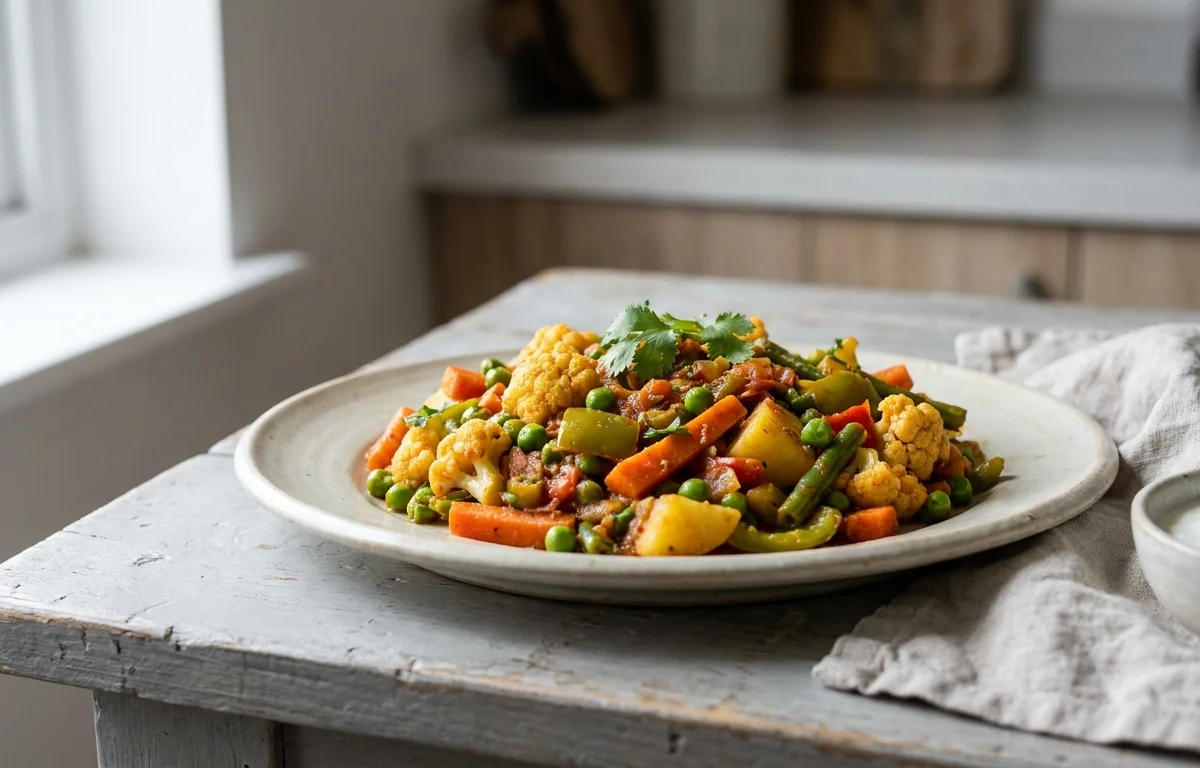
Mixed Vegetable Sabzi
A colorful medley of seasonal vegetables cooked with gentle spices. This everyday North Indian sabzi is lightly spiced and dry, letting the natural sweetness of carrots, peas, and beans shine through. Quick to make and pairs perfectly with roti or dal rice.
For 4 servings
- prep
Prep all the vegetables.
1.Peel and cube the potatoes into 1-inch pieces.2.Dice the carrots into 1-inch pieces.3.Trim the green beans and cut into 1-inch lengths.4.Cut the cauliflower into small florets.5.Finely chop the onion and tomatoes. - boil · ~5 min
Parboil the root and hard vegetables.
Bring 2 cups of water to a boil in a pot. Add the cubed potatoes, carrots, green beans, cauliflower, and green peas. Boil for 5 minutes until just tender but still holding shape. Drain and set aside.
TIPDon't overcook at this stage — the vegetables will finish cooking in the masala. - temper · ~2 min
Make the tempering.
1.Heat 2 tbsp oil in a kadai or wide pan over medium heat.2.Add 1 tsp cumin seeds and let them crackle and sizzle.3.Add the slit green chilies and grated ginger. Sauté for 30 seconds until fragrant. - saute · ~9 min
Build the masala base.
1.Add the finely chopped onion and sauté until translucent (3-4 min).2.Add the chopped tomatoes, a pinch of turmeric, 1 tsp coriander powder, and a pinch of red chili powder.3.Cook, stirring occasionally, until the tomatoes soften and the oil separates at the edges (4-5 min).TIPPatience here pays off — cook until you see oil leaving the sides of the masala. - mix · ~7 min
Add the parboiled vegetables and finish cooking.
1.Add all the drained vegetables to the pan along with 0.5 tsp salt.2.Gently toss to coat the vegetables evenly with the masala.3.Cover and cook on low heat for 5-7 minutes, stirring once or twice, until the vegetables are fully tender.4.Sprinkle a pinch of garam masala and 1 tbsp lemon juice. Give a final gentle mix. - garnish
Garnish with fresh coriander leaves and serve hot.
Transfer to a serving bowl, sprinkle generously with chopped coriander leaves. Serve with roti or dal rice.
What to keep in mind.
6 tips from the recipe — small details that make a real difference to the final dish.
- 1Cut vegetables into uniform 1-inch pieces for even cooking.
- 2Parboil just until tender-crisp; they finish cooking in the masala.
- 3Cook the masala until oil separates at the edges for deeper flavor.
- 4Use a heavy-bottomed pan or kadai to prevent sticking and burning.
- 5Add lemon juice and garam masala at the end to preserve their aroma.
- 6This dry sabzi stays well in the fridge for up to 3 days—reheat gently.
Adapt it for your goals.
High-protein
Add ½ cup of boiled chickpeas or paneer cubes along with the vegetables for a more filling, protein-rich meal perfect for lunch or post-workout dinners.
low oilLow-oil
Reduce oil to 1 tbsp and dry-roast cumin seeds before adding ginger-chili; the vegetables release enough moisture to cook without sticking, making it ideal for low-fat diets.
coconut masalaCoconut-masala
Add 2 tablespoons of shredded coconut or coconut milk powder with the masala for a mild, slightly sweet South Indian-style variation.
veganVegan
This recipe is already vegan; simply confirm the oil is plant-based and skip any optional ghee-based accompaniments to keep it fully plant-forward.
cauliflower onlyCauliflower-only
Replace all other vegetables with 300g of cauliflower florets; the dry masala clings perfectly to roasted-like cauliflower pieces, creating a quick gobi sabzi.
Why this is on our healthy list.
Rich in Dietary Fiber
Mixed vegetables like carrots, beans, and peas provide soluble and insoluble fiber that supports healthy digestion and helps maintain steady blood sugar levels.
Packed with Vitamin A
Carrots and green peas are excellent sources of beta-carotene, which the body converts to vitamin A for good vision, immune function, and skin health.
Low-Calorie, High-Volume
This dry sabzi is nutrient-dense yet low in calories, making it a satisfying addition to weight-management meals without sacrificing flavor.
Antioxidant-Rich Spices
Turmeric, coriander, cumin, and garam masala contain anti-inflammatory compounds that may help reduce oxidative stress and support overall immunity.
Frequently asked questions
Yes, frozen peas, carrots, and beans work well—skip the parboiling step and add them directly to the masala; cook covered until just tender.



.webp)