
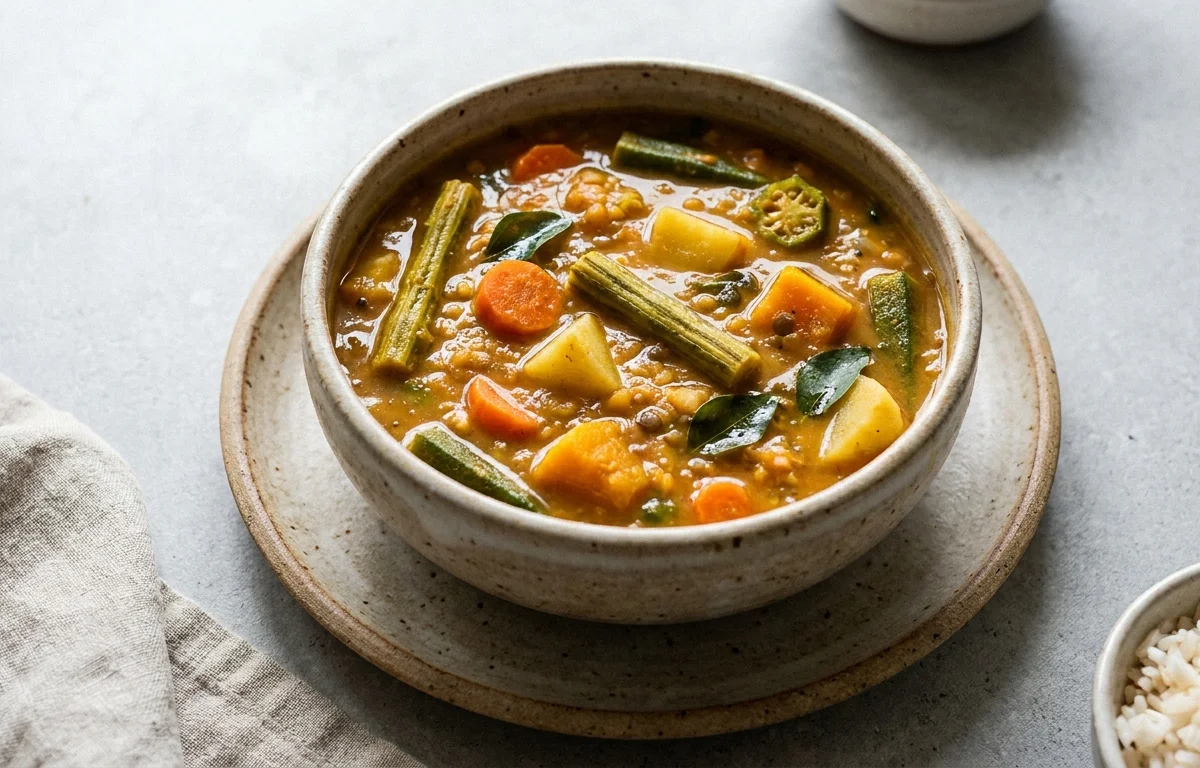
Mixed Vegetable Sambar
A hearty, tangy lentil stew loaded with seasonal vegetables like drumsticks, carrots, and brinjal. This South Indian staple is tempered with mustard seeds, curry leaves, and dried red chilies, filling the kitchen with an irresistible aroma. Perfect with steamed rice, idli, or dosa.
For 4 servings
- prep · ~15 min
Soak tamarind and prepare vegetables.
1.Soak the tamarind in ½ cup warm water for 15 minutes. Squeeze and extract the pulp. Discard the solids.2.Wash all vegetables. Cut drumsticks into 3-inch pieces, dice carrot, cube brinjal and pumpkin, roughly chop onion, and quarter tomatoes.3.Slit green chilies lengthwise. - pressure cook · ~15 min
Pressure cook the dal.
1.Wash toor dal thoroughly and add it to the pressure cooker with 3 cups of water and a pinch of turmeric powder.2.Close the lid and cook on medium heat for 4-5 whistles or until the dal is soft and mushy.3.Let the pressure release naturally. Open the lid and mash the dal well with a ladle.TIPDal should be completely mashed to give the sambar a thick, creamy body. - boil · ~12 min
Cook the vegetables.
1.In a heavy-bottomed pot, combine the chopped vegetables — drumsticks, carrot, brinjal, pumpkin, onion, tomato, and green chilies.2.Add 2 cups of water, sambar powder, and salt. Bring to a boil.3.Reduce heat and simmer until the vegetables are tender but not mushy, about 10-12 minutes.TIPAdd drumsticks first if they are particularly fibrous; they take the longest to cook. - simmer · ~7 min
Combine dal and vegetables with tamarind.
1.Pour the mashed dal into the pot with the cooked vegetables. Mix well.2.Add the extracted tamarind pulp and stir to combine.3.Bring the mixture to a gentle simmer on medium-low heat. Let it bubble away for 5-7 minutes, allowing the flavors to meld.4.Adjust the consistency with more water if needed — sambar should be pourable but not watery.TIPLet it simmer patiently. The longer it simmers, the deeper the flavors get. - temper · ~2 min
Make the tempering.
1.Heat oil in a small tempering pan over medium heat.2.Add mustard seeds and let them splutter completely.3.Add cumin seeds, dried red chilies, and curry leaves. Sauté for 10-15 seconds until fragrant.4.Add a pinch of asafoetida, give it a quick stir, and immediately pour the tempering over the simmering sambar.TIPPour the tempering carefully — it will sizzle dramatically. Cover the pot immediately after for 1 minute to trap the aroma. - garnish
Garnish with fresh coriander leaves and serve hot.
Stir in the chopped coriander leaves just before serving to retain their fresh flavor and vibrant color.
What to keep in mind.
7 tips from the recipe — small details that make a real difference to the final dish.
- 1Always soak tamarind in warm water for at least 15 minutes to extract maximum tangy flavor.
- 2Mash the dal completely while it is still warm to achieve a smooth, creamy base for the sambar.
- 3Add drumsticks to the pot first since they are fibrous and take longer to become tender.
- 4Let the sambar simmer for at least 5-7 minutes after combining all ingredients to meld the flavors.
- 5Pour the hot tempering over the sambar and cover immediately for 1 minute to lock in aroma.
- 6Adjust the consistency with water as needed; sambar should be pourable, not watery or thick.
- 7Use fresh curry leaves for tempering — dried ones lack the essential citrusy fragrance.
Adapt it for your goals.
No-Onion No-Garlic (Satvik)
Omit the onion entirely and replace with a small chopped raw banana or cubed ash gourd. This variation is popular in temple kitchens and fasting diets for a milder, sweeter flavor.
Low Oil / Low FatLow-Oil / Low-Fat
Reduce oil to 1 teaspoon for tempering and use nonstick cookware. The sambar still tastes vibrant because the tempering aromatics are retained in minimal oil.
High Protein BoostHigh-Protein Boost
Add ¼ cup cooked horse gram or chickpeas along with the vegetables. This increases protein content while complementing the tangy-sweet flavor profile.
Jain (Root Vegetable Free)Jain (Root-Vegetable-Free)
Substitute carrot and brinjal with raw banana, bottle gourd (lauki), and pumpkin. This variant avoids underground vegetables while keeping the sambar hearty and authentic.
Quick Stove TopQuick Stove-Top
Use 1 can of cooked toor dal (rinsed) instead of pressure-cooking raw dal. Simmer vegetables in the dal + water for 12 minutes, then proceed with tempering. Saves 20 minutes.
Why this is on our healthy list.
Rich in Plant-Based Protein
Toor dal (split pigeon peas) provides a solid source of plant protein, which supports muscle repair and satiety when paired with grains like rice.
High in Dietary Fiber
The mix of lentils and assorted vegetables like drumsticks, pumpkin, and brinjal contributes soluble and insoluble fiber, promoting healthy digestion and stable blood sugar.
Packed with Antioxidants
Turmeric, curry leaves, tomatoes, and pumpkin are rich in antioxidants like curcumin, beta-carotene, and lycopene that help fight inflammation.
Low in Fat, Naturally Cholesterol-Free
This sambar uses minimal oil and no animal products, making it a heart-friendly dish that supports healthy cholesterol levels.
Frequently asked questions
Yes, use 1 tablespoon of concentrated tamarind paste mixed with ¼ cup water, but adjust salt and tanginess because paste can be more intense than fresh-soaked tamarind.


