Moode
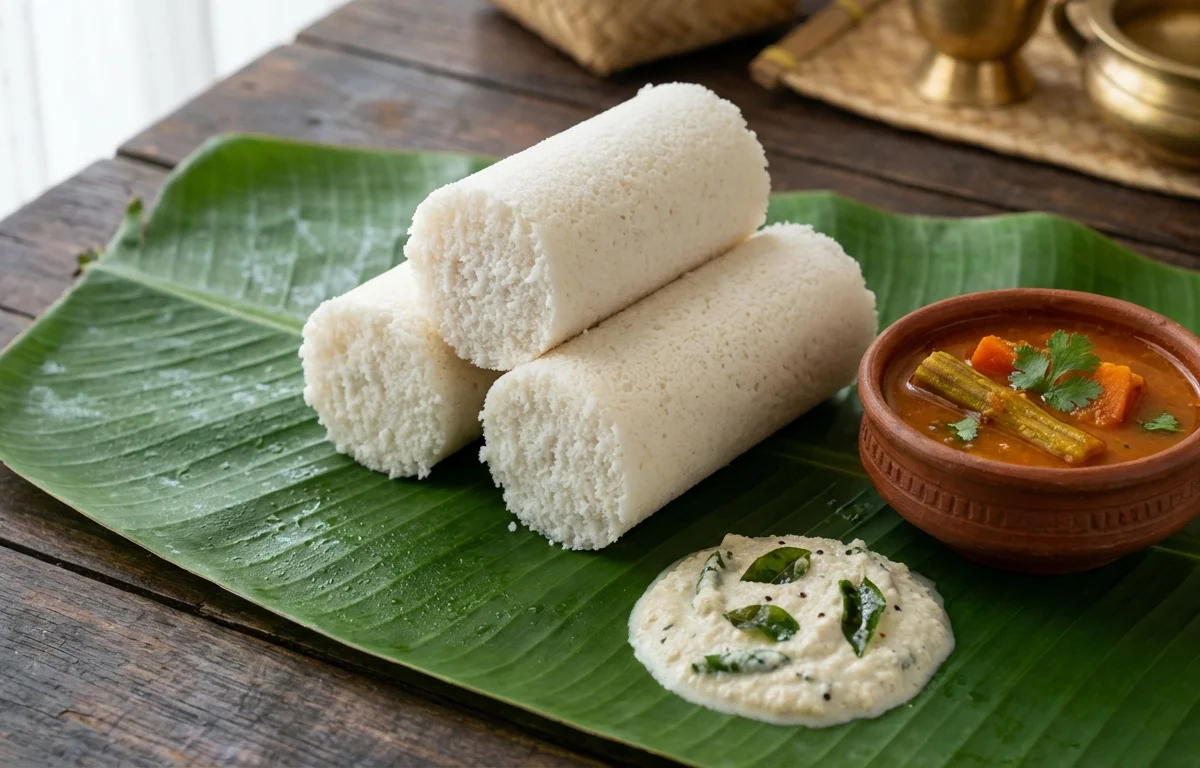
These soft steamed rice cylinders from coastal Karnataka are made with lightly fermented rice batter and cooked in screwpine leaf pockets. Mild, fragrant, and comforting, moode is a lovely breakfast dish with chutney or sambar.
For 8 servings
- prep · ~360 min
Soak the rice and dal.
1.Wash the idli rice well and soak it in plenty of water for 6 hours.2.Wash the urad dal and fenugreek seeds, then soak them together for 6 hours.3.Drain both separately before grinding.TIPKeep enough room in the bowls because the dal expands as it soaks. - mix · ~25 min
Grind the batter.
1.Grind the urad dal and fenugreek seeds with a little water to a smooth, fluffy batter.2.Grind the rice with the cooked rice and enough water to a slightly grainy batter.3.Mix both batters in a large bowl until evenly combined and airy.TIPThe rice batter should feel lightly coarse, not fully smooth, for the right moode texture. - rest · ~480 min
Ferment the batter.
Cover the bowl and let the batter ferment in a warm place for about 8 hours, until slightly risen and light. Stir in the salt gently after fermentation.
TIPUse a deep bowl because the batter rises as it ferments. - prep · ~10 min
Shape the screwpine leaf pockets.
1.Rinse the screwpine leaves well and wipe them dry.2.Roll each leaf into a cone or cylinder pocket and tuck the end in firmly.3.Keep the shaped pockets ready near the steamer. - assemble · ~5 min
Fill the leaf pockets.
Pour or spoon the batter into each screwpine leaf pocket until about three-quarters full, leaving a little space for the batter to rise while steaming.
TIPIf the batter sticks while handling, lightly grease your fingers with a little oil. - steam · ~20 min
Steam the moode.
Arrange the filled pockets upright in a steamer and steam over medium heat until the moode is set and cooked through, 15 to 20 minutes.
TIPDo not pack them too tightly in the steamer, or the steam will not circulate evenly. - rest · ~5 min
Cool briefly before unmolding.
Let the moode rest for 5 minutes after steaming so they firm up slightly and release more easily from the leaf wrappers.
- serve
Open the wrappers and serve hot.
Gently peel back the screwpine leaves and serve the moode warm.
What to keep in mind.
7 tips from the recipe — small details that make a real difference to the final dish.
- 1Grind the urad dal very fluffy and the rice slightly coarse; that contrast gives moode its soft yet gently textured crumb.
- 2Add salt only after fermentation, as in the recipe, so the batter rises more easily and stays light.
- 3Fill each screwpine pocket only three-quarters full; the batter needs headroom to expand while steaming.
- 4Keep the leaf pockets upright and slightly spaced in the steamer so steam can circulate evenly around each moode.
- 5Moode is done when the surface looks set and a skewer inserted through the top comes out clean.
- 6Rest the steamed moode for 5 minutes before peeling the leaves, or the soft cylinders may stick and tear.
- 7If making ahead, refrigerate leftover moode and re-steam for a few minutes rather than microwaving to keep them soft.
Adapt it for your goals.
Banana-leaf
If screwpine leaves are unavailable, steam the batter in banana leaf rolls for a different but still traditional leaf aroma.
mini moodeMini-moode
Make smaller leaf pockets for snack-size portions; they steam a little faster and are easier to serve for breakfast spreads.
plain idli moldPlain-idli-mold
Steam the same batter in idli molds when you cannot shape leaf pockets; texture stays similar though the fragrance changes.
Why this is on our healthy list.
Fermented and Easy to Digest
The lightly fermented rice-and-urad batter is a classic South Indian preparation that many people find gentler and lighter than dense breads.
Balanced Grain and Lentil Base
Idli rice and urad dal together provide a satisfying mix of carbohydrates and plant protein for a steady breakfast.
Low Added Fat Cooking
Moode is steamed and uses only a little oil for handling, making it a naturally light preparation.
Frequently asked questions
Yes. You can steam the batter in idli molds or banana leaf rolls, but you will miss the distinct screwpine fragrance that defines traditional moode.