
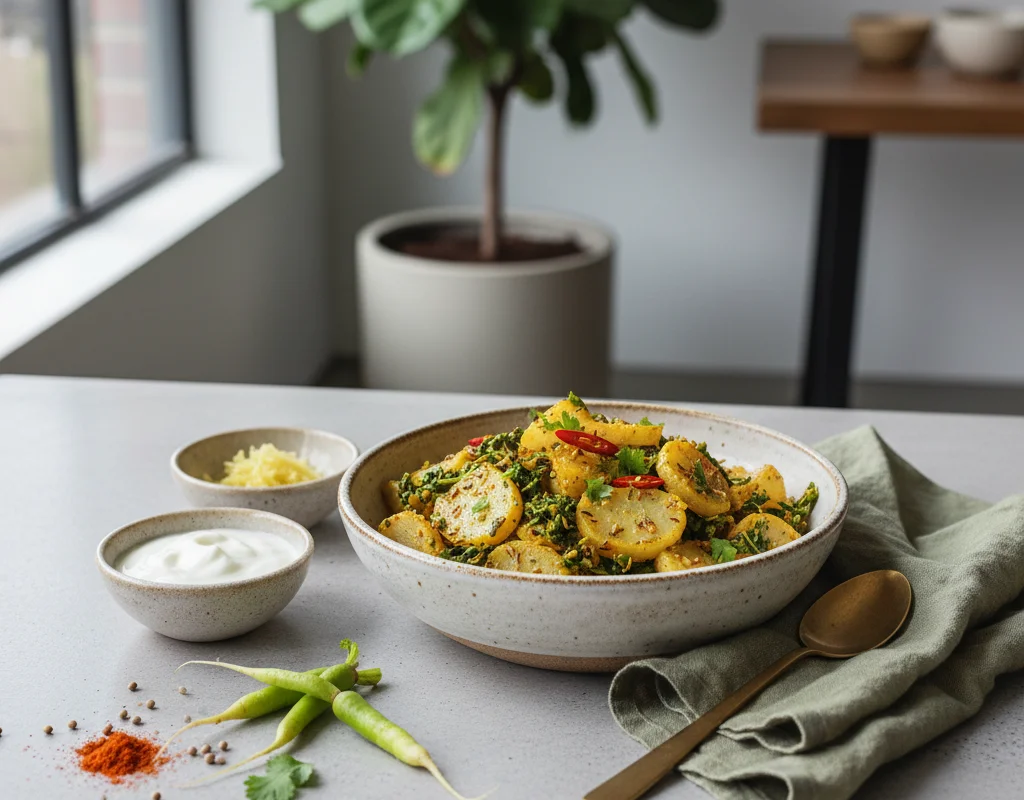
Mooli Sabzi
Tender white radish slowly cooked with mild spices until soft and aromatic. This homestyle North Indian dry sabzi has a subtle peppery sweetness that mellows as it cooks, making it a comforting everyday dish that pairs beautifully with roti or paratha.
For 4 servings
- prep
Prep the radish and aromatics.
1.Wash the radish well, trim the ends, and peel the skin.2.Slice radish into thin rounds, about 3 mm thick.3.Finely chop the onions and tomatoes, grate the ginger, and slit the green chilies. - temper · ~2 min
Make the tempering.
1.Heat oil in a kadai over medium heat until shimmering.2.Add cumin seeds and let them crackle until fragrant (30 seconds).3.Add asafoetida and green chilies, stir for a few seconds. - saute · ~6 min
Sauté the onions and ginger.
1.Add chopped onions and cook until translucent and lightly golden (4 to 5 minutes).2.Add grated ginger and sauté until the raw smell goes away (30 seconds). - saute · ~7 min
Cook the tomato masala base.
1.Add chopped tomatoes and cook until they soften and turn mushy (3 to 4 minutes).2.Sprinkle turmeric powder, red chili powder, and coriander powder, mix well.3.Sauté until oil starts to separate from the masala (2 to 3 minutes).TIPLet the tomatoes break down completely — this builds body and sweetness in the sabzi. - saute · ~12 min
Add the radish and cook covered.
1.Add sliced radish and salt to the pan, mix well to coat with masala.2.Sprinkle 3 tablespoons of water, give a quick stir.3.Cover with a lid and cook on low heat until radish turns tender (10 to 12 minutes).4.Check once halfway through and stir gently — radish releases its own moisture.TIPDo not add too much water; radish releases moisture as it cooks, keeping the sabzi semi-dry. - saute · ~2 min
Finish with spice powders.
1.Remove the lid once the radish is fork-tender and most water has evaporated.2.Sprinkle garam masala and dry mango powder, stir gently.3.Sauté uncovered for 1 to 2 minutes to dry out any excess moisture.TIPDry mango powder brings a gentle tang that balances the peppery radish notes. - garnish
Garnish and serve.
1.Turn off the heat, squeeze lemon juice on top.2.Garnish with fresh chopped coriander leaves.3.Serve hot with roti or paratha.
What to keep in mind.
7 tips from the recipe — small details that make a real difference to the final dish.
- 1Slice radish rounds evenly (about 3 mm) so they cook at the same rate without turning mushy.
- 2Cook the onions until deeply golden for a sweeter, more aromatic base.
- 3Resist adding extra water; the radish releases enough moisture to steam itself tender.
- 4Check the sabzi halfway through cooking and stir gently to prevent sticking.
- 5Sauté the masala until oil separates — this deepens flavour and prevents a raw spice taste.
- 6For best texture, cook uncovered at the end to evaporate excess moisture before adding finishing spices.
- 7Make ahead: this sabzi tastes even better the next day as flavours meld; reheat gently with a splash of water.
Adapt it for your goals.
No-onion no-garlic (satvik)
Skip the onion and use a pinch of asafoetida (hing) doubled. The radish becomes the star, and the dish is suitable for Jain or fasting diets.
veganVegan
This recipe is already vegan as written — no changes needed. Pair with any plant-based flatbread.
protein boostProtein boost
Add 1/2 cup boiled chickpeas or paneer cubes after the radish is tender. Makes it a more substantial one-dish meal.
low spiceLow-spice
Skip red chili powder and green chilies; use only black pepper and a pinch of turmeric for a mild, kid-friendly version.
Why this is on our healthy list.
Rich in Digestive Enzymes
White radish contains natural enzymes that aid digestion, making this a light yet satisfying dish for everyday meals.
Low in Calories
Radish is very low in calories and high in water content, helping you feel full without heaviness.
Anti-Inflammatory Spices
Turmeric, ginger, and asafoetida provide anti-inflammatory benefits that support joint and gut health.
Good Source of Vitamin C
Radish and lemon juice contribute vitamin C, which supports immune function and iron absorption.
Frequently asked questions
Overcooking or using very mature, woody radishes can cause bitterness. Choose tender, small-to-medium radishes and cook just until fork-tender.


