
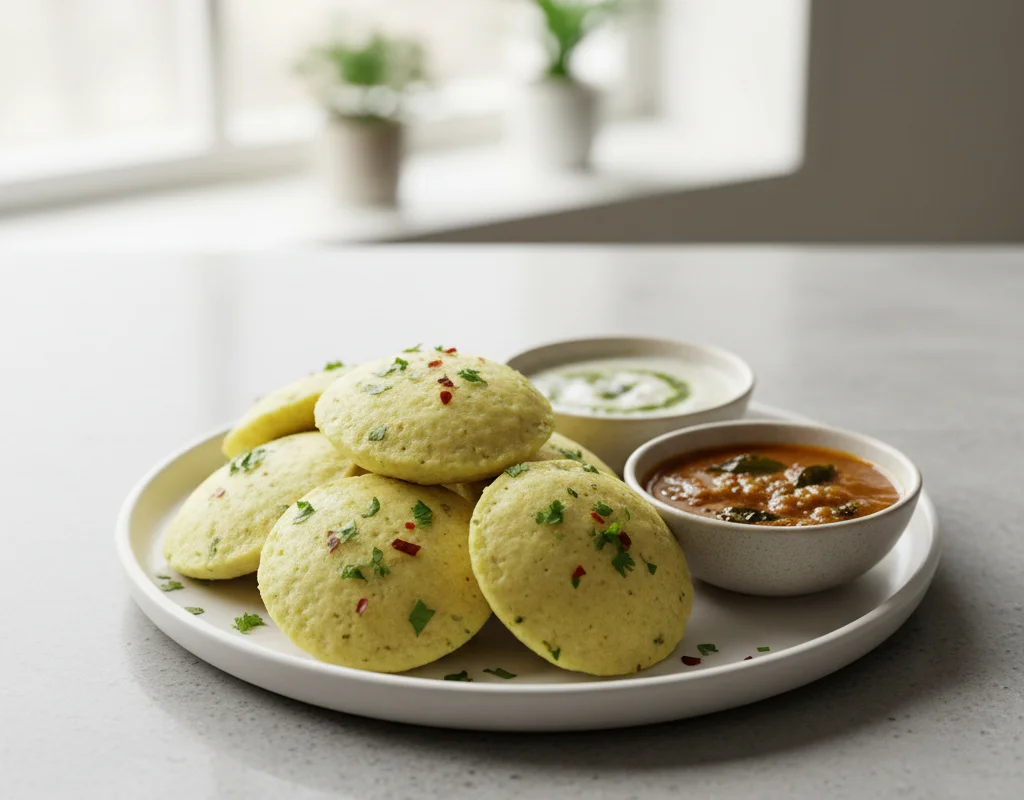
Moong Dal Idli
Soft, protein-packed steamed cakes made from ground split yellow moong dal and rice. These light and fluffy idlis are a wholesome twist on the classic, perfect for a nutritious breakfast or light dinner with coconut chutney and sambar.
For 4 servings
- prep
Soak the dal, rice, and fenugreek.
Wash the moong dal and rice together in 2-3 changes of water. Add fenugreek seeds and soak everything together in enough water to cover by 2 inches for 4 hours. Soak poha separately in just enough water to cover for 15-20 minutes before grinding.
TIPProper soaking softens the dal and rice, ensuring a smooth, fluffy batter. - prep · ~5 min
Grind the batter to a smooth paste.
Drain the soaked dal, rice, and fenugreek mixture. Add them to a wet grinder or blender with the soaked and drained poha. Add ½ cup cold water and grind to a smooth, fluffy batter. The consistency should be slightly thicker than regular idli batter, similar to thick pancake batter. Add a little more water if needed, a tablespoon at a time.
TIPUse cold water during grinding to prevent the batter from heating up, which can spoil the fermentation. - mix · ~1 min
Add salt and prepare for fermentation.
Transfer the ground batter to a large bowl. Add salt and mix well with your hand in one direction for a minute. This helps incorporate air and kickstart fermentation. The batter should be light and not too thick.
TIPMixing with your hand introduces beneficial bacteria from your skin, aiding fermentation. - rest
Ferment the batter overnight.
Cover the bowl loosely with a lid or cloth. Place in a warm place like an oven with the light on, or a warm corner of the kitchen, for 8-10 hours. The batter will rise and become airy with a pleasant, slightly sour aroma.
TIPIn cold climates, place the bowl inside an oven with just the oven light turned on, or wrap it in a thick towel. - prep · ~2 min
Prepare the steamer and mix the batter.
Bring water to a boil in the idli steamer. While it heats, gently mix the fermented batter without deflating all the bubbles. Do not beat it hard. The batter should be light and pourable. If it seems too thick, fold in a tablespoon or two of water gently.
TIPGently folding the batter preserves the air pockets created by fermentation, yielding softer idlis. - prep · ~1 min
Grease the idli molds.
Lightly grease each cavity of the idli plates with a drop of oil. Spreading it with your fingers or a pastry brush works best.
TIPA little oil is enough. Too much will make the batter slide and create a dense bottom. - steam · ~12 min
Pour batter and steam the idlis.
1.Pour the batter into each greased mold, filling it about three-quarters full to allow room for rising.2.Place the idli stands in the steamer once the water is at a rolling boil.3.Cover and steam on high heat for 10-12 minutes, or until a toothpick inserted into the center comes out clean.4.Turn off the heat and let them stand for 2 minutes before opening the lid.TIPDo not open the steamer mid-way. Opening the lid releases steam and causes dense, flat idlis. - serve · ~3 min
Unmold and serve the idlis hot.
1.Remove the idli plates from the steamer and let them cool for 1 minute.2.Gently run a spoon dipped in water around the edges of each idli to loosen it.3.Scoop out the soft, fluffy idlis and serve immediately with coconut chutney and hot sambar.TIPDip the spoon in water before unmolding each idli to prevent sticking and tearing.
What to keep in mind.
7 tips from the recipe — small details that make a real difference to the final dish.
- 1Soak the poha separately for only 15–20 minutes to prevent it from turning mushy and ruining the batter texture.
- 2Use cold water while grinding to keep the batter cool, which is essential for proper fermentation later.
- 3Mix the batter with your hand in one direction after adding salt to incorporate air and kickstart fermentation.
- 4For consistent soft idlis, fill the molds only three-quarters full to allow space for rising during steaming.
- 5Never open the steamer lid during cooking; the sudden temperature drop will cause the idlis to deflate and become dense.
- 6Let the steamed idlis rest in the steamer for 2 minutes before opening the lid to prevent them from sticking to the mold.
- 7Run a spoon dipped in water around each idli before unmolding to easily release them without tearing.
Adapt it for your goals.
Moong Dal Idli with Vegetables
Add 1/2 cup finely grated carrots or zucchini to the batter before fermenting for added moisture, color, and nutrients. The vegetables blend in seamlessly for a mild veggie boost.
Jain Moong Dal IdliJain Moong Dal Idli
Skip the fenugreek seeds (jains avoid certain seeds) and use a tiny pinch of asafoetida (hing) for a similar digestive and flavor effect. Ensure the poha used is unroasted to stay jain-friendly.
Moong Dal Idli (Low Oil / Oil Free)Moong Dal Idli (Low-Oil / Oil-Free)
Instead of greasing the molds with oil, use a non-stick idli pan or line the molds with parchment paper rounds. This cuts fat without sacrificing texture.
Why this is on our healthy list.
Rich in Plant Protein
Moong dal is packed with protein, making these idlis a satisfying, muscle-friendly breakfast or snack option.
Good Source of Dietary Fiber
The combination of dal, rice, and poha provides gentle fiber that supports digestion and helps keep you full longer.
Naturally Low in Fat
With only a teaspoon of oil for greasing, this recipe is low in fat, especially when paired with light chutneys.
Fermented for Gut Health
The overnight fermentation process develops natural probiotics and prebiotics, which support a healthy gut microbiome.
Frequently asked questions
Dense idlis usually result from under-fermentation (batter didn't rise enough) or over-mixing the batter after fermentation, which deflates the air bubbles. Ensure a warm spot (around 80°F) for 8–10 hours.


