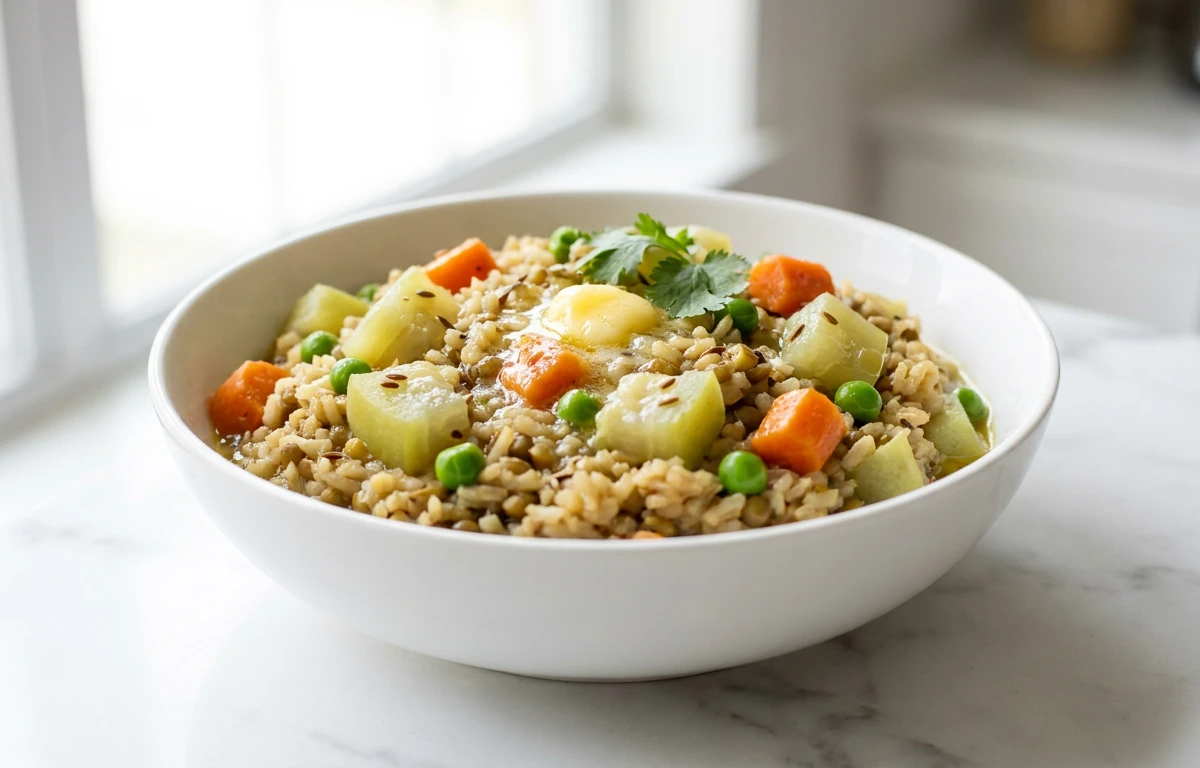
Moong Vegetable Khichdi
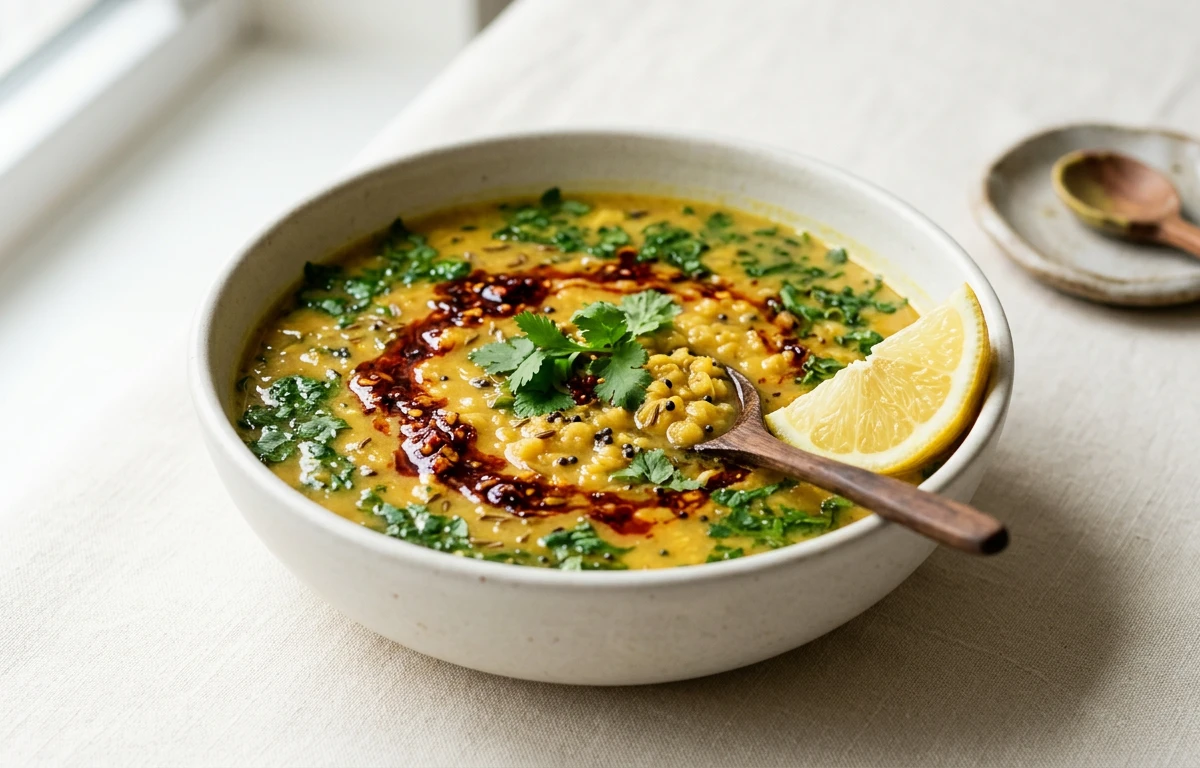
A warm, comforting one-pot meal of rice and split moong dal cooked with mild vegetables and gentle spices. This light yet nourishing khichdi is soft, easy to digest, and comes together in one pressure cooker — perfect for a cozy lunch or dinner.
For 4 servings
- prep · ~15 min
Wash and soak the rice and dal.
1.Combine rice and moong dal in a bowl. Wash with water 2-3 times until water runs clear.2.Soak in fresh water for 15 minutes, then drain. - prep · ~5 min
Prep the vegetables.
Peel and cube the potato into bite-sized pieces. Dice the carrot. Slit the green chili. Set everything aside.
TIPKeep the potato cubes small so they cook evenly with the rice and dal. - temper · ~1 min
Make the tempering in the pressure cooker.
1.Heat ghee in the pressure cooker over medium heat until warm.2.Add cumin seeds and let them splutter for 30 seconds.3.Add hing and bay leaf, stir for 10 seconds until fragrant.TIPDo not let the cumin burn — medium heat is enough to release its aroma. - saute · ~2 min
Sauté the vegetables briefly.
1.Add the cubed potato, diced carrot, green peas, and slit green chili to the cooker.2.Sprinkle turmeric powder and salt. Stir well to coat the vegetables with the spices.3.Sauté for 2 minutes until the vegetables look glossy. - pressure cook · ~15 min
Add rice, dal, and water; pressure cook the khichdi.
1.Add the drained rice and moong dal to the cooker.2.Pour in 3.5 cups of water and stir everything together.3.Close the lid and cook on medium heat. After the first whistle, lower the heat and cook for 3 more whistles.4.Let the pressure release naturally before opening the lid.TIPNatural pressure release is key — it lets the khichdi absorb any remaining liquid and become creamier. - mix · ~1 min
Mash and adjust consistency.
Open the cooker and mash the khichdi lightly with the back of a ladle. If it feels too thick, stir in a splash of hot water to loosen it. Adjust salt if needed.
- garnish · ~1 min
Garnish with coriander and serve hot.
Spoon the khichdi into bowls. Sprinkle chopped coriander leaves on top. Drizzle a few drops of ghee if you like it richer.
TIPKhichdi thickens as it sits — add a little hot water when reheating leftovers.
What to keep in mind.
7 tips from the recipe — small details that make a real difference to the final dish.
- 1Soaking the rice and moong dal together for 15 minutes softens them enough for even cooking and a creamier texture.
- 2Let the cumin seeds splutter completely before adding hing and bay leaf — this releases maximum flavor into the ghee.
- 3Use a heavy-bottomed pressure cooker to prevent the bottom from scorching during the tempering step.
- 4For a softer, almost porridge-like khichdi, increase water by ½ cup and cook for one extra whistle.
- 5Mash the khichdi gently with a ladle after cooking — over-mashing can make it gluey instead of creamy.
- 6Store leftovers in an airtight container; the khichdi will thicken, so stir in a splash of hot water when reheating.
- 7If you prefer a chunkier texture, skip the mashing step entirely and serve the grains and vegetables whole.
Adapt it for your goals.
High-protein
Swap half the rice with an extra ½ cup of moong dal or use quinoa instead of rice. This boosts protein content significantly while keeping the dish light and easily digestible — ideal for post-workout meals or high-protein diets.
veganVegan
Replace ghee with any neutral vegetable oil or coconut oil for the tempering. The dish remains just as comforting and flavorful, making it fully plant-based without losing any of its traditional character.
low oilLow-oil
Skip the tempering step entirely and instead add the cumin seeds, hing, and turmeric directly to the water before pressure cooking. This drastically reduces fat content while still retaining the essential aromatic notes.
jainJain
Omit the potato and green chili (Jain diets avoid root vegetables and certain alliums). Substitute with extra carrot, a few florets of cauliflower, or cubed bottle gourd (lauki) along with a pinch of black pepper for heat.
kid friendlyKid-friendly
Skip the green chili entirely and add a pinch of garam masala or a tiny bit of cinnamon powder. The resulting khichdi is mild, sweet-spiced, and appealing to toddlers and children who are sensitive to heat.
Why this is on our healthy list.
High in Plant Protein
Moong dal is an excellent source of plant-based protein and is one of the easiest legumes to digest, making this dish a great choice for gentle protein intake.
Rich in Dietary Fiber
The combination of rice, moong dal, carrots, peas, and potato provides a good amount of soluble and insoluble fiber, supporting healthy digestion and satiety.
Anti-Inflammatory Spices
Turmeric and cumin used in this recipe contain compounds like curcumin and cuminaldehyde, which are known for their anti-inflammatory and antioxidant properties.
Low in Fat
With only 2 teaspoons of ghee for the entire pot, this khichdi is a low-fat, balanced meal that provides sustained energy without being heavy.
Frequently asked questions
Yes, use a heavy-bottomed pot. Soak the rice and dal for 30 minutes, then cook covered on low heat with water, stirring occasionally, for about 25–30 minutes until soft.