
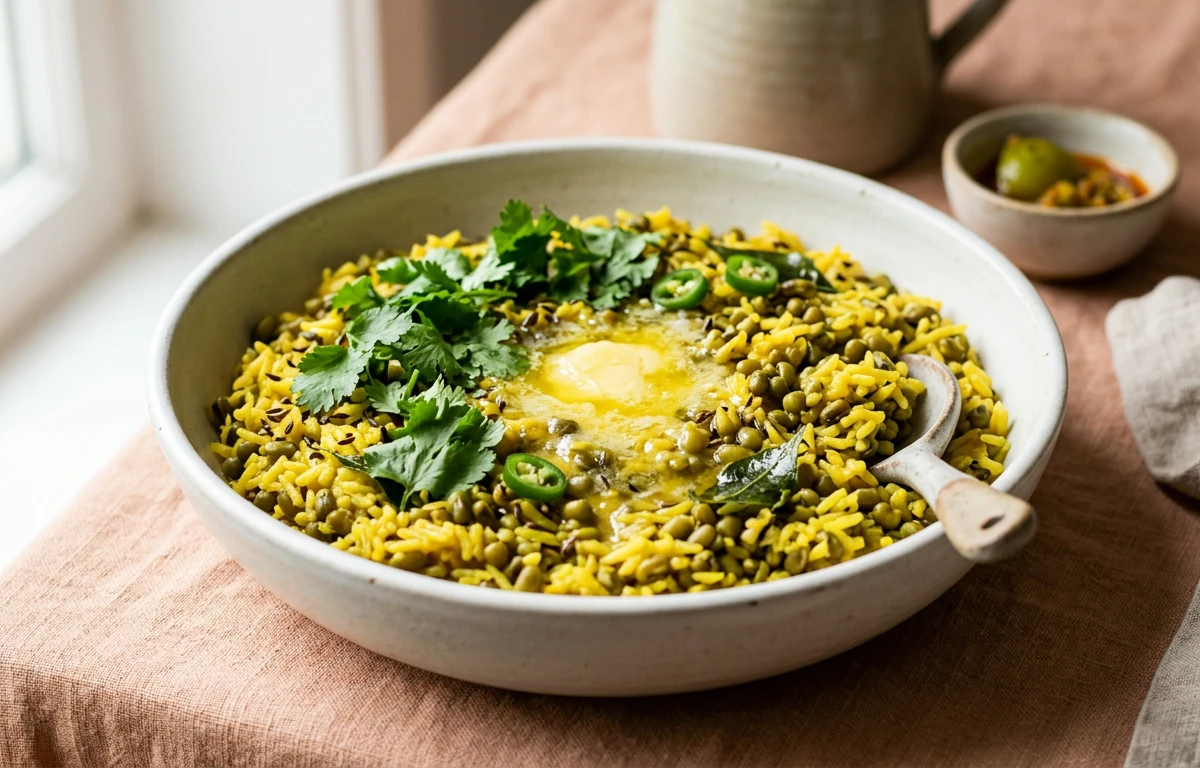
Moth Bean & Rice Khichdi
A comforting, one-pot meal made with nutty moth beans and fragrant basmati rice, slow-cooked with gentle spices. This Rajasthani-style khichdi is light on the stomach yet deeply satisfying — perfect for a cozy dinner or when you need something nourishing and simple.
For 4 servings
- prep
Soak the moth beans and rice.
1.Wash the moth beans thoroughly and soak in 2 cups water for 2 hours. Drain.2.Wash the basmati rice and soak in 1 cup water for 30 minutes. Drain and set aside.TIPSoaking the moth beans reduces cooking time and makes them easier to digest. - temper · ~2 min
Make the tempering.
1.Heat ghee in a pressure cooker over medium heat.2.Add cumin seeds and let them splutter for 30 seconds.3.Add black peppercorns, cloves, bay leaf, and asafoetida. Sauté for 20 seconds until fragrant.4.Add chopped ginger and slit green chili. Stir for 30 seconds.TIPDon't let the asafoetida burn — it turns bitter. Keep the heat at medium. - saute · ~3 min
Cook the tomato base.
1.Add chopped tomatoes and turmeric powder to the cooker.2.Sauté for 2-3 minutes until tomatoes soften and the ghee starts to separate. - pressure cook · ~15 min
Pressure cook the khichdi.
1.Add the drained moth beans and rice to the cooker.2.Add salt and pour in 3.5 cups of water. Stir well.3.Close the lid and pressure cook on medium heat for 3-4 whistles.4.Let the pressure release naturally. Open the lid and give it a gentle mash with the back of a spoon.TIPNatural pressure release keeps the rice and beans soft and creamy. Don't force the whistle release. - assemble · ~1 min
Adjust consistency and finish.
1.If the khichdi is too thick, stir in 1/4 cup of warm water and simmer for 1 minute until you get a soft, porridge-like consistency.2.Check salt and adjust if needed. - serve
Garnish with coriander leaves and serve hot.
Ladle the khichdi into bowls, top with generous amounts of fresh coriander leaves. Serve immediately with a dollop of ghee on top, alongside plain yogurt and papad.
What to keep in mind.
6 tips from the recipe — small details that make a real difference to the final dish.
- 1Soaking moth beans for a full 2 hours softens their tough outer skin for even cooking.
- 2Use a heavy-bottomed pressure cooker to prevent the ghee from browning too quickly during tempering.
- 3For a creamier texture, mash the khichdi lightly with a spoon after pressure cooking, but leave some beans whole.
- 4If the khichdi thickens on standing, loosen it with a splash of warm water — it should be soft and porridge-like.
- 5A dollop of fresh ghee just before serving enhances the aroma and adds a silky finish to each bowl.
- 6Let the pressure release naturally; a quick release can make the rice and beans turn mushy or uneven.
Adapt it for your goals.
Vegan
Replace ghee with coconut oil or your favorite neutral oil. The tempering spices and asafoetida will still lend full Rajasthani flavor, and a splash of coconut milk at the end adds a subtle creaminess.
high proteinHigh-protein
Increase moth beans to 1 cup and reduce rice to 1/2 cup for a protein-forward khichdi that's hearty and satiating, without losing the classic porridge-like consistency.
low oilLow-oil
Reduce ghee to 1 teaspoon; dry-roast the cumin, peppercorns, and cloves in the cooker before adding a splash of water to sauté the ginger and tomatoes. The final dish will be lighter but still aromatic.
jainJain
Omit onions, garlic, and asafoetida (use hing if permissible, but many Jain cooks skip it). Add a pinch of turmeric and ginger alone for tempering; the moth beans and rice still provide a satisfying meal.
vegetable loadedVegetable-loaded
Add 1/2 cup mixed finely chopped vegetables (carrots, green beans, peas) along with the tomatoes. They cook perfectly under pressure and boost the nutritional density without altering the spice balance.
Why this is on our healthy list.
Rich in Plant Protein
Moth beans are an excellent source of protein for vegetarians, and combining them with rice creates a complete amino acid profile that's easily absorbed by the body.
Digestion-Friendly Spices
Asafoetida, cumin, and ginger are traditionally used in Indian cooking to aid digestion and reduce bloating, making this khichdi exceptionally gentle on the stomach.
Low in Fat with Healthy Ghee
A moderate amount of ghee provides fat-soluble vitamins (A, D, E, K) and butyrate, which supports gut health, while the dish remains naturally low in saturated fat.
Naturally Gluten-Free
Both moth beans and basmati rice are naturally gluten-free, making this khichdi suitable for those with celiac disease or gluten sensitivity.
High in Complex Carbohydrates
The long-grain basmati rice and legumes provide sustained energy release, keeping you full and energized for hours without spiking blood sugar.
Frequently asked questions
Yes, but adjust the water drastically — use only about 1.5 cups water instead of 3.5, and skip pressure cooking; simmer for 10 minutes after adding the cooked beans.


