
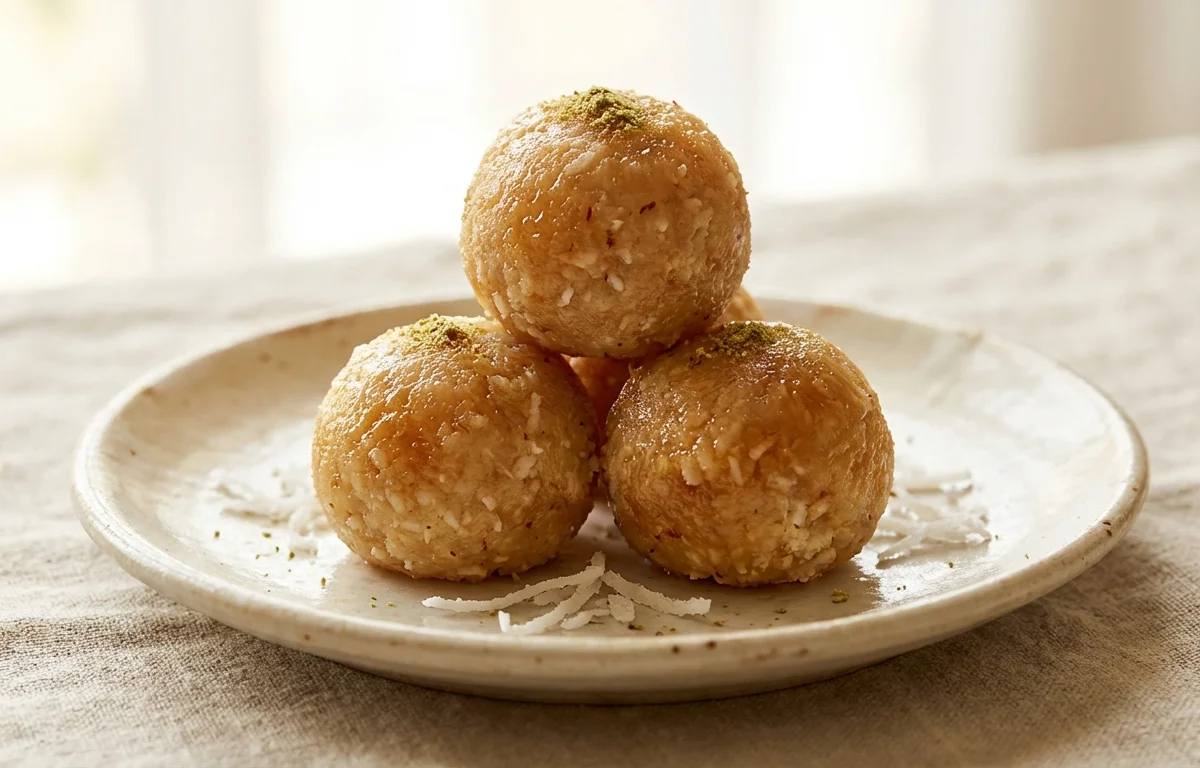
Narkel Naru
Sweet little Bengali coconut laddus made with fresh grated coconut, jaggery, and cardamom. They are soft, fragrant, and gently chewy, with a rich homemade taste that feels festive yet simple to make.
For 8 servings
- prep · ~10 min
Prepare the coconut and jaggery.
1.Grate the coconut finely if not already grated.2.Grate or crumble the jaggery so it melts quickly.3.Crush the cardamom seeds to a coarse powder. - saute · ~15 min
Cook the coconut with jaggery.
1.Add the grated coconut to a heavy pan over low heat.2.Stir in the jaggery and keep mixing as it begins to melt.3.Cook on low heat until the mixture thickens and starts leaving the sides of the pan.4.Add the crushed cardamom and mix well.TIPKeep the heat low so the jaggery melts gently and does not turn hard or grainy. - rest · ~5 min
Cool the mixture slightly.
Take the pan off the heat and let the mixture cool until it is warm but still easy to handle. It should feel sticky and hold shape when pressed.
- assemble · ~5 min
Shape the naru.
1.Grease your palms lightly with ghee.2.Divide the warm coconut mixture into 8 equal portions.3.Roll each portion into a tight round ball.TIPShape them while the mixture is still warm, or the balls may crack and not hold together. - serve
Let the naru set and serve.
What to keep in mind.
6 tips from the recipe — small details that make a real difference to the final dish.
- 1Use a heavy-bottomed pan so the jaggery melts evenly without scorching the coconut.
- 2If your jaggery has grit, melt and strain it first before cooking with the coconut.
- 3Cook only until the mixture leaves the sides of the pan; overcooking makes the naru hard after cooling.
- 4Shape the laddus while the mixture is warm, pressing firmly so they set into smooth, tight rounds.
- 5If the mixture cools too much and starts cracking, warm it briefly on low heat to soften it again.
- 6Store cooled naru in an airtight container; refrigerate in humid weather to keep the fresh coconut from spoiling.
Adapt it for your goals.
Nolen-gur
Use date palm jaggery for a deeper winter-special Bengali flavor and a more aromatic, caramel-like sweetness.
dry coconutDry-coconut
Make it with desiccated coconut if fresh is unavailable; useful for longer shelf life, though the texture will be less juicy.
less sweetLess-sweet
Reduce the jaggery slightly for a more coconut-forward naru with milder sweetness.
festiveFestive
Add a few chopped cashews or raisins for a richer prasad-style version with more bite.
Why this is on our healthy list.
Natural Energy Boost
Jaggery and coconut together make these naru a quick, satisfying sweet for festive days or small portions after meals.
Contains Healthy Fats
Fresh coconut provides natural fats that add satiety and rich mouthfeel, making each laddu feel satisfying.
Aromatic Digestive Spice
Cardamom adds fragrance and is traditionally used to make rich sweets feel lighter and more balanced.
Frequently asked questions
The mixture was likely cooked too long or on heat that was too high. Stop once it thickens and starts leaving the sides of the pan.


