No-Cook Dadpe Poha
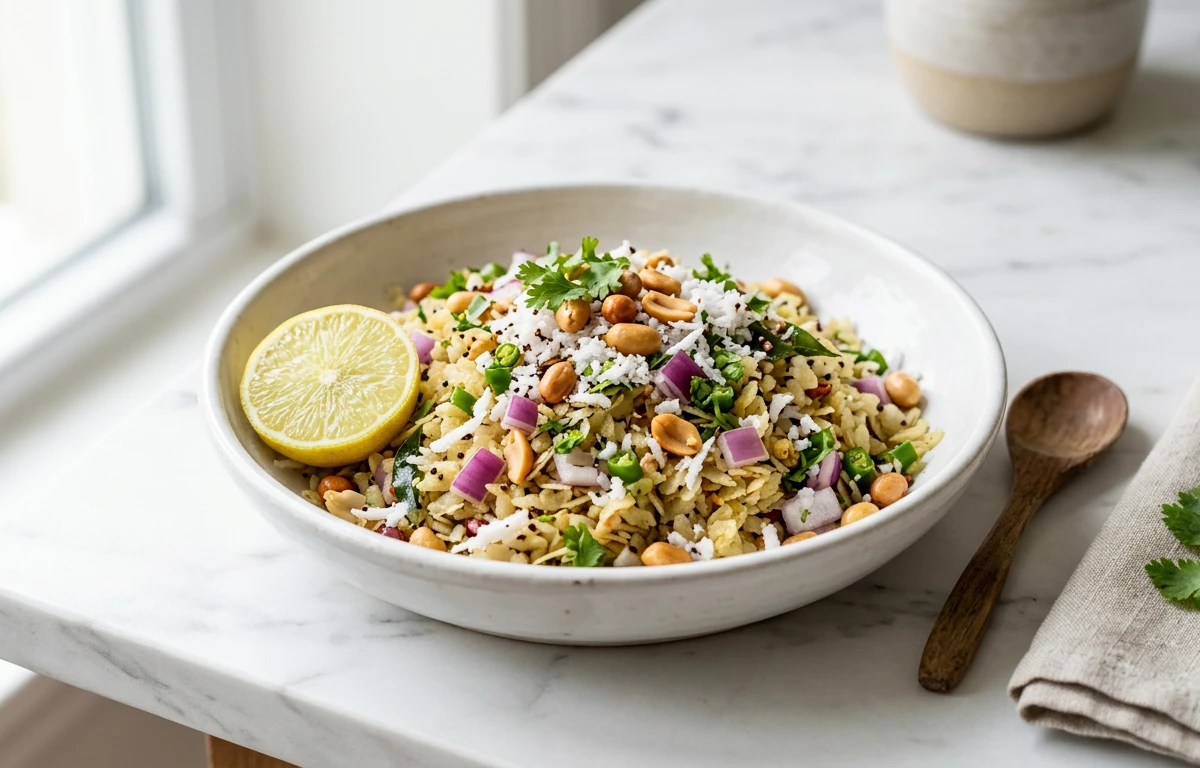
A refreshing Maharashtrian breakfast or snack made with flattened rice that requires zero cooking. The poha softens simply by being mixed with fresh coconut, onion, and a touch of water, then gets a bright lift from lemon juice and raw groundnut oil. Crunchy peanuts, green chili, and fresh coriander make it vibrant, light, and ready in under 15 minutes.
For 4 servings
- prep · ~3 min
Sprinkle water over poha and let it soften.
Place the medium variety poha in a large mixing bowl. Sprinkle 3 tablespoons of water evenly over the poha, tossing gently with your fingers to distribute the moisture. Let it sit for 3 to 5 minutes until the poha softens and fluffs up without becoming mushy.
TIPUse medium or thick poha, not thin. Thin poha turns into a soggy paste with just a sprinkle of water. - mix · ~1 min
Add oil, salt, and sugar to the softened poha.
Pour the groundnut oil over the now softened poha. Add the pinch of salt and sugar. Using your hands or a light spatula, gently toss the poha to coat each grain evenly with the oil and seasonings. The oil adds richness and keeps the grains separate.
TIPGroundnut oil is traditional and gives the authentic Maharashtrian earthiness, but any cold-pressed oil works. - mix · ~2 min
Fold in onions, coconut, peanuts, and green chili.
1.Add chopped onion, fresh grated coconut, crushed roasted peanuts, and chopped green chili to the bowl.2.Gently mix everything together with your fingers or a spoon until the ingredients are evenly distributed through the poha.3.Massage the mixture lightly for 30 seconds to release the onion's sharpness into the dish. - mix · ~1 min
Finish with lemon juice and fresh coriander.
Squeeze fresh lemon juice over the poha mixture and add most of the chopped coriander, saving a little for garnish. Give the whole thing one final gentle toss to combine without breaking the poha grains.
TIPAdd lemon juice right before serving to keep the dish bright and prevent it from becoming soggy. - garnish · ~1 min
Garnish with reserved coriander and serve immediately.
Transfer to a serving bowl, scatter the remaining coriander on top, and serve at once. Dadpe Poha tastes best fresh and at room temperature.
What to keep in mind.
5 tips from the recipe — small details that make a real difference to the final dish.
- 1Use medium or thick poha — thin poha turns mushy when sprinkled with water.
- 2Sprinkle water gradually and toss gently; let the poha rest 3–5 minutes until soft but not clumpy.
- 3Massage the onion into the poha for 30 seconds to mellow its sharpness and integrate flavors.
- 4Add lemon juice only at the end, just before serving, to keep the dish fresh and prevent sogginess.
- 5Chill the assembled poha for 10 minutes if you prefer a cooler, more refreshing bite.
Adapt it for your goals.
Spicy & Tangy
Add ½ teaspoon of red chili powder and an extra tablespoon of lemon juice for a punchier, more piquant version that wakes up the palate.
Protein BoostProtein Boost
Fold in ¼ cup of crumbled paneer or boiled chickpeas for a more filling breakfast or post-workout snack.
No Onion No Garlic (Satvik)No-Onion No-Garlic (Satvik)
Skip the onion and green chili, substitute with ¼ cup of finely chopped cucumber and a pinch of asafoetida (hing) for a lighter, satvik-friendly version.
Nut FreeNut-Free
Replace peanuts and groundnut oil with roasted sunflower seeds or pumpkin seeds and a neutral oil like coconut or avocado to avoid allergens while keeping crunch.
Fruity TwistFruity Twist
Add ½ cup of pomegranate arils along with the onions for bursts of sweetness and jewel-like color that contrast the nutty base.
Why this is on our healthy list.
Rich in Healthy Fats
Fresh coconut and raw groundnut oil provide medium-chain triglycerides and heart-friendly unsaturated fats that support energy and satiety.
Good Source of Plant Protein
Roasted peanuts add plant-based protein, essential for muscle repair and keeping you full longer.
High in Electrolytes & Hydration
Lemon juice and fresh coconut supply potassium and natural sugars, helping to rehydrate and balance electrolytes.
Gluten-Free Naturally
Made entirely from naturally gluten-free ingredients — flattened rice, nuts, vegetables, and spices — ideal for those with gluten sensitivity.
Supports Digestion
The combination of raw onion, green chili, and lemon juice stimulates digestive enzymes and adds antimicrobial benefits.
Frequently asked questions
No, thin poha will turn into a soggy paste. Always use medium or thick poha so the grains stay separate and chewy after adding just a splash of water.



.webp)