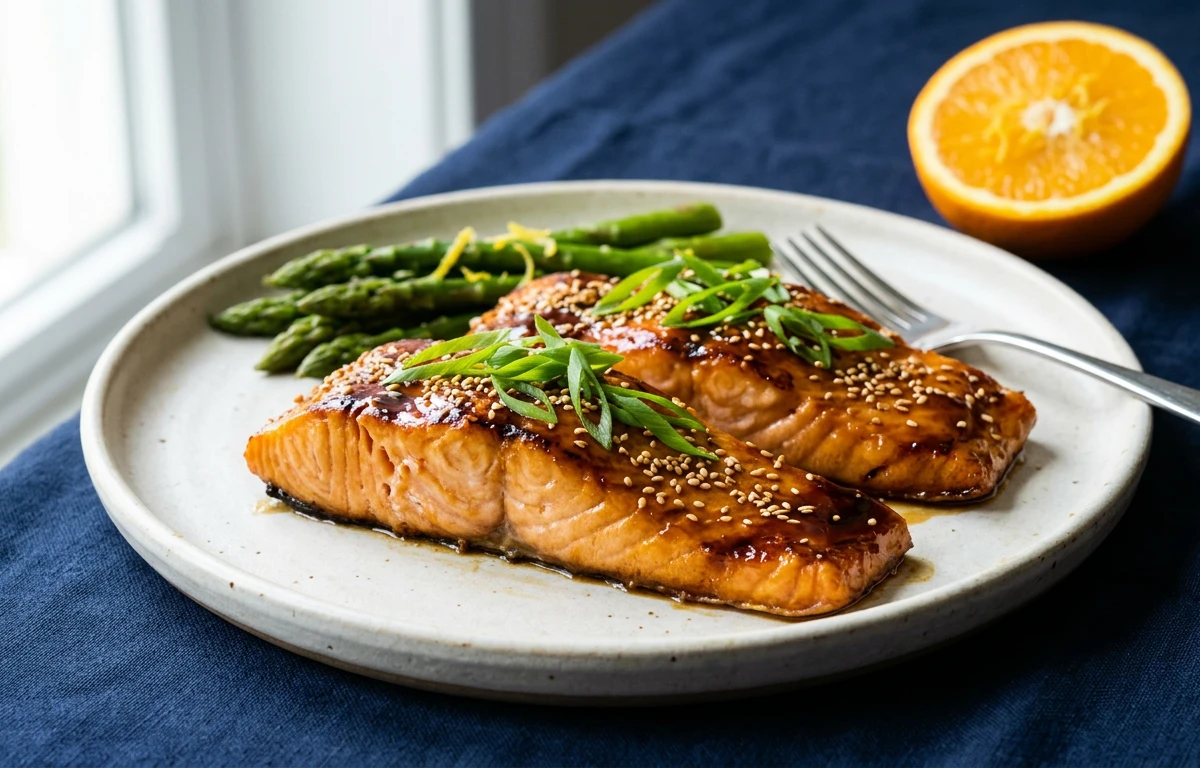
Orange & Ginger Glazed Salmon
Crispy-skinned salmon fillets coated in a sticky, sweet-tangy orange and ginger glaze. This weeknight hero comes together in 20 minutes — sear the salmon until golden, whip up the zesty sauce in the same pan, then let it bubble down to a glossy finish. Pairs beautifully with steamed rice and greens.
For 4 servings
- prep
Season the salmon.
1.Pat the salmon fillets completely dry with paper towels.2.Season both sides with salt and black pepper.TIPDry salmon skin guarantees a crispy sear. Don't skip the paper towels. - fry · ~6 min
Sear the salmon.
1.Heat oil in a large non-stick skillet over medium-high heat until shimmering.2.Place salmon skin-side down and cook undisturbed for 4 minutes until skin is golden and crisp.3.Flip carefully and cook the flesh side for 2 minutes until just opaque in the center.4.Transfer salmon to a plate and tent loosely with foil.TIPDon't move the fillets for the first 3 minutes — the skin releases naturally once crisp. - saute · ~1 min
Build the aromatic base for the glaze.
1.Lower the heat to medium. Add minced garlic and grated ginger to the same skillet.2.Sauté for 30 seconds until fragrant, stirring constantly.TIPWatch closely — garlic and ginger burn fast and turn bitter. - simmer · ~4 min
Reduce the orange glaze.
1.Pour in the orange juice, honey, soy sauce, and rice vinegar.2.Stir in the orange zest.3.Simmer for 3 to 4 minutes, stirring occasionally, until the sauce thickens and coats the back of a spoon.TIPThe glaze should be syrupy enough to leave a trail when you drag a spoon through it. It will thicken further off heat. - assemble · ~1 min
Glaze the salmon.
1.Return the salmon fillets to the skillet, skin-side up this time.2.Spoon the glaze repeatedly over the flesh for 1 minute until the salmon is well-coated and warmed through. - garnish
Finish with scallions and sesame seeds.
1.Transfer glazed salmon to plates.2.Scatter sliced scallions and toasted sesame seeds over the top.3.Serve immediately with any extra pan glaze drizzled over.
What to keep in mind.
6 tips from the recipe — small details that make a real difference to the final dish.
- 1Pat the salmon skin bone-dry before searing to guarantee a shatteringly crisp crust that won't stick.
- 2Use a fish spatula to flip the fillets; its thin, angled blade slides easily under the delicate flesh without breaking it.
- 3When the glaze coats the back of a spoon and leaves a clear trail, it's ready — remember it will thicken more off the heat.
- 4Let the salmon rest under foil for 2 minutes after searing to let juices redistribute, keeping the flesh moist.
- 5For the best flavor, use freshly squeezed orange juice; bottled juice often lacks acidity and brightness.
- 6If the skillet gets too dark after searing, deglaze it with a splash of water before adding garlic and ginger to avoid scorching.
Adapt it for your goals.
Spicy Chili-Ginger
Add 1/2 teaspoon red pepper flakes or a minced fresh red chili with the garlic and ginger for a fiery kick that balances the sweet orange.
Low Sugar (Keto Friendly)Low-Sugar (Keto-Friendly)
Replace honey with a sugar-free sweetener like monk fruit or allulose and use tamari instead of soy sauce to cut carbs while keeping the glaze sticky.
Grain Free (Paleo)Grain-Free (Paleo)
Substitute coconut aminos for soy sauce and maple syrup for honey to make the dish fully paleo-compliant without losing the savory-sweet balance.
Herb InfusedHerb-Infused
Add 1 tablespoon of fresh thyme or cilantro leaves to the glaze during the last minute of simmering for an earthy, aromatic layer that complements the ginger.
Why this is on our healthy list.
Rich in Omega-3 Fatty Acids
Salmon is packed with EPA and DHA omega-3s, which support heart health, reduce inflammation, and promote brain function.
High-Quality Protein Source
A single serving of salmon provides about 30 grams of complete protein, essential for muscle repair and satiety.
Vitamin D Boost
Salmon is one of the few natural food sources of vitamin D, crucial for bone health and immune support.
Antioxidants from Ginger
Fresh ginger contains gingerol, a potent antioxidant that may help reduce oxidative stress and support digestion.
Immune-Supporting Vitamin C
Freshly squeezed orange juice and zest provide a natural dose of vitamin C, which aids collagen production and immune defense.
Frequently asked questions
Most likely the pan wasn't hot enough or the salmon skin wasn't dry. Heat oil until shimmering, and always pat the skin bone-dry before seasoning.