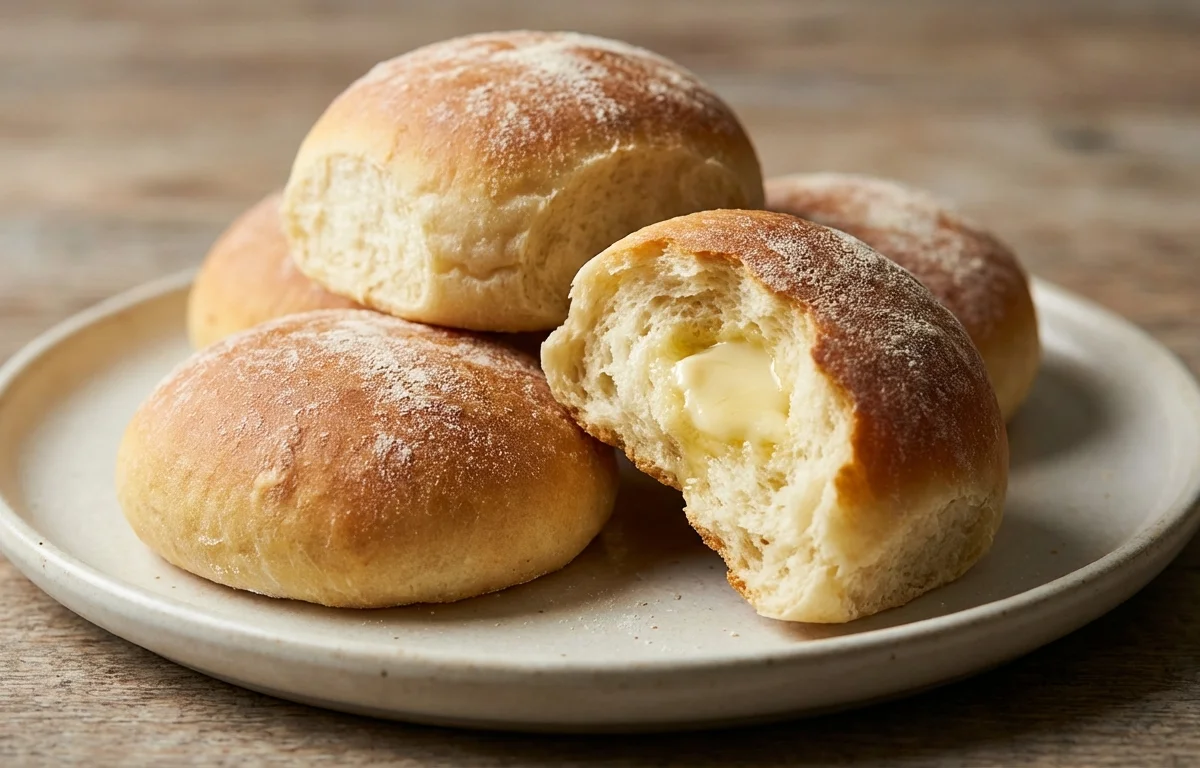
Paaun Ruti
Paaun Ruti is a soft, lightly sweet Bengali-style milk bread with a tender crumb and thin crust. Baked as a simple loaf, it is lovely warm with butter, jam, or a cup of chai.
For 8 servings
- prep · ~10 min
Bloom the yeast.
1.Warm the milk until just lukewarm, not hot.2.Stir in the sugar and yeast.3.Set aside until foamy, 8 to 10 minutes.TIPIf the yeast does not foam, start again with fresh yeast and cooler milk. - knead · ~10 min
Make the dough.
1.Add the flour and salt to a large bowl and mix well.2.Pour in the yeast mixture and half of the beaten egg.3.Mix into a shaggy dough, then add the softened butter.4.Knead for 8 to 10 minutes until smooth and soft.TIPThe dough should feel soft and slightly tacky, not dry. - rest · ~60 min
Let the dough rise.
Lightly grease a bowl with the oil and place the dough in it. Cover and let it rise in a warm spot until doubled in size, about 1 hour.
- assemble · ~30 min
Shape the loaf.
1.Grease a loaf tin lightly with oil.2.Punch down the risen dough gently.3.Shape it into a tight log and place it seam side down in the tin.4.Cover loosely and let it rise again until puffy, 25 to 30 minutes. - bake · ~30 min
Bake the bread.
Brush the top with the remaining beaten egg. Bake in a preheated 180°C oven for 28 to 30 minutes until the top is deep golden and the loaf sounds hollow when tapped.
TIPIf the top browns too quickly, cover it loosely with foil for the last 10 minutes. - rest · ~20 min
Cool the loaf.
Remove the bread from the tin and cool on a rack for at least 20 minutes before slicing. This helps the crumb set properly.
- serve
Slice and serve.
What to keep in mind.
7 tips from the recipe — small details that make a real difference to the final dish.
- 1Keep the milk just lukewarm; hot milk can kill the yeast and give a dense loaf.
- 2Add the butter after the dough comes together so gluten develops before the fat softens it too much.
- 3For the soft Bengali-style crumb, knead until the dough is smooth and slightly tacky, not firm or floury.
- 4Shape the dough into a tight log so the loaf rises upward instead of spreading in the tin.
- 5Do not overproof the second rise; bake when the dough looks puffy and springs back slowly when lightly pressed.
- 6Cool the loaf fully or at least 20 minutes before slicing, or the tender crumb may turn gummy.
- 7Store wrapped at room temperature for a day or two, then toast slices to bring back the buttery softness.
Adapt it for your goals.
Eggless
Skip the egg in the dough and use milk or melted butter on top; useful for an egg-free loaf with a still-soft crumb.
whole wheatWhole-wheat
Replace part of the all-purpose flour with whole wheat flour for a nuttier taste and heartier texture.
jaggeryJaggery
Use grated jaggery instead of sugar for a deeper, more caramel-like sweetness that pairs well with chai.
cardamom scentedCardamom-scented
Add a pinch of ground cardamom to the flour for a lightly aromatic version that leans more toward teatime bread.
Why this is on our healthy list.
Some Protein from Milk and Egg
The milk and egg add protein to the loaf, making it a bit more nourishing than a very plain water-based bread.
Energy-Giving Bread
Flour provides carbohydrates, so this loaf works well as a comforting breakfast or tea-time bread.
Calcium from Milk
Because the dough is made with milk, the bread offers some calcium along with its soft texture and mild sweetness.
Frequently asked questions
Dense bread usually means the yeast was weak, the milk was too hot, or the dough did not rise enough before baking.