Pan-Fried Rohu
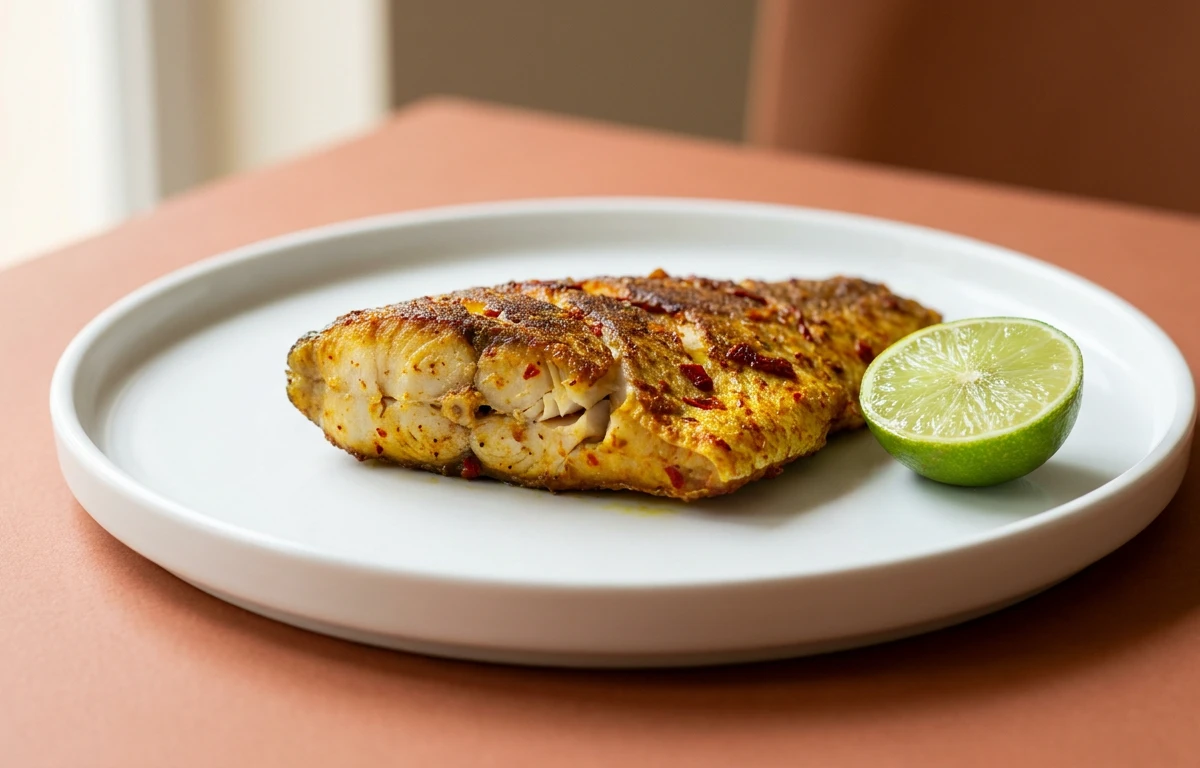
Golden, crisp-edged rohu steaks with a simple turmeric-chili marinade, pan-fried until the skin crackles and the flesh stays tender and flaky. A light squeeze of lemon is all it needs—classic Bengali home cooking that comes together in under 30 minutes.
For 4 servings
- prep · ~10 min
Marinate the fish steaks.
1.Pat the rohu steaks completely dry with paper towels.2.Rub both sides with turmeric powder, red chili powder, and salt.3.Squeeze lemon juice over the steaks and gently massage the spices in.4.Let them sit for 10 minutes at room temperature.TIPVery dry fish ensures a crisp crust. Don't skip patting them dry. - fry · ~9 min
Pan-fry the rohu steaks.
1.Heat mustard oil in a cast iron skillet over medium-high heat until it reaches its smoking point, then lower to medium heat.2.Carefully slide in the marinated steaks in a single layer, without crowding the pan.3.Fry for 4-5 minutes on the first side without moving, until deeply golden and crisp.4.Gently flip using a fish spatula and fry the second side for 3-4 minutes until golden and the flesh flakes easily.TIPMustard oil must smoke first to lose its raw pungency. This step is crucial for authentic Bengali flavor. - serve
Serve immediately with lemon wedges and sliced onion.
Transfer the fried fish to a serving plate. Arrange raw onion rings alongside and tuck lemon wedges around the fish. Serve hot as a standalone main with rice or as a side.
TIPA sprinkle of black salt on the onion rings adds a street-food tang that pairs beautifully.
What to keep in mind.
7 tips from the recipe — small details that make a real difference to the final dish.
- 1Always smoke the mustard oil until it shimmers and a wisp of smoke appears—this tames its sharp bite.
- 2Do not crowd the pan; fry only 2 steaks at a time to keep the oil temperature high for a crisp crust.
- 3Let the fish sear undisturbed for a full 4–5 minutes—moving it early will tear the skin.
- 4Use a thin, flexible fish spatula to flip the steaks gently and keep the crust intact.
- 5If the fish is fresh, skip the fridge and marinate at room temp for even cooking.
- 6For extra crunch, pat the steaks dry again just before they hit the oil, even after marinating.
- 7Leftover fried rohu can be refrigerated for a day; reheat in a dry pan to revive the crispness.
Adapt it for your goals.
Herb-Crusted
Add 1 tbsp finely chopped fresh coriander or curry leaves to the marinade for a fragrant, herbal layer that brightens the fish.
Spicy Andhra StyleSpicy Andhra-Style
Swap the red chili powder for ½ tsp of fiery gunpowder (a mix of roasted lentils, red chilies, and cumin) for a crunchy, intensely spicy crust.
Lighter Pan FryLighter Pan-Fry
Use 2 tbsp of a neutral oil (like sunflower or rice bran) instead of mustard oil for a milder base, then finish with a drizzle of fresh mustard oil after cooking.
Low SodiumLow-Sodium
Replace regular salt with a pinch of rock salt or black salt during marinade, and serve with extra lemon to compensate for reduced saltiness.
Non Bengali TwistNon-Bengali Twist
Marinate with a teaspoon of grated ginger and garlic paste, plus a pinch of garam masala, for a more aromatic, North Indian-style finish.
Why this is on our healthy list.
Rich in Omega-3 Fatty Acids
Rohu is a freshwater fish naturally high in heart-healthy omega-3s, which support brain function and reduce inflammation.
High-Quality Lean Protein
Each serving provides a generous amount of complete protein, essential for muscle repair and satiety, with minimal saturated fat.
Packed with Essential Minerals
Rohu is a good source of phosphorus, selenium, and vitamin B12—important for bone health, immune function, and energy metabolism.
Low in Refined Carbs
This dish contains no grains or sugars, making it suitable for low-carb, keto, and diabetic-friendly diets when paired with non-starchy sides.
Anti-Inflammatory Spices
Turmeric and red chili powder contain curcumin and capsaicin, both known for their antioxidant and anti-inflammatory properties.
Frequently asked questions
Yes—choose firm, white-fleshed fish steaks like catfish, tilapia, or sea bass, keeping them about 2 cm thick for the same cooking time.