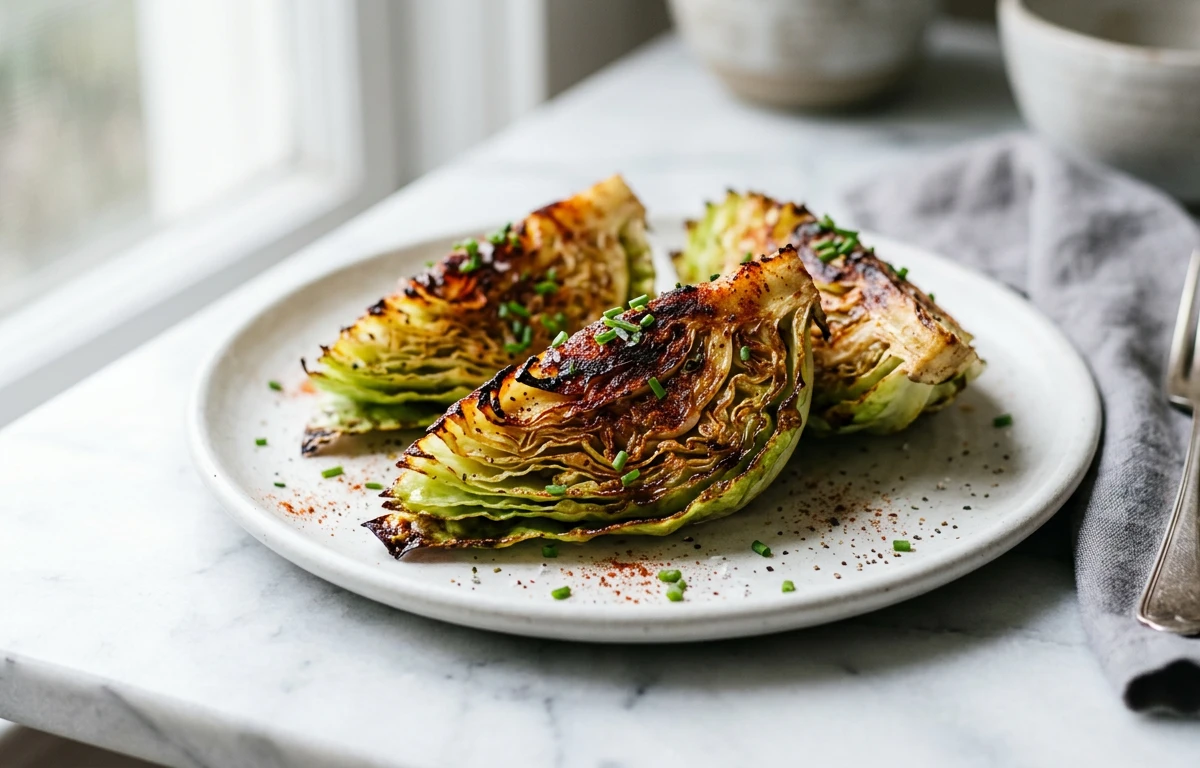
Pan-Seared Cabbage Wedges
Crispy, caramelized edges meet a tender, slightly sweet center in these pan-seared cabbage wedges. A simple weeknight side dish that transforms humble green cabbage into something downright crave-worthy with just a hot skillet, a little oil, and a squeeze of lemon.
For 4 servings
- prep · ~2 min
Cut the cabbage into wedges.
1.Peel off and discard any wilted outer leaves from the cabbage.2.Place the cabbage on a cutting board, core side down, and cut it in half through the core.3.Cut each half in half again to create 4 wedges, keeping a piece of core on each to hold the leaves together. - prep · ~1 min
Season the cabbage wedges.
1.Brush or drizzle both cut sides of each wedge evenly with 2 tablespoons of the olive oil.2.Season the cut sides with the salt, black pepper, and smoked paprika.TIPGetting oil on the flat cut sides is key for even browning and a crispy crust. - fry · ~6 min
Sear the first side of the wedges.
1.Heat the remaining 1 tablespoon of olive oil in a large skillet over medium-high heat until shimmering.2.Carefully place the cabbage wedges in the skillet, flat side down.3.Sear without moving for 4 to 5 minutes, until deeply golden brown and charred in spots.TIPDon't overcrowd the pan. If your skillet isn't large enough, sear in batches to avoid steaming the cabbage. - fry · ~5 min
Flip the wedges and sear the other side.
1.Use a thin metal spatula to carefully flip each wedge to the other cut side.2.Sear for another 4 to 5 minutes until the second side is equally caramelized.TIPA thin metal spatula slides under the crust best without tearing it. - simmer · ~5 min
Add garlic and steam to tenderize.
1.Reduce the heat to medium-low and push the wedges to one side of the skillet.2.Add the minced garlic to the open space and sauté for 30 seconds until fragrant.3.Pour 3 tablespoons of water into the skillet away from the wedges, then immediately cover with a lid.4.Steam for 3 to 4 minutes, or until the core is fork-tender.TIPThe steam finishes cooking the dense core without burning the exterior. - garnish · ~1 min
Finish with lemon juice and serve hot.
1.Transfer the wedges to a serving platter.2.Drizzle with fresh lemon juice and sprinkle any remaining garlic bits from the pan over the top.3.Serve immediately.
What to keep in mind.
6 tips from the recipe — small details that make a real difference to the final dish.
- 1Cut through the core to keep each wedge intact during searing.
- 2Pat the cut sides dry with a paper towel before oiling for better browning.
- 3Use a heavy stainless steel or cast-iron skillet for the best crust.
- 4Don't flip too early; wait until the first side is deeply golden to prevent tearing.
- 5If the pan smokes too much, reduce heat slightly—burnt garlic ruins the dish.
- 6For extra char, press the wedges gently with a spatula while searing.
Adapt it for your goals.
Spicy
Add 1/2 teaspoon red pepper flakes along with the smoked paprika for a subtle heat that complements the sweet caramelized cabbage.
bacon fleckedBacon-flecked
Render 2 strips of chopped bacon before searing, then cook the wedges in the bacon fat for a smoky, meaty depth.
herb garlic butterHerb-garlic butter
Swap the lemon juice and olive oil finish with a tablespoon of melted butter mixed with fresh thyme or parsley for a richer sauce.
balsamic glazedBalsamic glazed
Drizzle 1 tablespoon balsamic vinegar over the wedges in the last minute of steaming for a tangy-sweet glaze.
Why this is on our healthy list.
Rich in Vitamin C
Green cabbage is an excellent source of vitamin C, which supports immune function and collagen production.
High in Dietary Fiber
Each wedge of cabbage provides a good amount of fiber to aid digestion and promote a feeling of fullness.
Low-Calorie Side Dish
This dish uses minimal oil, making it a light and satisfying way to add vegetables to your meal without excess calories.
Contains Sulforaphane
Cabbage is a cruciferous vegetable rich in sulforaphane, a compound linked to antioxidant and anti-inflammatory benefits.
Frequently asked questions
Yes, but red cabbage is denser and may need 1-2 extra minutes of steaming to become fork-tender.