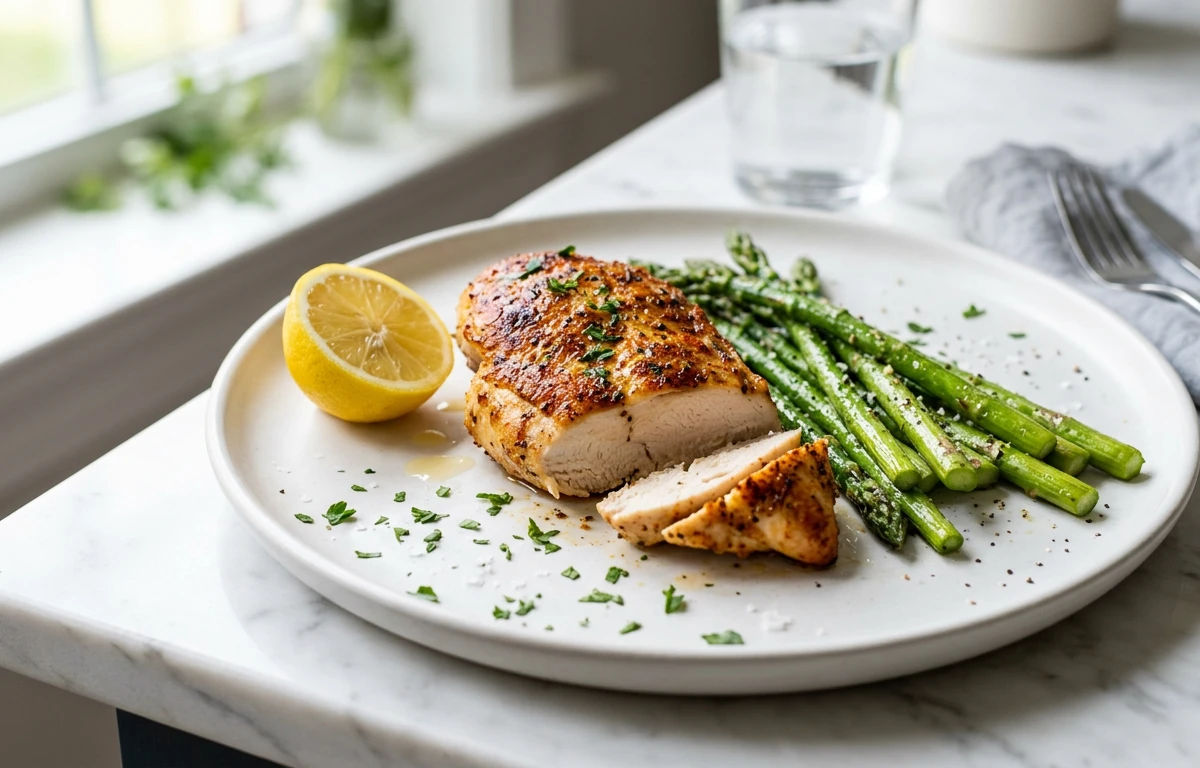
Pan-Seared Chicken & Asparagus
Golden, pan-seared chicken breasts with a crisp herb crust, paired with vibrant green asparagus spears cooked in the same skillet. This fuss-free dinner comes together in under 30 minutes with just one pan — the asparagus picks up all those delicious browned bits from the chicken, and a squeeze of lemon at the end brightens everything up.
For 4 servings
- prep
Season the chicken cutlets.
1.Pat the chicken breast cutlets completely dry with paper towels.2.Season both sides with garlic powder, smoked paprika, salt, and black pepper.TIPDrying the chicken well is the secret to a golden, crisp sear — moisture creates steam which prevents browning. - prep
Prep the asparagus.
1.Wash and pat the asparagus dry.2.Snap off the tough woody ends where they naturally break.TIPTo find the natural breaking point, hold each spear in both hands and bend — it will snap right where tenderness begins. - fry · ~11 min
Pan-sear the chicken.
1.Heat olive oil in a large cast iron skillet over medium-high heat until shimmering.2.Lay the chicken cutlets in a single layer without crowding.3.Sear without moving for 5-6 minutes until deeply golden on the first side.4.Flip and cook the second side for 4-5 minutes until the internal temperature reaches 165°F / 74°C.5.Transfer chicken to a plate and tent loosely with foil.TIPDon't move the chicken once it hits the pan — let it develop a proper crust. It releases naturally when ready to flip. - saute · ~7 min
Cook the asparagus in the same skillet.
1.Reduce the heat to medium and add minced garlic to the same skillet.2.Sauté for 30 seconds until fragrant.3.Add the asparagus and a pinch of salt.4.Cook for 4-6 minutes, turning occasionally, until bright green and tender-crisp.TIPDon't overcook the asparagus — it should still have a slight bite. Thin spears cook faster, so check at 3 minutes. - assemble
Finish and plate.
1.Return the chicken to the skillet or arrange on plates.2.Drizzle fresh lemon juice over the chicken and asparagus.3.Garnish with chopped parsley.TIPFor extra flavor, add a small pat of butter to the pan in the last minute of cooking the asparagus. - serve
Serve immediately while hot.
Plate alongside steamed rice, mashed potatoes, or a crusty bread to soak up the pan juices.
What to keep in mind.
6 tips from the recipe — small details that make a real difference to the final dish.
- 1Pat chicken cutlets bone-dry before seasoning to ensure a deep golden crust—moisture is the enemy of browning.
- 2Let the chicken sear undisturbed for 5-6 minutes; it will release naturally from the pan when the crust is ready.
- 3Snap asparagus spears at their natural breaking point instead of cutting—this removes only the woody, fibrous part.
- 4Cook asparagus just until bright green and tender-crisp, about 4-6 minutes; thinner spears may need only 3 minutes.
- 5Reserve the browned bits in the pan after searing chicken—they infuse the asparagus with rich, savory flavor.
- 6For meal prep, store cooked chicken and asparagus separately in the fridge for up to 3 days; reheat gently to avoid drying.
Adapt it for your goals.
Lemon-herb
Add 1 teaspoon of dried thyme or oregano along with the garlic powder, and toss in lemon zest with the lemon juice for a brighter, herbaceous finish.
low oilLow-oil
Use a nonstick pan and reduce olive oil to 1 tablespoon; cook chicken and asparagus with minimal oil for a lighter dish without sacrificing flavor.
high proteinHigh-protein
Swap the chicken breast for boneless, skinless chicken thighs—they stay juicier and provide a richer protein boost with more iron.
veganVegan
Replace chicken with extra-firm tofu slices (pressed and seasoned similarly) and cook until golden; use a splash of tamari instead of salt for umami.
jainJain
Omit garlic and use asafoetida (hing) for aroma; substitute lemon juice with amchur (dried mango powder) to keep the dish naturally sour and Jain-friendly.
Why this is on our healthy list.
Lean Protein Source
Chicken breast is a low-fat, high-quality protein that supports muscle maintenance and satiety without excess calories.
Rich in Folate
Asparagus is an excellent source of folate, a B-vitamin vital for cell growth and DNA synthesis, especially important during pregnancy.
Antioxidant Boost
Smoked paprika and parsley provide antioxidants like vitamin C and carotenoids that help combat oxidative stress.
Digestive Support
Asparagus contains insoluble fiber and the prebiotic inulin, promoting regular digestion and a healthy gut microbiome.
Frequently asked questions
Yes, boneless skinless thighs work well. Cook them for about 6-7 minutes per side or until they reach 175°F (80°C) for tender results.