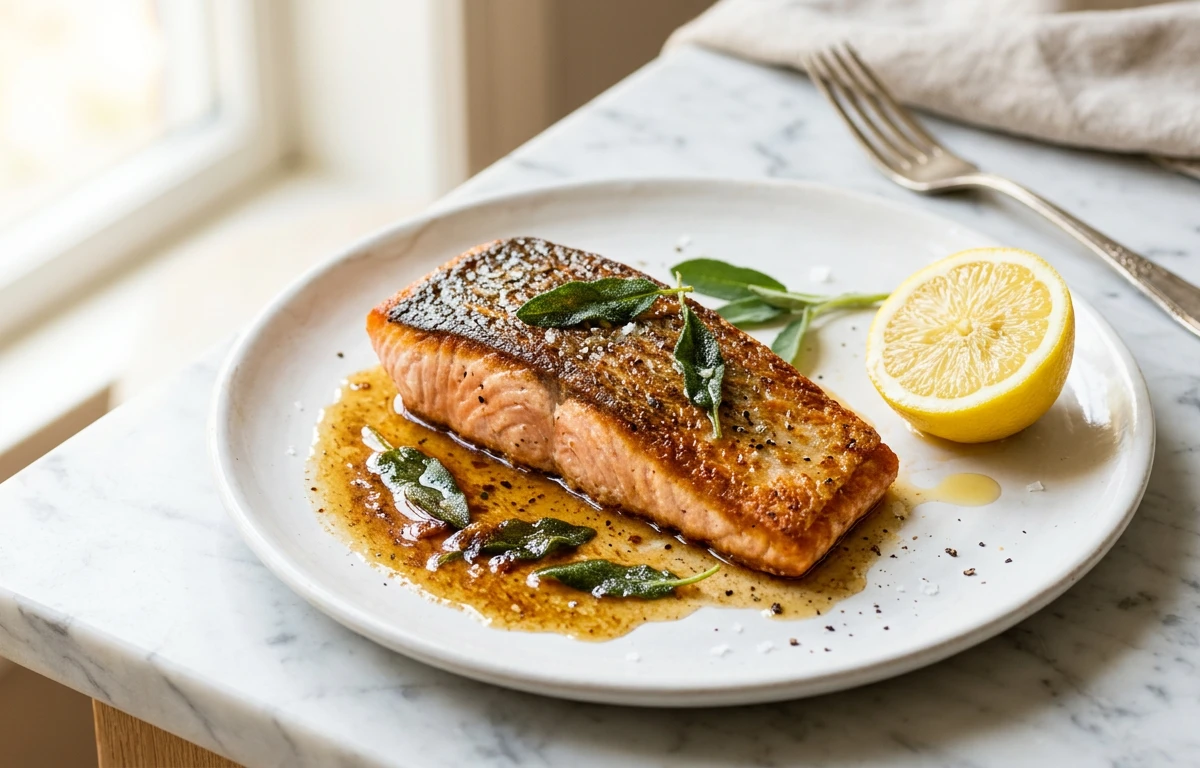
Pan-Seared Salmon with Brown Butter & Sage
Crispy-skinned salmon fillets pan-seared to perfection and finished with a nutty brown butter and sage sauce. This elegant dish comes together in 20 minutes with just a handful of ingredients, making it perfect for weeknight dinners or date nights.
For 4 servings
- prep
Pat the salmon dry and season.
1.Remove salmon fillets from the fridge 10 minutes before cooking.2.Pat each fillet completely dry with paper towels — dry skin is essential for crispiness.3.Season the flesh side evenly with salt and black pepper.TIPDon't skip the drying step. Any moisture left on the skin will steam instead of sear, leaving the skin chewy rather than crisp. - fry · ~5 min
Sear the salmon skin-side down.
1.Place the skillet over medium-high heat and add olive oil. Heat until shimmering but not smoking.2.Carefully lay the fillets skin-side down in the pan, laying them away from you to avoid splatter.3.Press each fillet gently with a fish spatula for 10 seconds to ensure full skin contact.4.Cook undisturbed until the skin is golden and crisp, about 4 to 5 minutes.TIPResist the urge to move the salmon. Letting it sit undisturbed is how you get that crackling-crisp skin. - fry · ~3 min
Flip and cook the second side.
1.When the salmon lifts easily from the pan, gently flip each fillet.2.Cook flesh side down until the internal temperature reaches 125°F for medium, about 2 to 3 minutes.3.Transfer salmon to a warm plate, skin side up, and tent loosely with foil.TIP125°F is medium — the fish will carry over to 130°F while resting. For well done, cook to 140°F but the salmon will be drier. - fry · ~2 min
Brown the butter with sage and garlic.
1.Reduce heat to medium-low. Add the cold butter cubes to the same skillet.2.Swirl the pan continuously as the butter melts — it will foam, then turn golden, then release a nutty aroma.3.Once the butter turns amber and smells nutty, drop in the sage leaves and smashed garlic cloves.4.Fry until the sage leaves crisp up and garlic is fragrant, about 1 minute.5.Remove from heat immediately to prevent burning.TIPWatch the butter closely — it goes from nutty perfection to burnt and acrid in seconds. The moment you see amber specks and smell toasted nuts, add the sage. - assemble
Plate and drizzle with brown butter sage sauce.
1.Place each salmon fillet on a warm plate, skin side up.2.Spoon the brown butter generously over each fillet.3.Top with the crispy sage leaves and discard the garlic cloves.4.Serve immediately with lemon wedges on the side.
What to keep in mind.
7 tips from the recipe — small details that make a real difference to the final dish.
- 1Pat the salmon skin bone-dry with paper towels and let it rest 10 minutes at room temp before searing to ensure maximum crispiness.
- 2Use a heavy stainless-steel or cast-iron skillet for even heat distribution and a better sear on the skin.
- 3Press each fillet gently with a fish spatula for 10 seconds after placing it in the pan to guarantee full skin contact.
- 4Start the butter browning with cold cubes — the temperature shock slows the process, giving you more control over the color.
- 5Cut the butter into small, equal cubes so they melt and brown uniformly without burning.
- 6Remove the pan from heat the instant the butter turns amber and smells nutty — carryover heat will continue cooking the solids.
- 7For extra-crispy sage, blot the leaves completely dry with a paper towel before frying to prevent sputtering.
Adapt it for your goals.
Citrus-herb
Swap the sage for fresh thyme or tarragon, and add a splash of white wine or lemon juice at the end. This brightens the sauce with acidity and pairs beautifully with the rich brown butter.
low oilLow-oil
Skip the olive oil for searing and use only a light spray of cooking oil. Reduce butter to 2 tablespoons; the sauce will still be flavorful but with less saturated fat.
garlic freeGarlic-free
Omit the smashed garlic cloves entirely. The brown butter and sage alone create a clean, elegant sauce that's still deeply savory and aromatic.
Why this is on our healthy list.
Rich in Omega-3 Fatty Acids
Salmon is one of the best natural sources of EPA and DHA omega-3s, which support heart health, brain function, and reduce inflammation.
High-Quality Complete Protein
Each fillet provides around 30 grams of easily digestible, complete protein containing all essential amino acids needed for muscle repair and satiety.
Source of Vitamin D
Wild-caught salmon is one of the few food sources of vitamin D, important for bone health and immune function.
Contains Selenium and B Vitamins
Salmon provides selenium (an antioxidant mineral) and B12, B6, and niacin, which support energy metabolism and nervous system health.
Frequently asked questions
Yes, but thaw it completely in the refrigerator overnight and pat it extremely dry before searing — frozen fish releases more moisture and won't crisp as well.