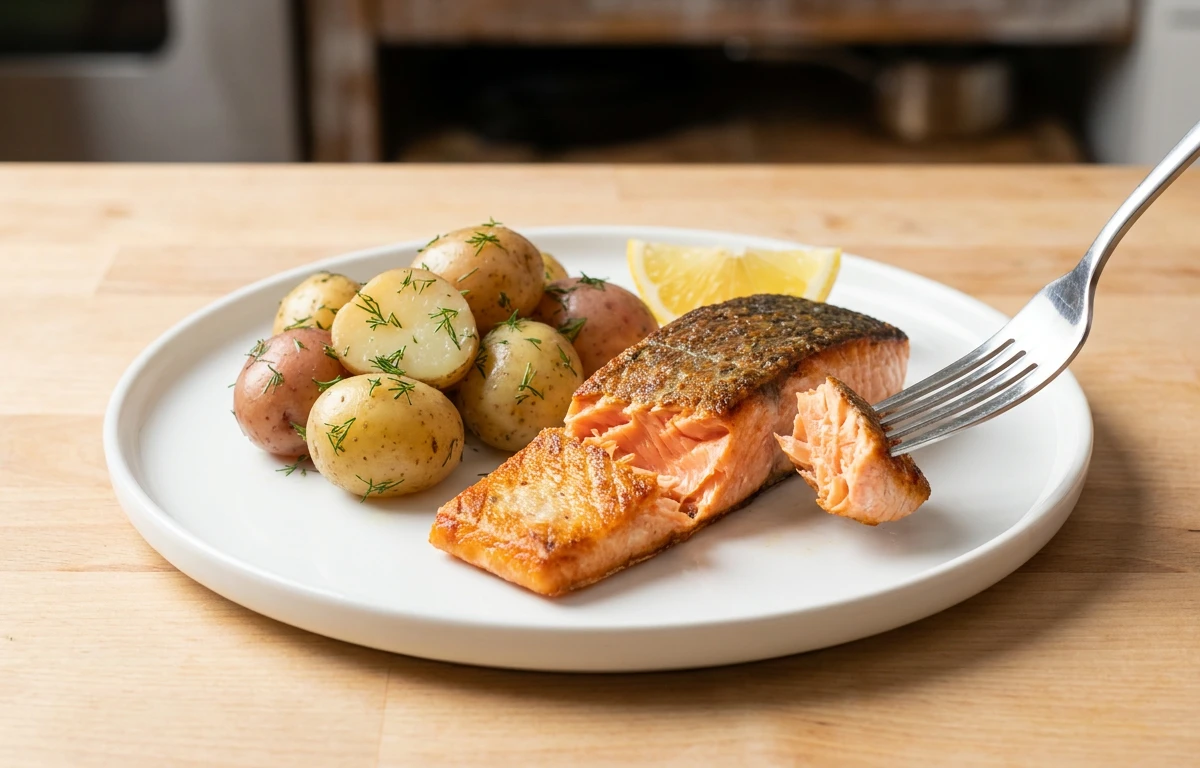
Pan-Seared Salmon with Dill Potatoes
Crispy-skinned salmon fillets with tender, golden baby potatoes tossed in fresh dill. A simple yet elegant dinner that comes together in one skillet, with bright lemon cutting through the richness of the fish. Perfect for weeknights but impressive enough for company.
For 4 servings
- boil · ~12 min
Boil the baby potatoes.
1.Place halved baby potatoes in a saucepan and cover with 4 cups of cold water.2.Add a generous pinch of salt to the water.3.Bring to a boil and cook until fork-tender, about 10 to 12 minutes.4.Drain well and let steam dry in the colander for 2 minutes.TIPStart potatoes in cold water so they cook evenly. Don't overcook or they'll fall apart in the skillet. - prep · ~1 min
Pat the salmon fillets completely dry.
Use paper towels to pat the salmon fillets dry on both sides, especially the skin. Season both sides evenly with 0.5 teaspoon salt and a pinch of black pepper.
TIPMoisture is the enemy of crispy skin. Really press with the paper towels until the skin feels tacky, not wet. - fry · ~6 min
Sear the salmon skin-side down.
1.Heat 1 tablespoon olive oil in a large skillet over medium-high heat until shimmering.2.Lay salmon fillets skin-side down in the pan, pressing gently with a spatula for 10 seconds.3.Cook undisturbed until skin is golden and crispy, about 5 to 6 minutes.TIPDon't move the fish once it hits the pan. Let the skin render and crisp — it releases naturally when ready. - fry · ~3 min
Flip and finish the salmon.
1.Flip each fillet carefully with a thin spatula.2.Add 1 tablespoon butter and minced garlic to the pan.3.Baste the salmon with the foaming butter for 2 to 3 minutes until just cooked through.TIPSalmon is done when it flakes easily with a fork and registers 125°F to 130°F for medium. Remove from pan immediately — carryover cooking will bring it to perfect doneness. - fry · ~9 min
Crisp the boiled potatoes.
1.Transfer salmon to a plate and cover loosely with foil.2.Add remaining 2 tablespoons olive oil to the same skillet over medium-high heat.3.Add drained potatoes cut-side down and cook without moving until golden, about 4 to 5 minutes.4.Flip and cook the other side until crisp, about 3 to 4 minutes more.TIPUse the same pan without cleaning — the potatoes will pick up all the browned butter and garlic flavor left from the salmon. - mix · ~1 min
Toss potatoes with dill and lemon.
Turn off the heat. Scatter chopped fresh dill over the crispy potatoes and squeeze lemon juice generously on top. Toss once or twice to coat.
TIPAdd dill off the heat to keep its bright, fresh flavor. Heat wilts it and dulls the taste. - assemble · ~1 min
Plate salmon alongside dill potatoes.
1.Divide the dill potatoes among four plates.2.Place a salmon fillet next to or on top of the potatoes.3.Serve immediately with lemon wedges on the side.
What to keep in mind.
7 tips from the recipe — small details that make a real difference to the final dish.
- 1Pat the salmon skin dry until it feels tacky — this ensures a shatteringly crisp crust.
- 2Start potatoes in cold water so they cook evenly from the inside out.
- 3Don't move the salmon once it hits the pan; it will release naturally when the skin is crispy.
- 4Use the same pan for the potatoes to pick up the buttery garlic fond left from the salmon.
- 5Add fresh dill off the heat to preserve its bright, herbaceous flavor — heat wilts it quickly.
- 6Cook salmon to 125°F–130°F for medium; carryover cooking will finish it perfectly.
- 7For extra-crispy potatoes, press them cut-side down with a spatula in the first minute.
Adapt it for your goals.
Low-oil
Replace the olive oil for crisping potatoes with a light spray of oil and use non-stick pan — reduces fat while still achieving a golden crust, ideal for lighter meals.
high proteinHigh-protein
Swap the baby potatoes for steamed broccoli or cauliflower florets — lowers carbs and boosts fiber and vitamin C, great for keto or low-carb diets.
jainJain
Omit garlic and use ghee instead of butter; replace dill with a mix of fresh coriander and a pinch of asafoetida — makes the dish Jain-friendly while keeping it aromatic.
veganVegan
Replace salmon with thick portobello mushroom caps or firm tofu steaks, use vegan butter or extra olive oil, and skip the butter basting step — creates a plant-based version with umami depth.
Why this is on our healthy list.
Rich in Omega-3 Fatty Acids
Salmon is a top source of anti-inflammatory omega-3s, which support heart and brain health.
Good Source of Vitamin D
A serving of salmon provides a significant amount of vitamin D, essential for bone health and immune function.
Potassium from Potatoes
Baby potatoes with skin contribute potassium, an electrolyte important for muscle function and blood pressure regulation.
Antioxidant Dill
Fresh dill contains flavonoids and monoterpenes that may help reduce oxidative stress and inflammation.
Frequently asked questions
The skin should be deep golden brown and sound crackly when you tap it with a spatula. If it sticks to the pan, it needs more time.