Pan-Seared Sea Bass with Lemon & Dill
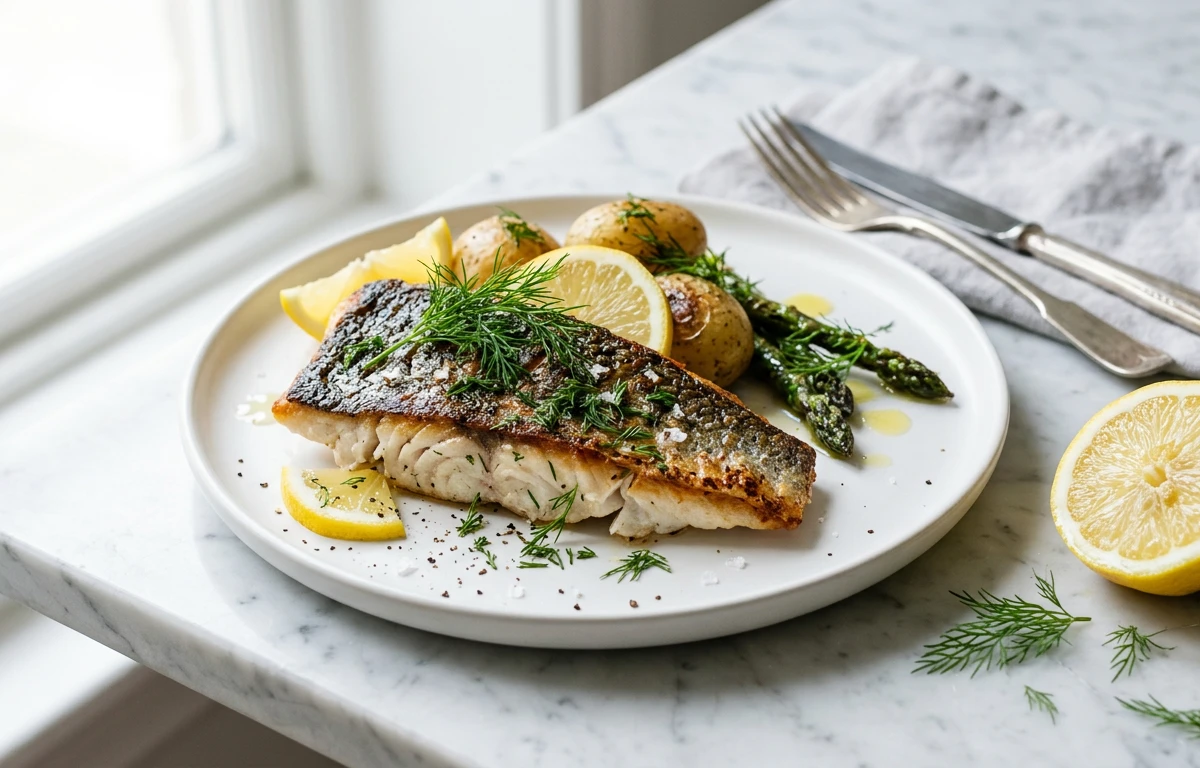
Crispy-skinned sea bass fillets with a golden sear, finished with fresh lemon and aromatic dill. The fish stays tender and flaky inside while the skin crackles beautifully. A restaurant-quality dinner that comes together in under 20 minutes.
For 4 servings
- prep
Pat the fish completely dry and season.
1.Use paper towels to press firmly on the skin side of each fillet until no moisture remains.2.Score the skin lightly with a sharp knife in 2-3 shallow cuts per fillet to prevent curling.3.Season both sides of each fillet with a pinch of salt and a pinch of pepper.TIPBone-dry skin is the secret to crispy crackling. Any moisture will steam the skin instead of crisping it. - fry · ~6 min
Sear the fish skin-side down until golden and crisp.
1.Heat olive oil in a large non-stick skillet over medium-high heat until shimmering.2.Lay the fillets skin-side down and press gently with the back of a fish spatula for 10 seconds.3.Cook without moving for 3-4 minutes until the skin is deeply golden and releases easily from the pan.4.Flip gently and cook flesh side for 1-2 minutes until just opaque.TIPDon't crowd the pan — cook in batches if needed. Overcrowding drops the pan temperature and steams the fish. - saute · ~2 min
Baste with butter, garlic and lemon.
1.Reduce heat to low and add butter and smashed garlic cloves to the pan.2.Once butter melts and foams, tilt the pan slightly and spoon the butter over the fillets for 30 seconds.3.Squeeze the juice of half a lemon over the fish in the final moments. - garnish
Finish with fresh dill and serve immediately.
Transfer fillets to warm plates, spoon the pan butter over the top, and scatter fresh dill generously. Serve with lemon wedges alongside.
TIPServe skin-side up so it stays crisp. The skin softens if left sitting against a plate.
What to keep in mind.
6 tips from the recipe — small details that make a real difference to the final dish.
- 1Pat the skin bone-dry with paper towels and let it air-dry for 5 minutes for maximum crackle.
- 2Lightly score the skin in 2-3 shallow cuts to prevent the fillet from curling as it sears.
- 3Use a fish spatula to press the fillet flat for 10 seconds after placing it skin-side down.
- 4Don't move the fish for at least 3 minutes — wait until the skin releases naturally from the pan.
- 5Baste with foaming butter and smashed garlic for 30 seconds to infuse flavor without overcooking.
- 6Serve skin-side up immediately; resting the skin against a warm plate will soften it.
Adapt it for your goals.
Herb-swap
Replace dill with fresh thyme, tarragon, or parsley for a different aromatic profile — tarragon pairs especially well with the lemon butter.
low oilLow-oil
Use a non-stick pan and reduce olive oil to 1 teaspoon; rely on the butter baste for moisture and flavor, cutting total fat significantly.
citrus twistCitrus-twist
Substitute half the lemon juice with orange or grapefruit juice for a sweeter, less acidic finish that still brightens the fish.
high proteinHigh-protein
Serve the fillets over a bed of steamed lentils or quinoa and spoon the pan butter over the top for a protein-packed meal.
Why this is on our healthy list.
Rich in Omega-3s
Sea bass is a fatty fish that provides EPA and DHA omega-3 fatty acids, which support heart and brain health.
Lean Protein Source
A single fillet delivers high-quality, low-fat protein essential for muscle maintenance and satiety.
Vitamin D Boost
Sea bass is naturally rich in vitamin D, important for bone health and immune function.
Antioxidant from Dill
Fresh dill contains flavonoids and polyphenols that help combat oxidative stress and inflammation.
Frequently asked questions
The pan isn't hot enough when you add the fish, or the skin has residual moisture not fully patted dry. Heat the oil until it shimmers, then pat the skin bone-dry.