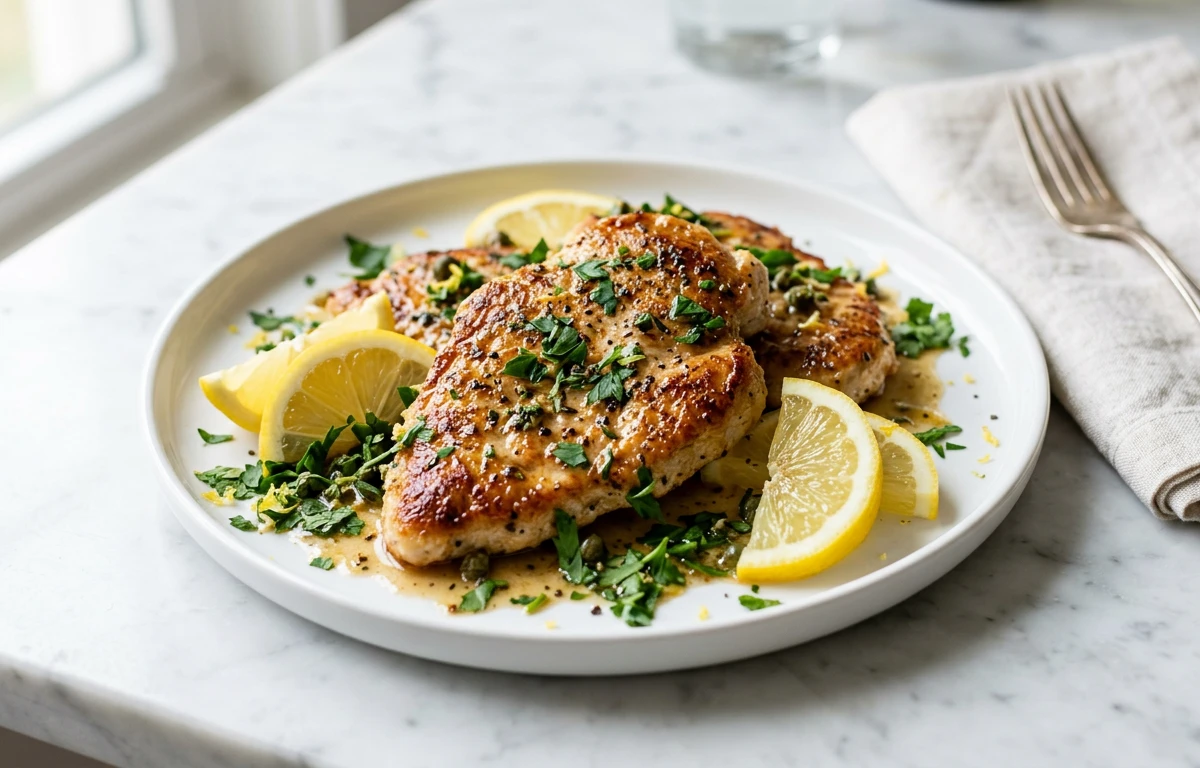
Pan-Seared Turkey Cutlets with Lemon & Herbs
Golden, juicy turkey cutlets kissed with bright lemon, garlic, and fresh herbs. Ready in under 20 minutes, this light yet satisfying dish brings Mediterranean sunshine to your weeknight table. Perfect with a simple salad or steamed greens.
For 4 servings
- prep · ~2 min
Pound the turkey cutlets to even thickness.
Place turkey cutlets between two sheets of plastic wrap. Gently pound with a meat mallet or rolling pin until uniformly 1/4 inch thick. This ensures quick, even cooking.
TIPEven thickness is the secret to juicy cutlets — thin spots overcook in seconds. - prep · ~2 min
Season and dust the cutlets.
1.Pat the turkey cutlets completely dry with paper towels.2.Season both sides with salt and black pepper.3.Lightly dust each cutlet with all-purpose flour, shaking off any excess. - fry · ~8 min
Sear the turkey cutlets.
1.Heat olive oil in a large skillet over medium-high heat until shimmering but not smoking.2.Lay cutlets in the pan in a single layer without crowding (work in batches if needed).3.Sear for 2-3 minutes on the first side until golden brown.4.Flip and cook the other side for 2 minutes until cooked through and juices run clear.TIPDon't move the cutlets for the first 2 minutes — they release naturally when a crust forms. - rest · ~3 min
Transfer cutlets to a plate and rest.
Remove turkey from the skillet and set aside on a clean plate. Cover loosely with foil to keep warm.
TIPResting lets the fibers relax, keeping juices inside the meat. - saute · ~2 min
Make the lemon-herb pan sauce.
1.Reduce heat to medium. In the same skillet, add minced garlic and sauté for 30 seconds until fragrant.2.Pour in water and scrape up the browned bits from the bottom of the pan with a wooden spoon.3.Remove pan from heat. Stir in lemon juice, lemon zest, fresh parsley, and thyme.TIPThose browned bits are pure flavor — don't skip scraping them up. - assemble · ~1 min
Spoon the sauce over the cutlets.
Drizzle the warm pan sauce evenly over the rested turkey cutlets on the plate.
- serve
Serve immediately.
Plate the cutlets with your choice of sides. A simple arugula salad or steamed green beans pair beautifully.
What to keep in mind.
6 tips from the recipe — small details that make a real difference to the final dish.
- 1Pound cutlets to an even 1/4-inch thickness for uniform cooking and tenderness.
- 2Pat turkey completely dry before seasoning to ensure a crisp, golden sear.
- 3Don't crowd the pan—cook in batches so cutlets sear, not steam.
- 4Let the cutlets rest undisturbed for 2 minutes before flipping to develop a proper crust.
- 5Rest the cooked cutlets under foil for 3 minutes before saucing to lock in juices.
- 6Use a wooden spoon to scrape up the fond (browned bits) when making the pan sauce.
Adapt it for your goals.
Chicken swap
Replace turkey cutlets with boneless, skinless chicken breast pounded to the same thickness — a classic, quicker alternative with a milder flavor.
herb variationHerb variation
Swap parsley and thyme for fresh basil and oregano to lean into a more southern Italian or Greek profile.
gluten freeGluten-free
Skip the flour dusting and sear the cutlets in olive oil alone — the natural sugars in the turkey will still develop a nice crust.
capers & olivesCapers & olives
Add 1 tablespoon rinsed capers and 2 tablespoons sliced Kalamata olives to the pan sauce for a briny, punchy twist.
butter finishButter finish
Swirl in 1 tablespoon cold butter at the end of the pan sauce for a richer, glossier texture.
Why this is on our healthy list.
Lean Protein Source
Turkey breast is naturally low in fat and high in protein, supporting muscle maintenance and satiety.
Rich in Vitamin C
Fresh lemon juice and zest provide vitamin C, which aids iron absorption and supports immune function.
Low in Saturated Fat
This dish uses olive oil and lean turkey, keeping saturated fat minimal while delivering heart-healthy fats.
Antioxidant Boost from Herbs
Fresh parsley and thyme are packed with antioxidants that help reduce oxidative stress in the body.
Frequently asked questions
Yes, but still pound them to a uniform 1/4-inch thickness to prevent thin edges from overcooking while the center remains raw.