
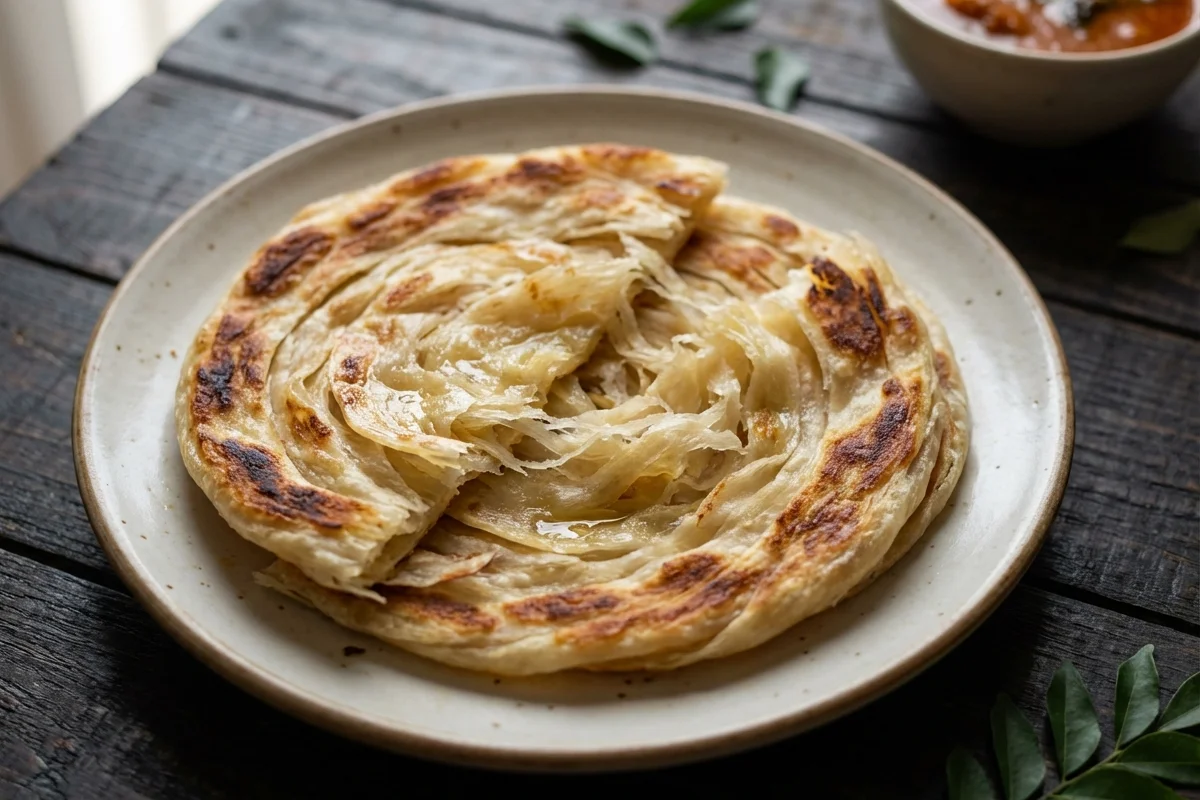
Parotta
Layered South Indian flatbread with a soft center and lightly crisp edges, made by stretching a simple dough and folding it into coils. It cooks up flaky, chewy, and perfect for scooping curries and salna.
For 8 servings
- mix · ~5 min
Mix the dough ingredients.
1.Add all-purpose flour, sugar, and salt to a wide bowl and mix well.2.Add the egg, milk, 1 tbsp oil, and most of the water.3.Mix until a shaggy dough forms, adding the remaining water only if needed.TIPKeep the dough soft and slightly tacky; a stiff dough will not stretch well later. - knead · ~10 min
Knead the dough until smooth.
Knead the dough for 8 to 10 minutes until soft, elastic, and smooth. Rub 1 tbsp oil over the dough, cover, and keep it in the bowl.
- rest · ~120 min
Rest the dough.
Let the dough rest for 2 hours so the gluten relaxes and the layers become easier to stretch.
TIPThis long rest is what gives parotta its signature stretch and flaky texture. - prep · ~15 min
Divide and oil the dough balls.
1.Divide the dough into 8 equal balls.2.Coat each ball lightly with oil.3.Cover and rest again for 15 minutes. - assemble · ~15 min
Stretch and coil each parotta.
1.Grease the work surface with a little oil.2.Take one dough ball and flatten it with your fingers.3.Stretch it as thin as possible into a long sheet without tearing.4.Brush or smear a little oil over the sheet.5.Pleat or gather the sheet into a long strip, then roll it into a loose coil.6.Tuck the end underneath and repeat with the remaining dough.TIPIf the dough springs back, let it rest for a few minutes and then continue stretching. - rest · ~10 min
Rest the coils.
Cover the coiled dough and let it rest for 10 minutes before rolling.
- prep · ~5 min
Roll the coils into discs.
Gently roll each coil into a thick flat disc about 15 cm wide, keeping the layers intact.
- fry · ~20 min
Cook the parottas on a hot tawa.
1.Heat a tawa or flat pan over medium heat.2.Place one rolled parotta on the hot surface and cook until light bubbles appear.3.Drizzle a little oil around the edges and flip.4.Cook both sides, pressing gently, until golden brown spots appear and the bread is cooked through.5.Repeat with the remaining parottas.TIPUse medium heat so the layers cook through without burning the outside. - assemble · ~2 min
Clap the parottas to open the layers.
While still hot, place one parotta between your palms and clap it gently a few times to separate the layers and make it flaky.
- serve
Serve the parottas hot.
What to keep in mind.
7 tips from the recipe — small details that make a real difference to the final dish.
- 1Keep the dough softer than chapati dough; that extra slackness is what lets you stretch it paper-thin later.
- 2Oil the dough balls well during resting so the surface never dries out and tears while stretching.
- 3When stretching, work from the center outward with oiled fingers instead of using flour, which can toughen the layers.
- 4Roll the pleated strip into a loose coil, not a tight one, or the finished parotta will lose some flakiness.
- 5Cook on medium heat only; high heat browns the outside before the thicker inner layers finish cooking.
- 6Clap the parottas immediately after they come off the tawa while still hot to separate and fluff the layers.
- 7If making ahead, half-cook the parottas, cool, stack with parchment, and reheat on the tawa before serving.
Adapt it for your goals.
Eggless
Skip the egg and add a little extra milk or water for a softer dough; useful if you want a simpler vegetarian version.
whole wheat mixWhole-wheat-mix
Replace part of the all-purpose flour with whole wheat flour for a nuttier taste, though the parotta will be slightly less stretchy and flaky.
veganVegan
Use water instead of milk and omit the egg; the texture is a bit less rich but still layered and suitable with curry.
stuffedStuffed
Flatten the coil slightly and add a lightly spiced filling like potato before rolling for a heartier parotta meal.
Why this is on our healthy list.
Provides Sustained Energy
The flour-based dough makes parotta a filling carbohydrate-rich bread that pairs well with protein-packed curries for a complete meal.
Some Protein From Egg and Milk
The egg and milk add modest protein and richness, helping the bread feel more satisfying than a plain flour-and-water flatbread.
Comforting and Easily Digestible Texture
Because the dough is well kneaded and rested, the cooked parotta stays soft and layered, making it easy to tear and eat with gravies.
Frequently asked questions
Usually the dough was too stiff, not rested long enough, or the coil was rolled too tightly. Thin stretching, oil between layers, and clapping while hot are key.


