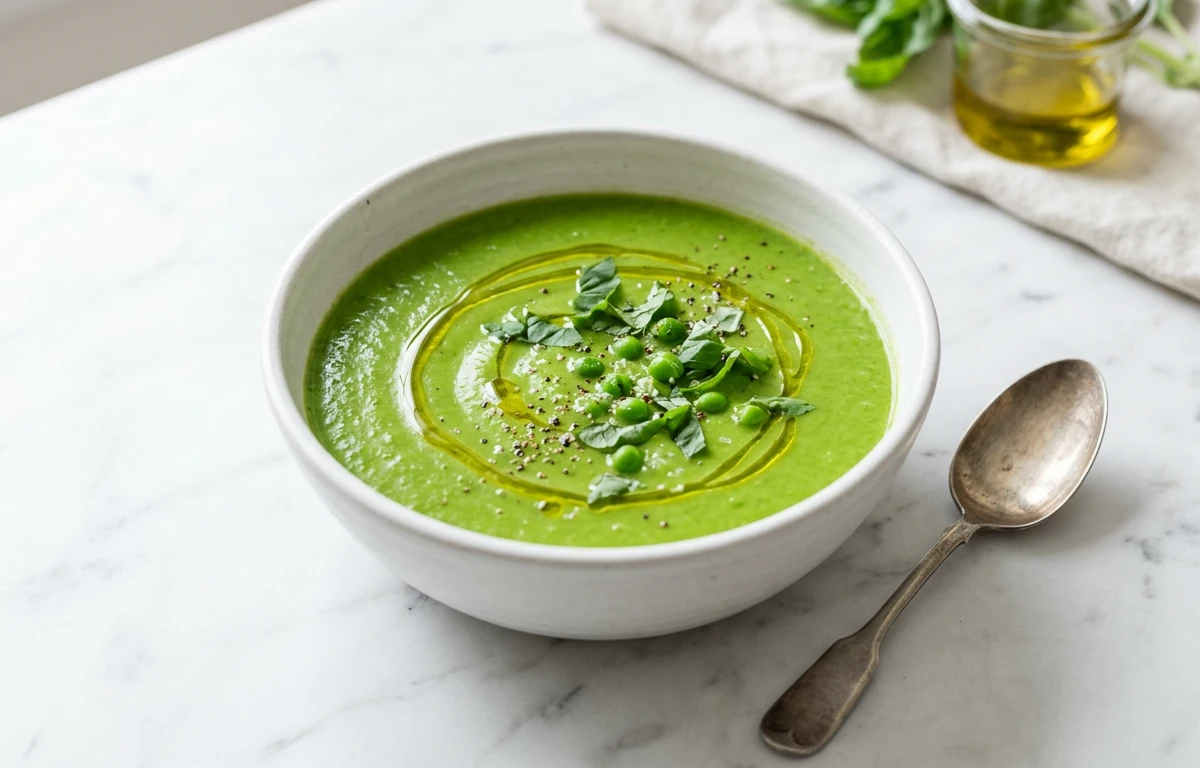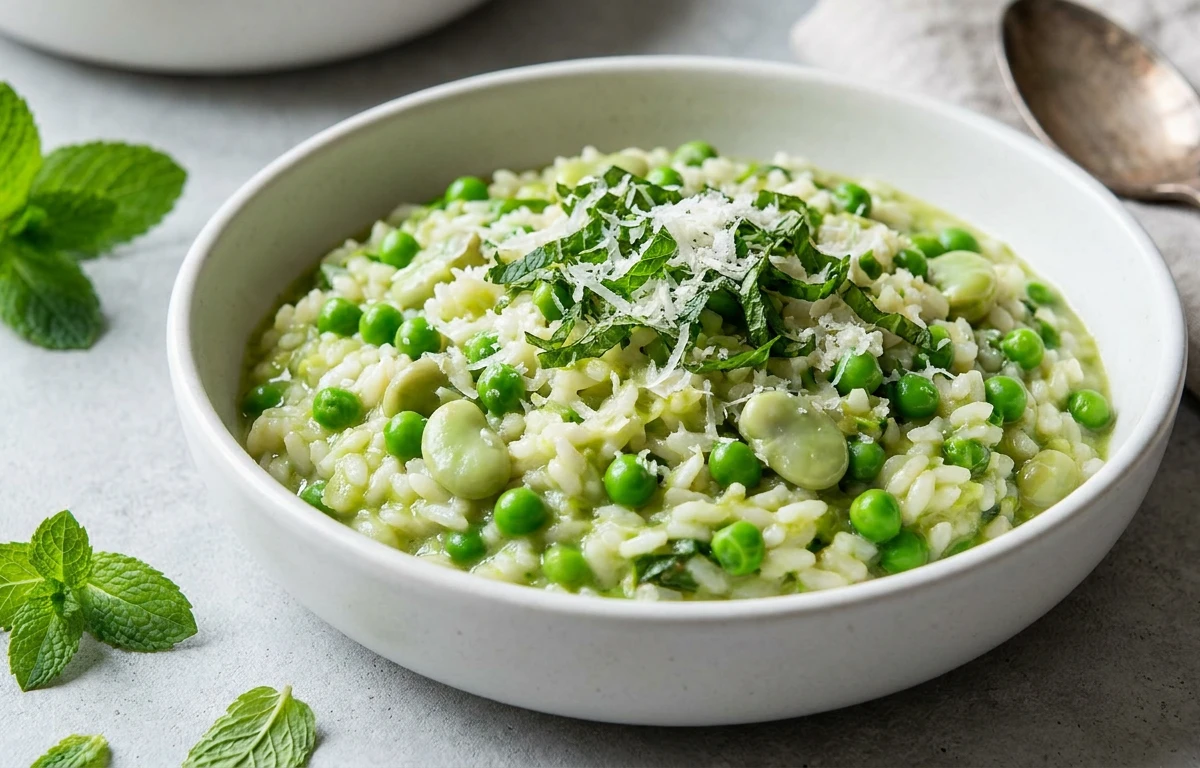
Pea, Bean & Mint Risotto
Creamy, vibrant risotto made with sweet green peas, tender beans, and fresh mint stirred through right at the end. The mint lifts the whole dish, giving it a bright, garden-fresh finish. Easy enough for a weeknight dinner but elegant enough for company.
For 4 servings
- prep · ~5 min
Prep the vegetables and warm the water.
1.Bring 1 litre of water to a gentle simmer in a saucepan. Keep it warm on low heat.2.If using fresh broad beans, blanch them in boiling water for 2 minutes, then drain and pop them out of their grey skins.3.Finely chop the onion and mince the garlic cloves. - saute · ~6 min
Sauté the onion and garlic.
1.Heat olive oil in a large heavy-bottomed pan over medium heat.2.Add the onion and cook gently until softened and translucent, about 5 minutes.3.Stir in the garlic and cook for 30 seconds until fragrant.TIPKeep the heat moderate — you want the onions soft, not browned. - saute · ~2 min
Toast the rice.
1.Add the arborio rice to the pan.2.Stir constantly for 1 to 2 minutes until the grains look slightly translucent at the edges with an opaque centre.3.Season with a pinch of salt.TIPToasting the rice seals the surface and helps it release starch slowly for a creamy risotto. - simmer · ~18 min
Cook the risotto, adding warm water gradually.
1.Add a ladleful of warm water to the rice. Stir gently until the liquid is mostly absorbed.2.Continue adding water a ladle at a time, stirring often and waiting until each addition is nearly absorbed before adding the next.3.Cook for 16–18 minutes total, until the rice is tender but still has a slight bite in the centre.TIPStirring is key — it coaxes the starch from the rice, giving you that signature creamy texture. - mix · ~2 min
Fold in the peas, beans, and mint.
1.When the rice is almost done and the texture is creamy, add the peas and shelled broad beans.2.Cook for 2 more minutes until the vegetables are just heated through and the rice is perfectly al dente.3.Remove the pan from the heat.TIPAdding the peas and beans at the end keeps them sweet and bright green. - mix · ~2 min
Mantecare — beat in butter and parmesan.
1.Add the cold cubed butter and grated parmesan cheese.2.Beat vigorously with a wooden spoon for a full minute until the risotto becomes incredibly creamy and glossy.3.Stir in the chopped mint and lemon juice.4.Taste and adjust with a pinch of pepper.TIPVigorous beating off the heat emulsifies the butter and cheese — this is how restaurants get that luscious, wavy texture. - serve
Serve immediately.
1.Spoon the risotto into warm shallow bowls.2.Finish with a few small mint leaves on top.TIPRisotto waits for no one — serve it as soon as it's ready, while it's still beautifully fluid and creamy.
What to keep in mind.
7 tips from the recipe — small details that make a real difference to the final dish.
- 1Use a heavy-bottomed pan to distribute heat evenly and prevent scorching.
- 2Keep the 'stock' at a gentle simmer; adding cold liquid shocks the rice and disrupts creaminess.
- 3If using frozen peas and beans, add them straight from the freezer — no need to thaw.
- 4For a true al dente bite, taste a grain 2 minutes before you think it's done; carryover cooking continues.
- 5Broad bean skins are tough — always double-peel fresh beans for a silky texture.
- 6Reserve a few mint leaves for garnish to preserve their fresh aroma on top of the dish.
- 7Cold butter cubes emulsify better than room-temperature; keep them in the fridge until the moment you add them.
Adapt it for your goals.
Vegan
Replace butter with 2 tbsp of olive oil and use 3 tbsp of nutritional yeast instead of parmesan for a dairy-free version that stays creamy.
High ProteinHigh-Protein
Stir in 200g of cooked, shredded chicken or pan-fried pancetta just before adding the peas for extra protein and savoury depth.
Low OilLow-Oil
Sauté the onion in 2 tbsp of vegetable broth instead of olive oil, and reduce the final butter to 1 tbsp — still creamy but lighter.
Spring GreensSpring Greens
Swap the broad beans for 150g of chopped asparagus (blanched) or zucchini; the risotto stays just as vibrant and seasonal.
Why this is on our healthy list.
Rich in Plant Protein
Green peas and broad beans together provide a generous amount of plant-based protein, supporting muscle repair and satiety.
High in Dietary Fibre
Both peas and broad beans are excellent sources of fibre, which aids digestion and helps maintain steady blood sugar levels.
Good Source of Folate
Broad beans are naturally rich in folate (vitamin B9), essential for cell growth and red blood cell formation.
Balanced Carbohydrate Energy
Arborio rice provides slow-release carbohydrates, giving you sustained energy without a sharp spike in blood sugar.
Frequently asked questions
Yes, for more flavour use a light vegetable stock — but unsalted water keeps the pure pea-and-mint taste front and centre.