Peanut Butter
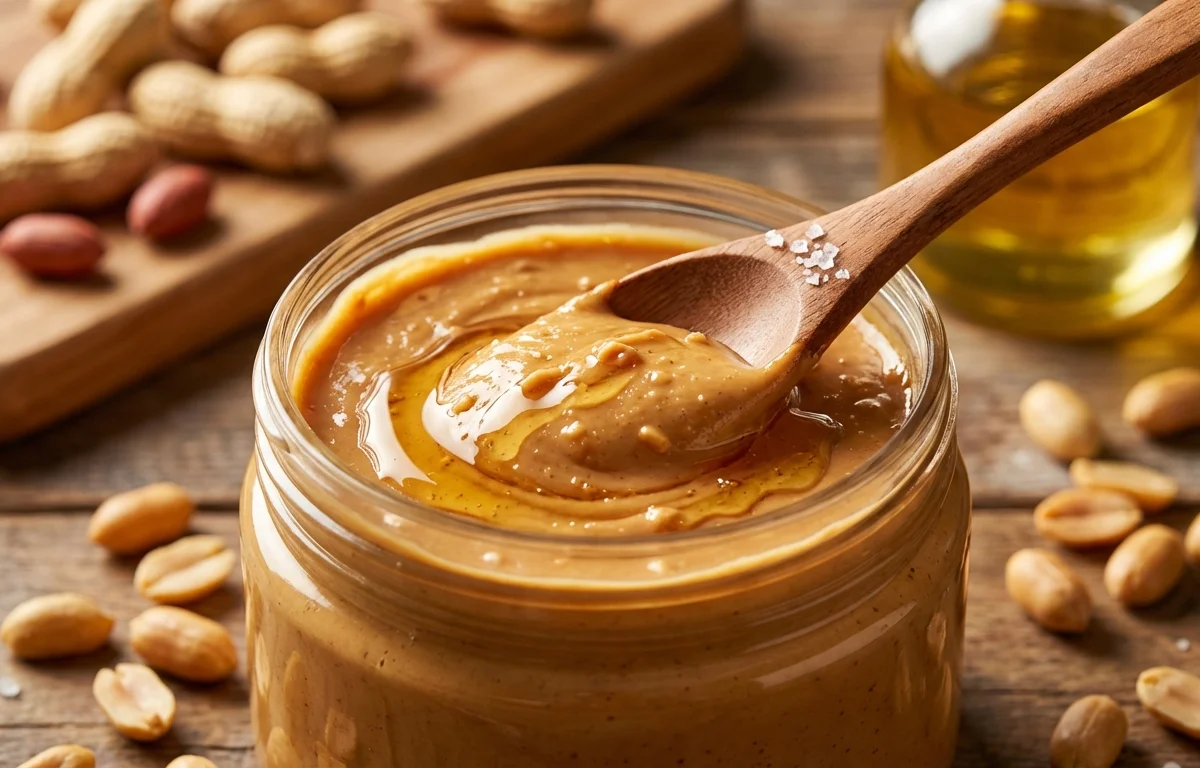
Creamy, rich, and deeply nutty homemade peanut butter made with just peanuts and a touch of salt. So much better than store-bought, it comes together in minutes in a food processor and can be made as smooth or chunky as you like.
For 16 servings
- prep
Preheat the oven and prepare the peanuts.
Preheat the oven to 350°F (175°C). Spread the peanuts in a single layer on a baking sheet.
- roast · ~10 min
Roast the peanuts.
Roast the peanuts for 8 to 10 minutes, shaking the pan halfway through, until they are fragrant and lightly golden. This step is essential for unlocking the deep nutty flavor. Let the peanuts cool for 5 minutes.
TIPDon't skip the roasting step — it deepens the flavor dramatically. - prep
Blend the peanuts.
Transfer the warm peanuts to the bowl of a food processor. Secure the lid and process continuously.
TIPWarm peanuts release their oils more readily, making the process faster. - mix · ~8 min
Process until smooth, scraping down as needed.
1.Process for 1 minute — the peanuts will look like coarse sand.2.Scrape down the sides of the bowl with a spatula.3.Process for another 2 to 3 minutes — the mixture will clump into a thick ball.4.Keep processing for 2 to 4 minutes more until the ball suddenly relaxes into a smooth, glossy liquid.5.Add the salt and process for 30 seconds to combine.TIPBe patient. The peanuts will go from crumbly to a ball to perfectly smooth — don't stop early unless you want chunky peanut butter. - assemble
Transfer to a jar and store.
Scrape the peanut butter into a clean glass jar. Seal tightly and store in the refrigerator for up to 3 months.
TIPStir the peanut butter if any oil rises to the top — this is natural.
What to keep in mind.
6 tips from the recipe — small details that make a real difference to the final dish.
- 1Roast the peanuts until lightly golden and fragrant to unlock their deepest nutty flavor.
- 2Process the warm peanuts immediately after roasting—warm nuts release oils faster for smoother butter.
- 3Be patient during blending: the mixture will go from crumbly to a thick ball before suddenly turning silky.
- 4If you prefer chunky peanut butter, reserve a handful of roasted peanuts and pulse them in at the end.
- 5Store your peanut butter in the fridge to keep it fresh for up to 3 months; stir any separated oil back in.
- 6Use a clean, dry jar to store the peanut butter—moisture can cause spoilage.
Adapt it for your goals.
Honey-roasted
Add 1–2 tablespoons honey and a pinch of cinnamon during the final processing step for a sweet, spiced peanut butter perfect for toast or dipping.
spicy srirachaSpicy-sriracha
Blend in 1–2 teaspoons sriracha or chili oil at the end for a savory, spicy kick ideal for noodles or satay sauce.
double nutDouble-nut
Replace up to 50% of the peanuts with roasted almonds or cashews for a different flavor and texture profile.
chocolateChocolate
Add 2 tablespoons unsweetened cocoa powder and 1 tablespoon maple syrup during the final blending for a fudgy, dessert-like peanut butter.
low oilLow-oil
Skip the roasting step and use raw peanuts—the butter will be thicker and less oily, ideal for baking where you want a firmer consistency.
Why this is on our healthy list.
Rich in Healthy Fats
Peanuts provide heart-friendly monounsaturated and polyunsaturated fats, which support good cholesterol levels.
Good Source of Plant Protein
A single serving of this peanut butter offers a substantial amount of protein, helping with muscle repair and satiety.
Packed with Vitamin E
Peanuts are a natural source of vitamin E, an antioxidant that helps protect cells from oxidative stress.
No Added Preservatives
This homemade version contains only peanuts and salt, free from the stabilizers and sugars often found in store-bought varieties.
Frequently asked questions
Your peanuts were likely under-roasted or too cool before processing. Roast until fragrant and process while still warm to help the oils release.