
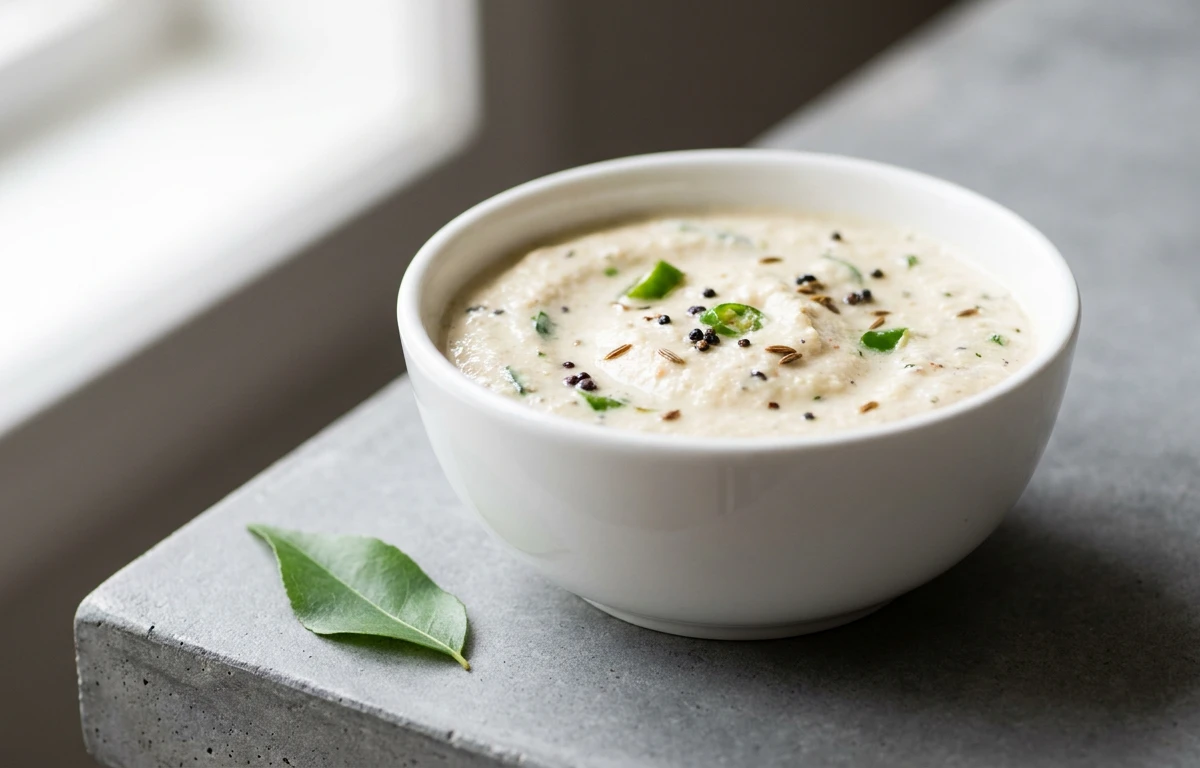
Peanut Coconut Chutney
A creamy, nutty South Indian chutney made with roasted peanuts and fresh coconut. Tempered with mustard seeds, curry leaves, and dried red chilies, this versatile condiment pairs beautifully with idli, dosa, and vada.
For 8 servings
- roast · ~4 min
Dry roast the peanuts.
Place a pan over medium heat. Add peanuts and dry roast, stirring continuously, until lightly browned and aromatic (3-4 minutes). Transfer to a plate and let cool.
- roast · ~1 min
Roast the dried red chilies.
In the same hot pan, add 2 dried red chilies and dry roast for 30 seconds until slightly puffed and aromatic.
TIPDry roasting intensifies the chili's smokiness and makes them easier to grind. - prep · ~3 min
Cool and grind the chutney base.
1.Let roasted peanuts and chilies cool completely (2-3 minutes).2.In a blender jar, add roasted peanuts, roasted red chilies, grated coconut, tamarind, and salt.3.Add 3 tablespoons water and grind to a smooth, thick paste. Add a splash more water if needed.TIPGrind without water first to release oils from peanuts, then add water gradually for a creamy texture. - mix · ~1 min
Transfer chutney to a serving bowl.
Scrape the ground chutney into a bowl. Adjust consistency with a little water if it's too thick.
- temper · ~2 min
Make the tempering.
1.Heat oil in a small pan over medium heat.2.Add mustard seeds and let them splutter (30 seconds).3.Add urad dal and sauté until golden (20 seconds).4.Add cumin seeds and let them sizzle (10 seconds).5.Add curry leaves, 1 dried red chili, and a pinch of asafoetida. Sauté until fragrant (15 seconds).TIPKeep the heat medium-low so the dal turns golden without burning the spices. - mix · ~2 min
Pour the tempering over the chutney.
Immediately pour the hot tempering over the chutney. Mix gently and let it sit for 2 minutes so the flavors meld.
TIPThe sizzle of hot tempering hitting the chutney releases an incredible aroma — don't skip this moment! - serve
Serve fresh with idli, dosa, or vada.
Peanut coconut chutney is best served at room temperature alongside hot South Indian tiffin items.
What to keep in mind.
6 tips from the recipe — small details that make a real difference to the final dish.
- 1Dry roast peanuts until they smell nutty and turn a shade darker for maximum flavor.
- 2Grind the peanuts and coconut without water first to release natural oils, then add water gradually.
- 3Use fresh grated coconut instead of dried for a creamier, more authentic texture.
- 4Temper the spices on medium-low heat so urad dal turns golden without burning.
- 5Pour the hot tempering immediately over the chutney and let it sit for 2 minutes to meld flavors.
- 6This chutney keeps well in the fridge for 2–3 days; stir before serving.
Adapt it for your goals.
No-Coconut Version
Omit the fresh coconut and replace with an extra 2 tablespoons of roasted peanuts for a pure peanut chutney that's still creamy and intensely nutty.
Spicy Mint TwistSpicy Mint Twist
Add a handful of fresh mint leaves along with the coconut while grinding for a bright, herbaceous chutney that cuts through rich fried snacks.
Ginger Garlic PunchGinger-Garlic Punch
Add 1 small piece of ginger and 2 garlic cloves to the blender for a pungent, warming chutney that pairs beautifully with masala dosa.
Low Oil TemperingLow-Oil Tempering
Replace oil with 1 teaspoon of ghee for a richer, more aromatic tempering, or skip the tempering entirely and just stir in a pinch of asafoetida and salt.
Why this is on our healthy list.
Heart-Healthy Fats
Peanuts provide monounsaturated and polyunsaturated fats that support heart health when eaten in moderation.
Plant-Based Protein Boost
Peanuts and urad dal together offer a good source of plant protein, making this chutney a satisfying addition to vegetarian meals.
Digestive Aid from Asafoetida
Asafoetida (hing) is traditionally used in Indian cooking to aid digestion and reduce bloating after heavy meals.
Antioxidant-Rich Spices
Curry leaves and cumin seeds are rich in antioxidants and may help reduce oxidative stress in the body.
Frequently asked questions
Yes, but soak 2 tablespoons of desiccated coconut in 2 tablespoons of warm water for 10 minutes before grinding to rehydrate and mimic fresh coconut's creaminess.


