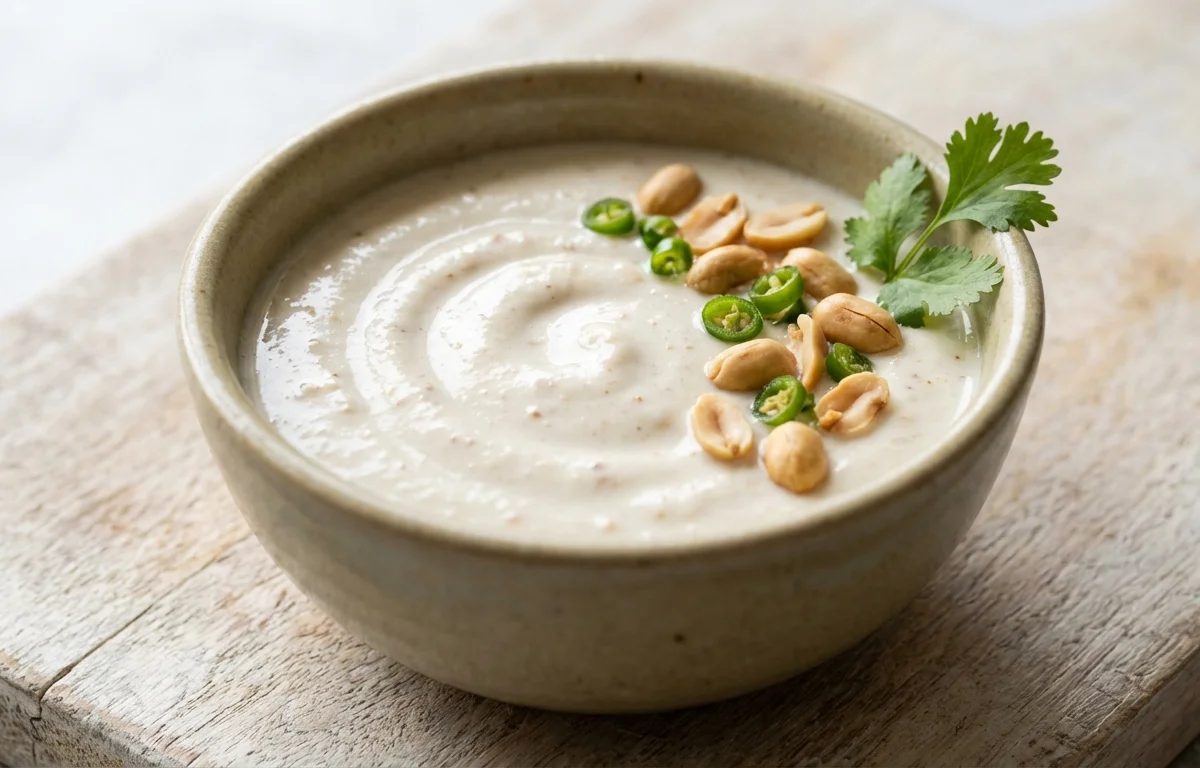
Peanut Dahi
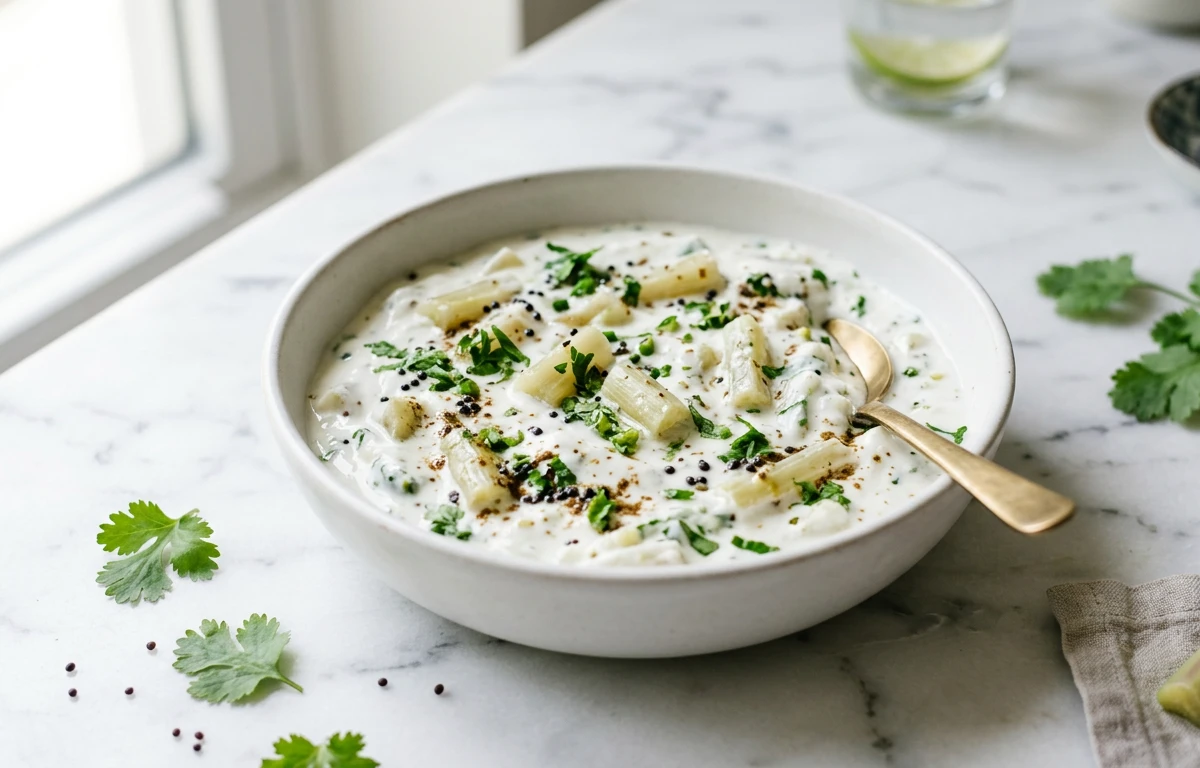
A cooling, lightly spiced peanut and yogurt side dish with a nutty bite and gentle tang. It comes together quickly and works beautifully with pulao, khichdi, or a simple South Indian meal.
For 4 servings
- roast · ~4 min
Roast the peanuts.
Dry roast the peanuts in a small pan over medium-low heat until crisp and lightly browned. Cool them, then coarsely crush for texture.
TIPKeep the heat moderate so the peanuts toast evenly without turning bitter. - mix · ~3 min
Mix the yogurt base.
1.Whisk the yogurt in a bowl until smooth.2.Add ginger, green chili, coriander leaves, and salt.3.Stir in the crushed peanuts and mix well. - temper · ~1 min
Make the tempering.
1.Heat oil in a small pan over medium heat.2.Add mustard seeds and let them splutter.3.Add cumin seeds and curry leaves, then cook for a few seconds until fragrant. - assemble · ~1 min
Pour the tempering over the dahi.
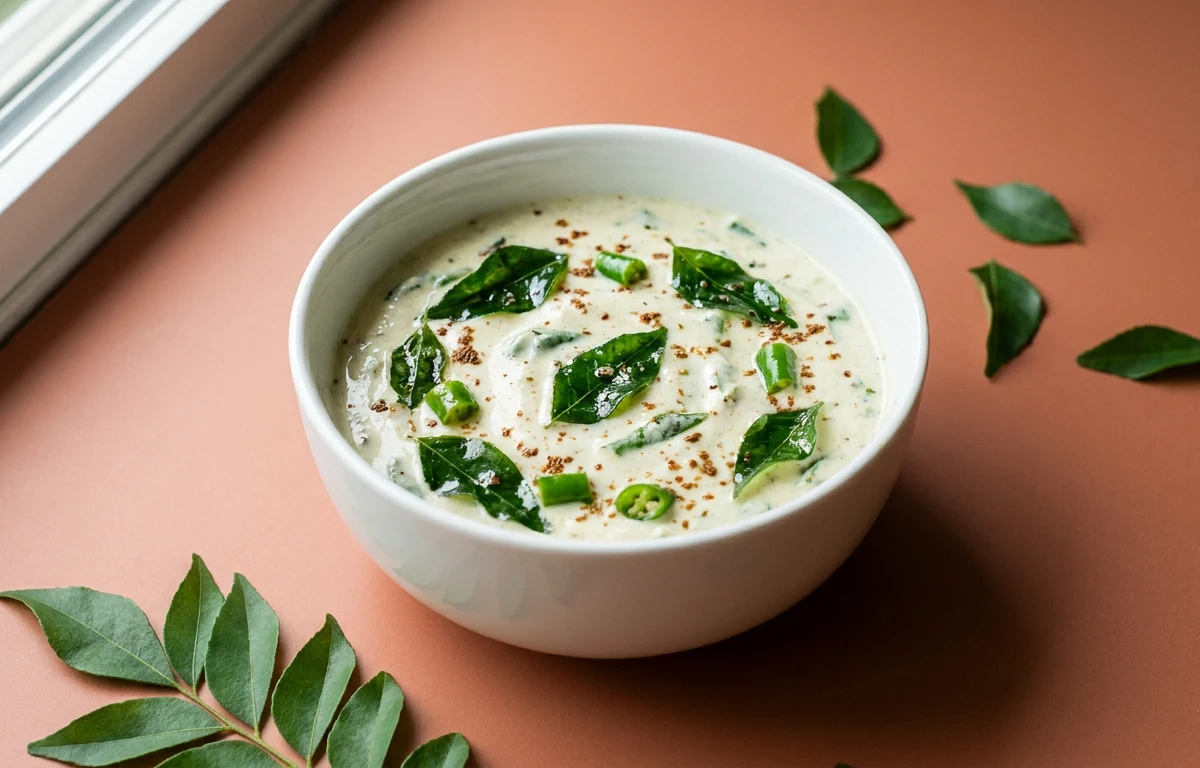
Pour the hot tempering over the peanut yogurt mixture and stir gently. Sprinkle red chili powder on top.
- serve
Serve chilled or at room temperature.
What to keep in mind.
7 tips from the recipe — small details that make a real difference to the final dish.
- 1Roast the peanuts on medium-low heat until they smell nutty and turn patchy golden; dark spots can make the dahi taste bitter.
- 2Coarsely crush the peanuts instead of grinding them fine so the dish keeps its signature nutty bite.
- 3Use thick, well-whisked yogurt; if it is very sour or loose, chill it first or strain briefly for a creamier texture.
- 4Let the roasted peanuts cool completely before mixing into yogurt so they stay crisper for longer.
- 5Pour the tempering over just before serving if you want the mustard, cumin, and curry leaves to stay especially aromatic.
- 6For a colder side dish with rice, chill the peanut dahi for 20 to 30 minutes after mixing, then add the tempering at the end.
- 7This is best eaten the same day; the peanuts soften as they sit, so store leftovers chilled and stir before serving.
Adapt it for your goals.
Low-oil
Use a minimal tempering with just enough oil to bloom the mustard, cumin, and curry leaves while keeping the dish lighter.
mildMild
Skip the green chili and garnish lightly with red chili powder only, for a gentler version that pairs well with spicy mains.
veganVegan
Replace dairy yogurt with unsweetened peanut or coconut yogurt for a plant-based side with similar cooling tang.
chunky raita styleChunky-raita-style
Add finely chopped cucumber for extra crunch and a more raita-like texture, especially nice in hot weather.
Why this is on our healthy list.
Protein-Rich Side
Peanuts and yogurt both contribute protein, making this simple accompaniment more satisfying than a plain curd side.
Cooling and Soothing
Yogurt gives the dish a cooling quality that balances spicy rice dishes and strongly seasoned South Indian meals.
Good Fats from Peanuts
Peanuts add healthy fats along with texture, helping the dish feel rich and flavorful without much oil.
Frequently asked questions
Yes, you can mix the yogurt base a few hours ahead and refrigerate it. Add the tempering close to serving for the freshest aroma and best texture.