Perfect Pan-Seared Chicken Breast
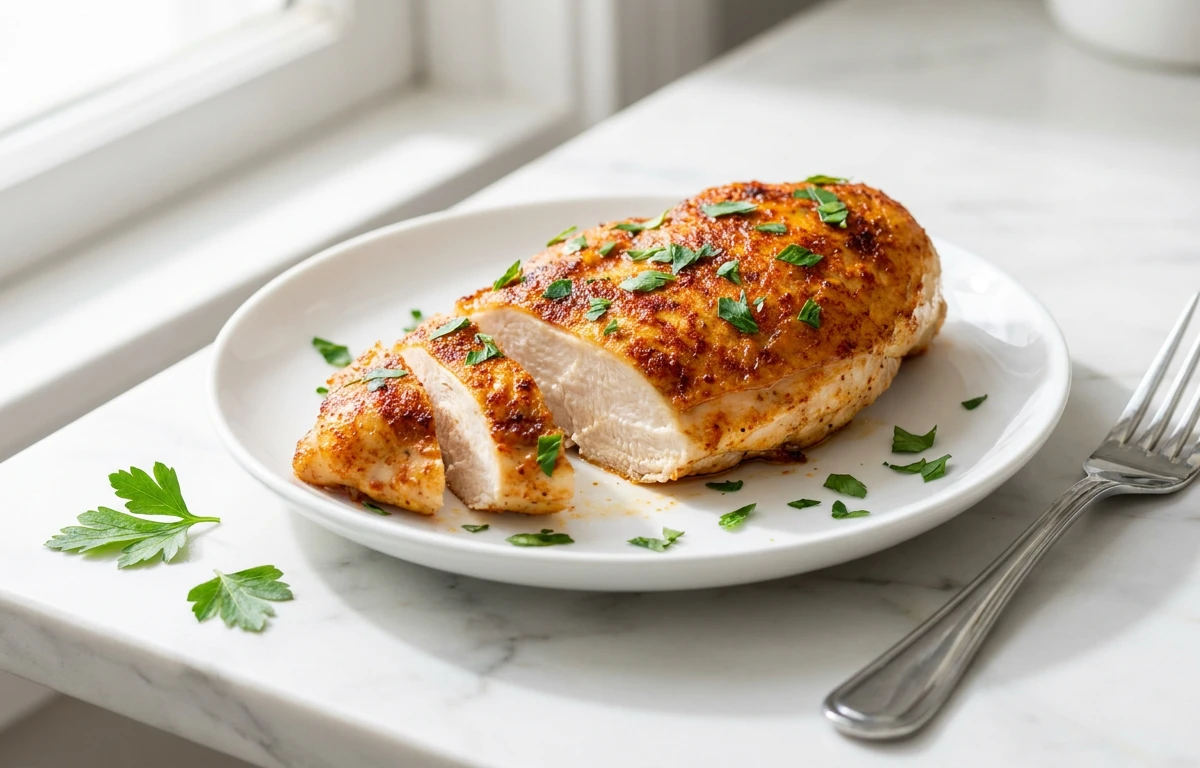
Golden, crusty exterior giving way to the most tender, juicy chicken breast you will ever make. A simple stovetop technique that ditches the dry, stringy results of the past. Ready in under 20 minutes, this is your new go-to weeknight protein.
For 4 servings
- prep
Pound the chicken to an even thickness.
1.Place one chicken breast between two sheets of plastic wrap.2.Use a meat mallet or rolling pin to gently pound the thicker end until the breast is an even 1.5 cm thickness throughout.3.Repeat with all breasts and pat them completely dry with paper towels.TIPPounding ensures the whole breast cooks at the same rate — no more dry, thin end. - prep
Season the chicken breasts.
1.Drizzle the olive oil over both sides of each breast and rub to coat evenly.2.Mix the salt, black pepper, and garlic powder in a small bowl.3.Sprinkle the seasoning mix generously on both sides of each breast. - fry · ~6 min
Sear the first side until deeply golden.
1.Place a heavy skillet over medium-high heat and let it get hot for 2 minutes.2.Lay the chicken breasts in the pan, presentation side down.3.Sear without moving for 5 to 6 minutes, until the bottom is golden brown and releases easily from the pan.TIPDo not touch or move the chicken — that golden crust won't form without full contact. - fry · ~5 min
Flip and cook the second side with aromatics.
1.Flip the breasts with tongs. Immediately add butter, smashed garlic cloves, and thyme sprigs to the pan.2.Once the butter melts, tilt the pan and use a spoon to baste the chicken with the foaming butter continuously.3.Cook for 4 to 5 minutes more, until the internal temperature hits 74°C (165°F).TIPBasting continuously keeps the lean breast moist and layers on flavor. - rest · ~5 min
Rest the chicken before slicing.
1.Transfer the chicken to a warm plate.2.Spoon the pan butter and aromatics over the top.3.Rest loosely tented with foil for 5 minutes — the internal temp will carry over to 74°C.TIPResting is non-negotiable. It lets the juices redistribute so they stay in the meat, not on the cutting board. - serve
Slice against the grain and serve.
1.Place the rested breast on a board and slice diagonally across the grain into thick strips.2.Arrange on plates and spoon any leftover pan juices over the top.
What to keep in mind.
7 tips from the recipe — small details that make a real difference to the final dish.
- 1Pound breasts to even thickness for uniform cooking and juiciness.
- 2Pat chicken bone-dry with paper towels to guarantee a golden crust.
- 3Don't move the chicken while searing; let it release naturally from the pan.
- 4Use a digital thermometer to nail 165°F internal temp every time.
- 5Baste with foaming butter and aromatics for deep, savory flavor.
- 6Rest chicken tented with foil for 5 minutes to lock in juices.
- 7Slice diagonally against the grain for tender, bite-sized pieces.
Adapt it for your goals.
Herb-crusted
Add 1 tablespoon finely chopped fresh rosemary and parsley to the seasoning mix for an herby, aromatic crust.
lemon pepperLemon-pepper
Replace garlic powder with ½ teaspoon lemon zest and use cracked black pepper — bright and zesty, perfect for light dinners.
spicy southwestSpicy-southwest
Mix ½ teaspoon smoked paprika, ¼ teaspoon cayenne, and ½ teaspoon cumin into the seasoning for a smoky, mildly hot crust.
garlic parmesanGarlic-parmesan
After flipping, sprinkle 2 tablespoons grated Parmesan over the breasts and baste — adds nutty, savory depth.
lower fatLower-fat
Skip the butter and use only oil spray; baste with a splash of chicken broth instead for a lighter pan sauce.
Why this is on our healthy list.
Lean Protein Source
Chicken breast is naturally low in fat and high in protein, supporting muscle maintenance and satiety.
Rich in B Vitamins
Chicken provides niacin and vitamin B6, which aid energy metabolism and nervous system function.
Low in Saturated Fat
Using just a touch of butter and olive oil keeps total saturated fat modest while adding flavor.
Garlic & Thyme Antioxidants
Fresh garlic and thyme offer antioxidant compounds that may help reduce oxidative stress.
Frequently asked questions
The most likely cause is overcooking — use an instant-read thermometer and pull the chicken at 162°F; carryover cooking will bring it to 165°F.