Perfectly Poached & Shredded Chicken
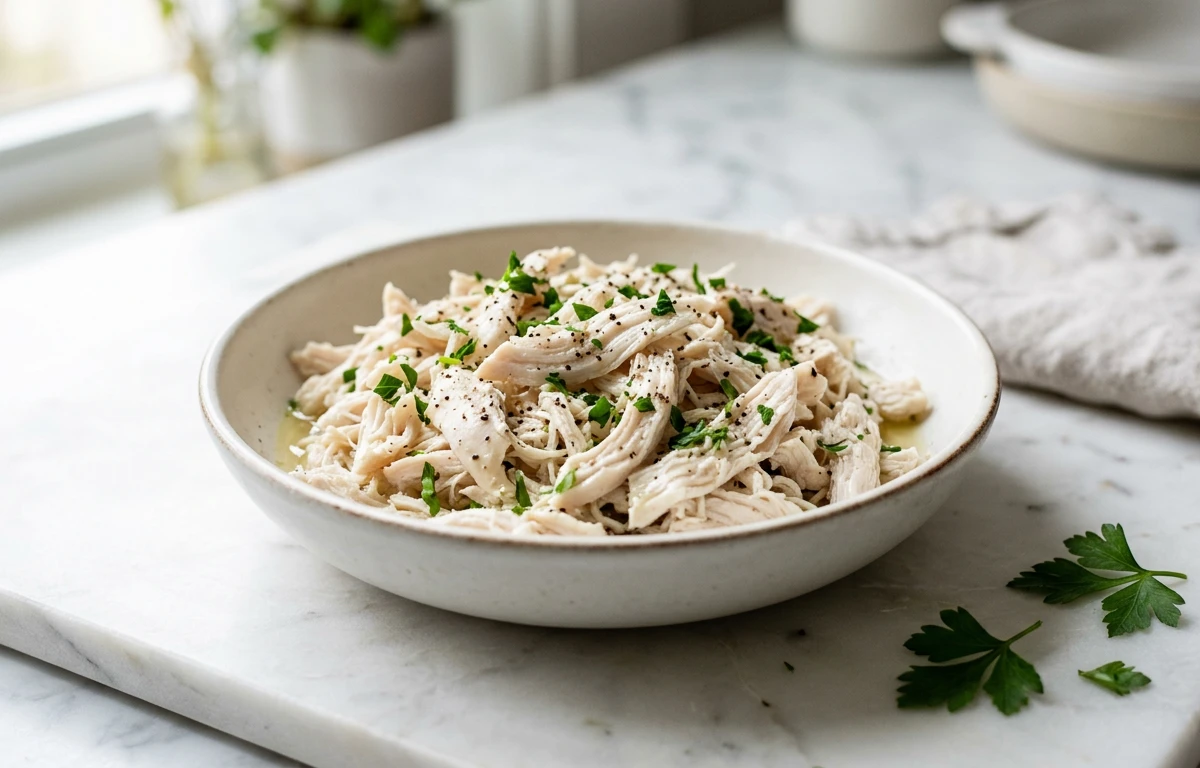
Incredibly tender, juicy chicken breasts gently poached in aromatic water until perfectly cooked. The meat shreds beautifully into silky strands, ready to be used in salads, sandwiches, tacos, or soups. This simple technique guarantees moist results every time, far better than any deli counter.
For 4 servings
- prep
Prepare the poaching liquid.
1.Place the chicken breasts in a single layer in a medium saucepan.2.Add water until the chicken is submerged by at least 1 inch.3.Remove the chicken, then add the bay leaves, peppercorns, smashed garlic, onion, and salt to the water. - simmer · ~8 min
Bring the poaching liquid to a gentle simmer.
Set the saucepan over medium heat and bring the water to a gentle simmer. Small bubbles should just begin to break the surface. Do not let it boil vigorously.
TIPA rolling boil will make the chicken tough and rubbery. Keep it at a very gentle simmer. - simmer
Poach the chicken.
1.Carefully add the chicken breasts back into the simmering liquid.2.Ensure the liquid completely covers the chicken; add more hot water if needed.3.Cover the saucepan with a tight-fitting lid and remove from the heat. - rest · ~20 min
Let the chicken rest until cooked through.
Let the chicken sit in the covered hot poaching liquid for 15 to 20 minutes. The residual heat cooks it gently. The chicken is done when it reaches an internal temperature of 165°F (74°C) or feels firm to the touch.
TIPThe exact resting time depends on the thickness of the breasts. Thinner pieces will be ready closer to 15 minutes. - prep
Remove and rest the chicken.
1.Using tongs, transfer the poached chicken to a clean cutting board.2.Discard the poaching liquid and aromatics. - prep · ~3 min
Shred the chicken.
1.While the chicken is still warm, use two forks to pull the meat apart into thin strands.2.Alternatively, let it cool slightly and shred with clean hands for a more rustic texture.TIPPoached chicken shreds most easily while still warm. If it cools completely, the fibers tighten up.
What to keep in mind.
6 tips from the recipe — small details that make a real difference to the final dish.
- 1Use a thermometer to check for 165°F (74°C) internal temperature; don't rely solely on time.
- 2Submerge chicken completely in the poaching liquid; add extra hot water if needed to keep it covered.
- 3Let the chicken rest in the covered pot off heat; residual heat finishes cooking without toughening the meat.
- 4Shred the chicken while it's still warm—cooled chicken becomes tight and harder to pull apart.
- 5Save the strained poaching liquid to use as a light broth for soups or cooking grains.
- 6For extra flavor, add a sprig of fresh thyme or a strip of lemon zest to the poaching liquid.
Adapt it for your goals.
Herb-infused
Add fresh thyme sprigs, parsley stems, and a strip of lemon zest to the poaching liquid. This infuses the chicken with bright herbal notes, perfect for Mediterranean salads or sandwiches.
spicy Mexican styleSpicy Mexican-style
Add a halved jalapeño, a few cilantro stems, and 1 teaspoon of cumin seeds to the poaching water. Use the shredded chicken in tacos, burritos, or enchiladas for a subtle warmth.
Asian inspiredAsian-inspired
Replace half the water with low-sodium chicken broth and add a 2-inch piece of ginger (sliced), 2 star anise, and a tablespoon of soy sauce. The resulting shredded chicken is aromatic and savory, ideal for noodle bowls or lettuce wraps.
low oil meal prepLow-oil meal prep
After shredding, toss the chicken with a splash of the reserved poaching broth instead of oil. It stays moist and flavorful for salads and wraps without added fat.
Why this is on our healthy list.
Lean Protein Source
Chicken breast is naturally low in fat and high in protein, making this poached version a heart-healthy choice for muscle maintenance and satiety.
Low in Added Fat
This method uses no oil or butter during cooking, keeping the dish very low in unhealthy saturated fats while still delivering tender results.
Natural Mineral Boost
Garlic and onions in the poaching liquid provide trace amounts of manganese, vitamin B6, and antioxidant compounds without adding sodium or calories.
Frequently asked questions
Yes, but you must thaw them completely in the refrigerator first. Poaching from frozen will result in uneven cooking and a less tender texture.