Pesto
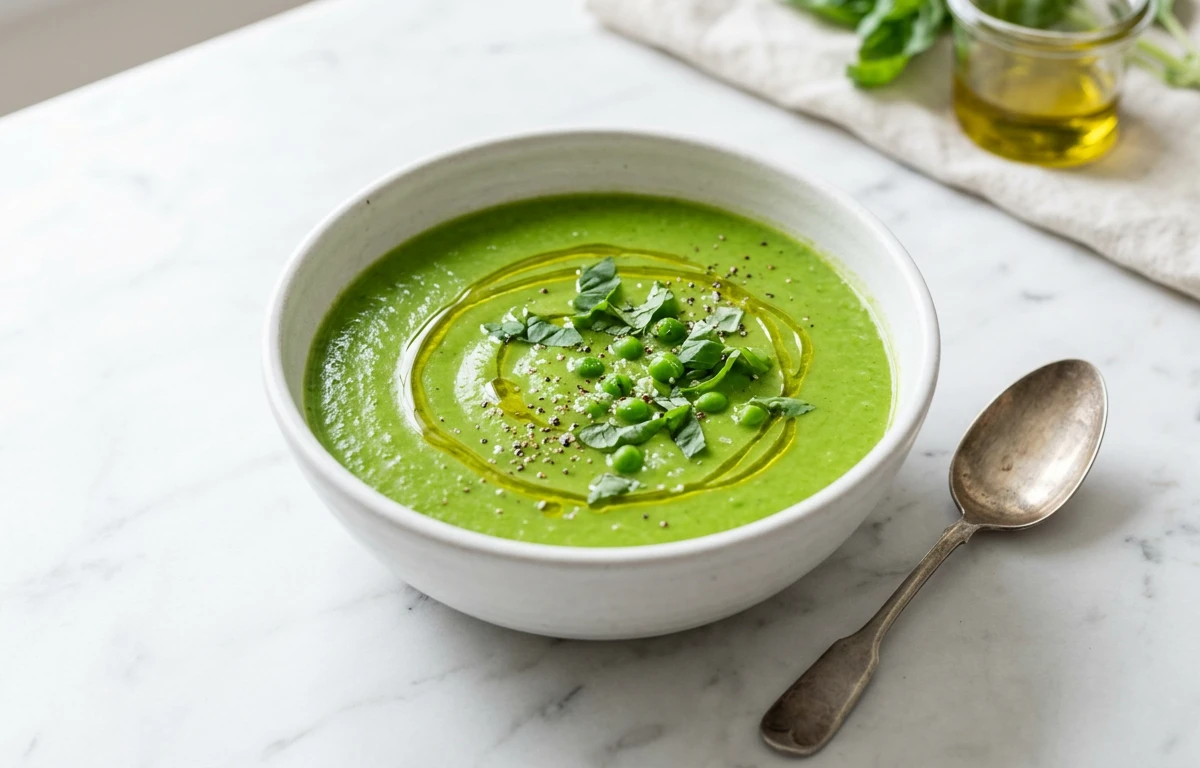
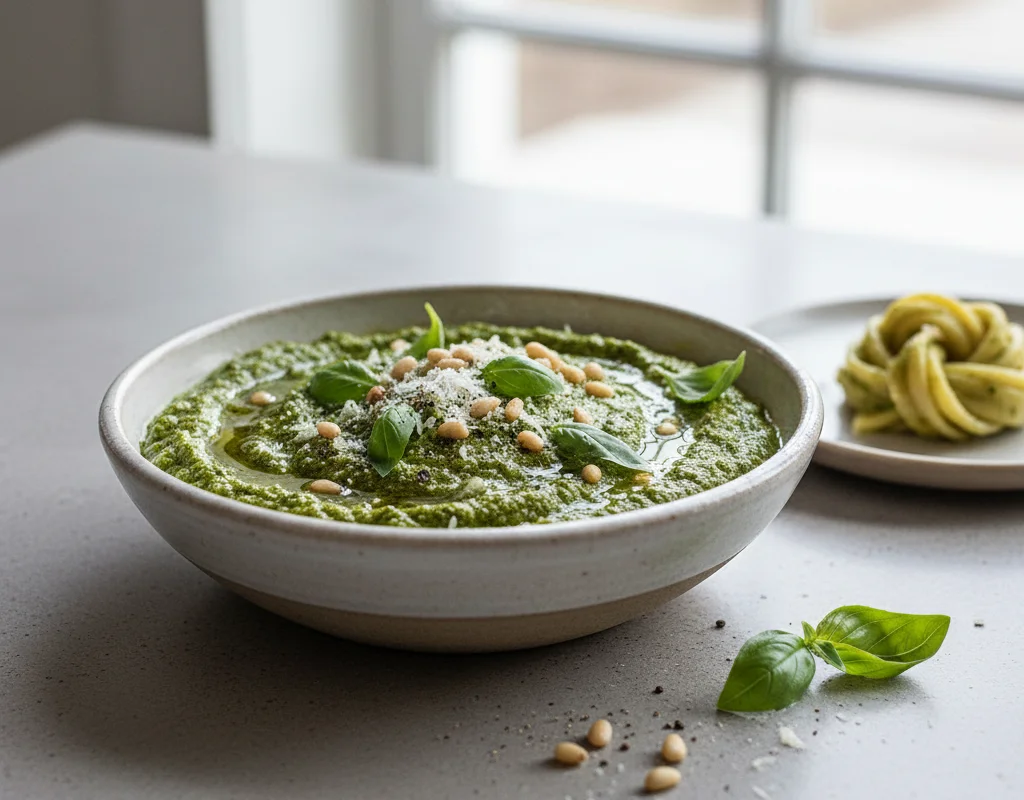
A bright, aromatic raw sauce from Genoa, Italy. Fresh basil leaves are crushed with garlic, pine nuts, and Parmesan cheese, then loosened with olive oil into a silky, verdant paste. This no-cook classic coats pasta beautifully, spreads on bread, or elevates grilled vegetables and meats.
For 16 servings
- prep
Prep the basil and garlic.
1.Gently wash 60 g basil leaves in cold water and pat completely dry with a kitchen towel.2.Peel 2 garlic cloves and lightly crush them with the flat side of a knife.TIPDry basil leaves thoroughly — water on the leaves causes the pesto to darken and turn bitter. - prep
Crush garlic and pine nuts into a paste.
1.Place the crushed garlic and 3 tbsp pine nuts in the mortar.2.Grind with the pestle using a firm, circular motion until a smooth paste forms (about 2 minutes). - mix
Work the basil into the garlic-nut base.
1.Add the basil leaves a handful at a time into the mortar.2.Crush against the sides with a gentle, twisting motion — do not pound or pulverize.3.Continue until the basil breaks down and the mixture looks like a coarse, bright green paste.TIPCrush with a twisting motion, not a pounding one. Heat generated from pounding darkens the basil and releases bitter compounds. - mix
Incorporate the cheeses and salt.
1.Add 0.5 cup grated Parmesan and 2 tbsp grated Pecorino to the mortar.2.Add 1 pinch of salt.3.Fold and crush gently until the cheeses are fully blended into the basil mixture.TIPAdd cheese and salt together — salt draws moisture from the cheese to help bind the pesto. - mix
Loosen the pesto with olive oil.
1.Drizzle 0.5 cup extra virgin olive oil in a slow, steady stream while stirring continuously with the pestle.2.Keep mixing until the oil is fully absorbed and the pesto reaches a velvety, slightly runny consistency.TIPStir in the oil by hand with the pestle — do not whisk. Whisking over-emulsifies the oil and creates a mayonnaise-like texture instead of the traditional silky sauce. - serve
Use immediately or store under oil.
Spoon the pesto onto hot pasta, roasted vegetables, or grilled bread. If storing, transfer to a clean jar, smooth the surface, and cover with a thin layer of olive oil to prevent oxidation. Refrigerate and use within 3 days.
TIPNever heat pesto directly — always toss with hot pasta off the burner. Direct heat turns the basil dark and dulls the fresh flavor.
What to keep in mind.
6 tips from the recipe — small details that make a real difference to the final dish.
- 1Always dry basil leaves completely before grinding to prevent oxidation and bitterness.
- 2Use a mortar and pestle for a rustic texture—food processors can heat and bruise the basil.
- 3Add olive oil slowly while stirring to control the consistency without over-emulsifying.
- 4Toast pine nuts lightly in a dry pan for 1-2 minutes to deepen their nutty flavor.
- 5Toss pesto with hot pasta off the heat to preserve its bright green color and fresh taste.
- 6Store leftover pesto in a jar with a thin layer of olive oil on top to block air and prevent browning.
Adapt it for your goals.
Nut-free
Replace pine nuts with toasted sunflower seeds or blanched almonds for a similar creamy texture, perfect for those with nut allergies.
veganVegan
Substitute Parmesan and Pecorino with 1/4 cup nutritional yeast and 2 tablespoons white miso paste for a cheesy, umami-rich vegan pesto.
herb swapHerb swap
Use half basil and half fresh spinach or arugula for a milder, slightly peppery version that stretches the basil further without losing color.
low oilLow-oil
Reduce olive oil to 1/4 cup and add 2 tablespoons of pasta cooking water when mixing to maintain a saucy consistency with less fat.
Why this is on our healthy list.
Rich in Antioxidants
Basil contains flavonoids and volatile oils that help protect cells from oxidative stress and inflammation.
Heart-Healthy Fats
Extra virgin olive oil and pine nuts provide monounsaturated fats and omega-3s that support cardiovascular health.
Good Source of Calcium
Parmesan and Pecorino cheeses contribute a significant amount of calcium for bone strength—each serving offers roughly 10% of daily needs.
Low-Carb Friendly
This pesto is naturally low in carbohydrates, making it a suitable flavor boost for keto or low-glycemic diets.
Frequently asked questions
Yes, use a food processor with short pulses—do not run continuously, or the heat will darken the basil and make it bitter.