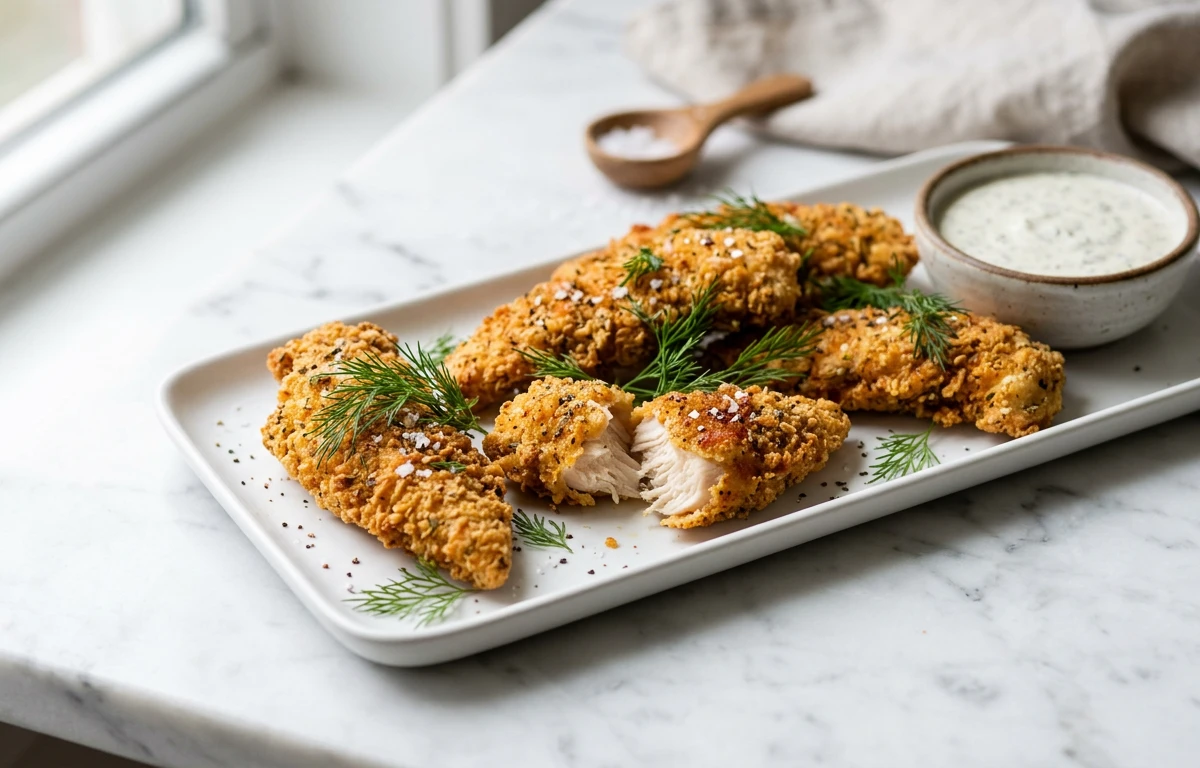
Pickle-Brined Chicken Tenders
Juicy, golden-crisp chicken tenders soaked in tangy dill pickle brine, then dredged in a perfectly seasoned coating and fried to crunchy perfection. The pickle juice works magic — tenderizing the meat while infusing it with that unmistakable zesty, garlicky flavor. Ready in under an hour, these are the ultimate upgrade to your weeknight chicken dinner.
For 4 servings
- prep · ~30 min
Brine the chicken tenders.
1.Place chicken tenders in a bowl or resealable bag.2.Pour pickle brine over chicken, making sure all pieces are submerged.3.Cover and refrigerate for at least 30 minutes, or up to 4 hours for stronger pickle flavor.TIPDon't brine longer than 4 hours — the acid can start to make the chicken mushy. - prep · ~5 min
Set up the dredging station.
1.In a shallow bowl, whisk together flour, cornstarch, garlic powder, onion powder, smoked paprika, cayenne, black pepper, and salt.2.In a second shallow bowl, whisk eggs with buttermilk until smooth.3.Line a baking sheet with parchment paper for holding the breaded tenders. - prep · ~10 min
Heat the oil.
Pour oil into a large, heavy-bottomed pot or Dutch oven. Clip on a deep fry thermometer and heat over medium-high until the oil reaches 350°F (175°C).
TIPMaintain the oil between 340-350°F for the crispiest results. Too low and the tenders absorb oil; too high and they burn before cooking through. - prep · ~8 min
Bread the chicken tenders.
1.Remove chicken from brine and pat very dry with paper towels.2.Dip each tender into the flour mixture, pressing to coat well. Shake off excess.3.Dip into the egg mixture, letting excess drip off.4.Return to flour mixture and press firmly again, creating a craggy, shaggy coating.5.Place breaded tenders on the lined baking sheet.TIPFor extra crunch, drizzle a few drops of the egg mixture into the flour and rub it in to create clumps before you start breading. - fry · ~12 min
Fry the chicken tenders in batches.
1.Carefully lower 3 to 4 tenders into the hot oil using tongs.2.Fry for 3 to 4 minutes, turning once, until deep golden brown and the internal temperature reaches 165°F.3.Transfer to a wire rack set over a baking sheet to drain.4.Repeat with remaining tenders, bringing oil back to 350°F between batches.TIPDon't crowd the pot — overcrowding drops the oil temperature fast and makes the coating greasy. - rest · ~3 min
Rest the tenders before serving.
Let tenders rest on the wire rack for 2 to 3 minutes. This allows the juices to settle and the crust to set completely. Serve immediately.
- garnish
Serve with your favorite dipping sauce.
Arrange hot tenders on a platter and serve with ranch, honey mustard, or extra dill pickle slices on the side.
What to keep in mind.
5 tips from the recipe — small details that make a real difference to the final dish.
- 1Pat the chicken very dry after brining to ensure the coating adheres properly.
- 2Use a thermometer to keep oil at a steady 350°F for the crispiest tenders.
- 3Don't skip the cornstarch in the coating — it creates a lighter, crunchier crust.
- 4Rest the cooked tenders on a wire rack, not paper towels, to keep the crust crisp.
- 5Drizzle a few drops of egg mixture into the flour and rub to form clumps for extra craggy texture.
Adapt it for your goals.
Oven-baked
For a lighter version, spray breaded tenders with oil and bake at 425°F for 15-18 minutes, flipping halfway. The pickle brine keeps them moist even without deep frying.
gluten freeGluten-free
Swap all-purpose flour with a 1:1 gluten-free flour blend and ensure the pickle brine is from a gluten-free brand. This makes the dish celiac-safe.
extra spicyExtra spicy
Add 1 teaspoon of cayenne and 1/2 teaspoon of chipotle powder to the flour dredge for a smoky, fiery kick that complements the pickle tang.
Why this is on our healthy list.
Lower in Fat Than Traditional Fried Chicken
Using chicken tenders rather than dark meat reduces saturated fat, and the pickle brine adds flavor without extra oil.
Good Source of Protein
Each serving provides a substantial amount of lean protein from chicken breast, supporting muscle repair and satiety.
Contains Probiotic Benefits from Brine
While pasteurized pickle brine may vary, naturally fermented pickle juice can contain beneficial bacteria that support gut health.
Frequently asked questions
Sweet pickle brine will add sugar and a different flavor profile — use dill pickle brine for the classic tangy, savory result this recipe is designed for.