Pistachio & Herb Crusted Salmon
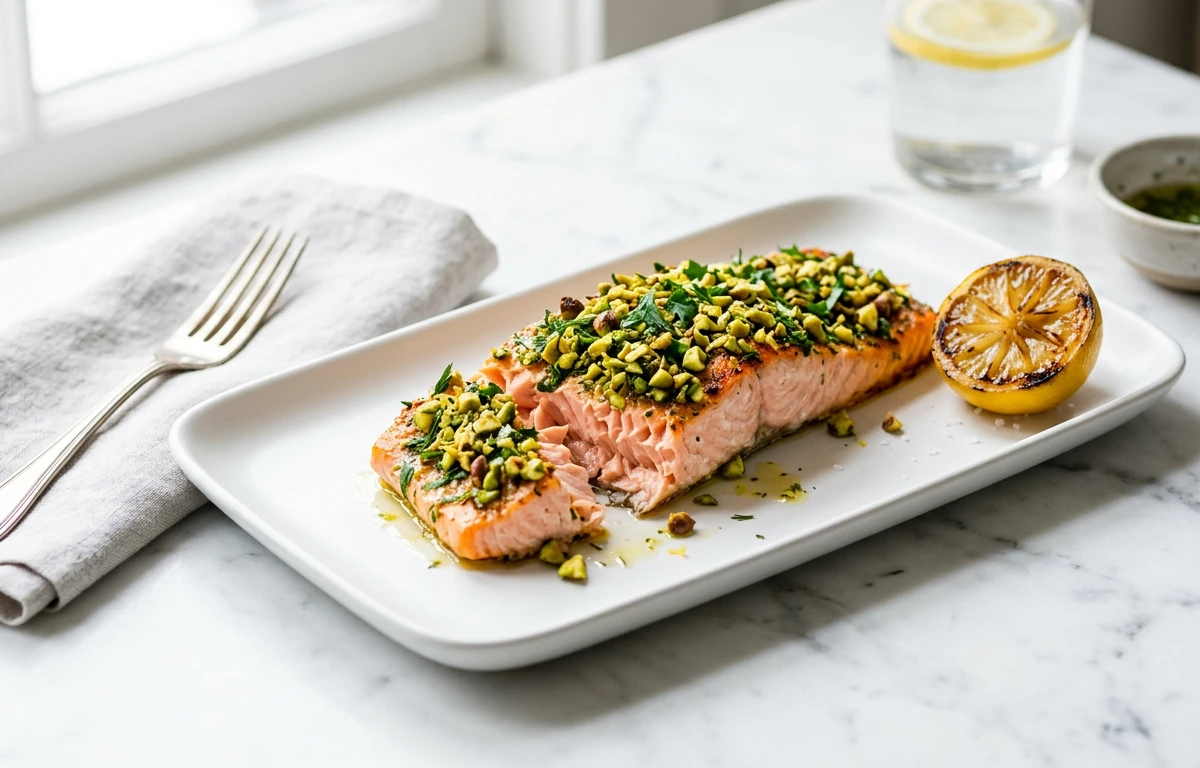
Tender salmon fillets topped with a crunchy, golden crust of chopped pistachios and fresh herbs. The nutty, savory topping locks in moisture while the fish bakes to flaky perfection. An elegant yet effortless dinner ready in under 30 minutes.
For 4 servings
- prep
Preheat oven and prepare the baking sheet.
Preheat oven to 200°C (400°F). Line a baking sheet with parchment paper and lightly grease with olive oil.
- mix
Make the pistachio herb crust.
1.In a medium bowl, combine chopped pistachios, panko breadcrumbs, parsley, dill, lemon zest, minced garlic, olive oil, honey, salt, and black pepper.2.Mix well until the mixture resembles damp sand and holds together when pressed. - prep
Prepare the salmon fillets.
Pat salmon fillets completely dry with paper towels. Place them skin-side down on the prepared baking sheet, spaced evenly apart.
TIPRemoving excess moisture helps the mustard adhere and prevents steaming. - assemble
Coat salmon with mustard and crust.
1.Brush the top of each salmon fillet evenly with Dijon mustard.2.Divide the pistachio-herb mixture over the four fillets, pressing it gently onto the mustard-coated surface to form an even crust.TIPPress firmly so the crust sticks during baking. - bake · ~13 min
Bake until crust is golden and salmon is cooked.
Bake on the middle rack for 12 to 15 minutes. The crust should be golden brown and the salmon should flake easily with a fork. Internal temperature should reach 63°C (145°F).
TIPWatch the crust — if it browns too fast before the salmon cooks through, loosely tent with foil. - serve
Rest briefly and serve with lemon wedges.
Let the salmon rest on the baking sheet for 2 minutes. Serve hot with fresh lemon wedges on the side for squeezing over the top.
What to keep in mind.
6 tips from the recipe — small details that make a real difference to the final dish.
- 1Pat the salmon fillets very dry with paper towels so the mustard clings and the crust stays on.
- 2Press the pistachio-herb mixture firmly onto the mustard layer — this prevents it from falling off during baking.
- 3If the crust browns too quickly, loosely tent the salmon with foil for the remaining bake time.
- 4For even cooking, choose fillets of similar thickness (about 1-inch) and arrange them skin-side down on the baking sheet.
- 5Let the salmon rest for 2 minutes after baking — this allows the juices to redistribute and the crust to set.
- 6You can assemble the crust mixture up to 1 day ahead and refrigerate; add the lemon zest just before using to keep it fresh.
Adapt it for your goals.
Gluten-free
Replace panko breadcrumbs with an equal amount of crushed pork rinds or finely ground almonds to keep the crust crunchy and gluten-free without sacrificing texture.
extra herbyExtra-herby
Swap the dill and parsley for equal parts fresh basil and mint for a brighter, more summery flavor profile that pairs beautifully with pistachios.
no honeyNo-honey
Omit the honey and add a tiny pinch of cayenne pepper or red pepper flakes to the crust for a subtly spicy, savory twist instead of sweet.
dairy free cream sauceDairy-free cream sauce
Serve the salmon over a dollop of dairy-free yogurt mixed with lemon juice, minced dill, and a pinch of salt for a cool, tangy counterpart.
Why this is on our healthy list.
Rich in Omega-3s
Salmon is one of the best natural sources of omega-3 fatty acids, which support brain health and heart function.
High in Plant Protein
Pistachios add plant-based protein and fiber, making this dish more satiating and nutrient-dense.
Good Source of Vitamin E
Pistachios provide vitamin E, an antioxidant that helps protect cells from oxidative stress.
Low in Added Sugar
With just a teaspoon of honey for the whole dish, this meal is naturally low in added sweeteners.
Frequently asked questions
Yes, but thaw them completely in the fridge overnight and pat very dry before using to avoid excess moisture that would make the crust soggy.