
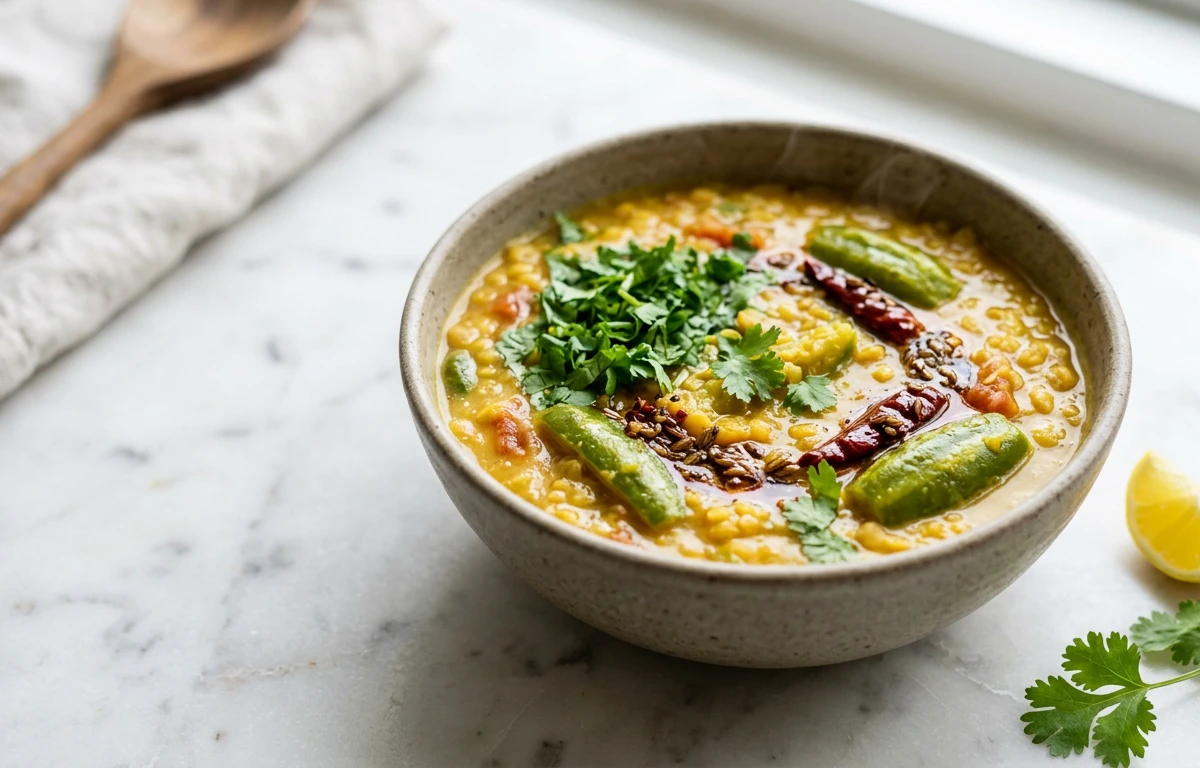
Pointed Gourd & Lentil Dal
A humble, homestyle dal where tender pointed gourd pieces swim in a mildly spiced, creamy lentil stew. The gourd absorbs the gentle warmth of ginger and cumin, making every spoonful comforting and light. Perfect with steamed rice and a squeeze of lime.
For 4 servings
- prep
Prepare the pointed gourd.
1.Wash 250 g pointed gourd thoroughly.2.Trim the ends and cut each gourd lengthwise into halves.3.Cut the halves into 1-inch pieces and set aside.TIPChoose firm, green pointed gourds without blemishes. Avoid overripe ones with hard seeds. - pressure cook · ~15 min
Cook the lentils.
1.Add 0.75 cup washed toor dal, 2.5 cups water, 1 pinch turmeric powder, and 0.25 tsp salt to the pressure cooker.2.Close the lid and pressure cook for 4 whistles on medium heat.3.Let the pressure release naturally. Open and whisk the dal lightly until smooth.TIPWhisking the dal well gives it a creamy, uniform consistency that coats the gourd beautifully. - fry · ~7 min
Sauté the pointed gourd.
Heat 2 tbsp mustard oil in a heavy-bottomed pan over medium heat until it reaches its smoking point, then reduce heat. Add the pointed gourd pieces and sauté until lightly golden and softened, about 5 to 7 minutes. Remove and set aside.
TIPSmoking mustard oil removes its raw pungency. Don't rush this step. - temper · ~2 min
Make the tempering.
1.In the same pan, ensure about 1 tbsp oil remains. Add 0.5 tsp cumin seeds and 2 dried red chilies.2.Let cumin seeds splutter and chilies darken slightly (30 seconds).3.Add 1 inch grated ginger and sauté until the raw aroma fades (30 seconds). - saute · ~5 min
Cook the tomato masala base.
1.Add 2 finely chopped tomatoes and 2 slit green chilies to the pan.2.Cook until tomatoes turn soft and mushy (3 to 4 minutes).3.Stir in 1 tsp coriander powder and 1 pinch cumin powder. Cook for 1 minute until fragrant.TIPMashing the tomatoes with the back of your spoon helps the masala break down faster. - simmer · ~10 min
Combine dal and pointed gourd.
1.Pour the whisked dal into the pan with the tomato masala.2.Add the sautéed pointed gourd pieces back into the pan.3.Stir well and add water if needed to reach a smooth, pourable consistency.4.Bring to a gentle simmer and cook covered for 8 to 10 minutes so flavors meld.TIPDon't let it boil vigorously — a gentle simmer keeps the gourd intact and the dal creamy. - garnish
Finish and serve.
1.Sprinkle 1 pinch garam masala and 1 tsp ghee over the dal.2.Stir in 2 tbsp chopped coriander leaves.3.Ladle into bowls and serve hot.TIPLetting the dal rest for 5 minutes off the heat allows the flavors to deepen.
What to keep in mind.
7 tips from the recipe — small details that make a real difference to the final dish.
- 1Smoke the mustard oil until it just starts to shimmer to remove its raw pungency before adding other ingredients.
- 2Whisk the cooked toor dal vigorously until smooth for a creamy texture that coats the pointed gourd pieces.
- 3Sauté the pointed gourd pieces until lightly golden and softened before adding to the dal so they hold their shape.
- 4Slit the green chilies lengthwise to infuse heat without making the dal overly spicy; remove them before serving if desired.
- 5Let the finished dal rest off the heat for 5 minutes before serving to allow the garam masala and ghee to meld.
- 6If the dal thickens too much on cooling, thin it with a splash of warm water when reheating.
- 7Use firm, bright green pointed gourds with no blemishes for the best texture and flavour.
Adapt it for your goals.
Vegan
Replace the ghee with an extra teaspoon of mustard oil or any neutral oil to keep the dal entirely plant-based.
low oilLow-oil
Reduce mustard oil to 1 tablespoon and skip sautéing the gourd separately; add raw gourd pieces directly to the simmering dal and cook until tender.
high proteinHigh-protein
Substitute half the toor dal with masoor dal (red lentils) for higher protein content, and cook for one fewer whistle.
pumpkin swapPumpkin swap
Replace pointed gourd with same-weight cubed pumpkin or butternut squash for a sweeter, creamier variation that pairs well with the same spices.
Why this is on our healthy list.
Rich in Plant Protein
Toor dal provides a substantial source of plant-based protein, essential for muscle repair and satiety.
High in Dietary Fiber
Both lentils and pointed gourd contribute dietary fiber, supporting healthy digestion and steady blood sugar levels.
Packed with Antioxidants
Turmeric, cumin, and coriander offer anti-inflammatory compounds like curcumin, which may help reduce oxidative stress.
Low in Calories
This dal is naturally low in calories and fat, making it a light yet filling meal option.
Frequently asked questions
Yes, you can substitute masoor dal (red lentils) or moong dal (split yellow mung beans). Adjust cooking time: masoor dal cooks faster (3 whistles), moong dal similar to toor.


